The Complete 4x4 Grow Light Guide: Choosing the Perfect LED System for Maximum Yields in 16 Square Feet
Are you setting up a 4x4 grow tent and wondering which grow light will actually deliver the professional results you're aiming for? You're in the right place. The 4x4 configuration—providing a perfect 16 square feet of growing space—represents the sweet spot for serious home cultivators. It's large enough to produce substantial yields while remaining manageable for one person to operate. But here's the challenge: choosing the wrong lighting for this popular tent size wastes money and limits your harvest potential.
The 4x4 grow tent dominates indoor cultivation for good reason. It accommodates 4-9 plants comfortably depending on training techniques, fits into most spare rooms or basements without overwhelming the space, and produces yields sufficient for personal supply or small-scale commercial operations. More importantly, the 16 square foot footprint works perfectly with modern LED grow light technology—large enough to justify quality equipment but compact enough to avoid the excessive power consumption larger setups demand.
This comprehensive guide reveals everything you need to know about selecting, positioning, and maximizing 4x4 grow lights. You'll discover the exact wattage requirements for optimal flowering, which features actually matter versus marketing fluff, how to position lights for even coverage, and which specific systems deliver the best results for this popular tent size. Whether you're upgrading from a smaller setup or starting your first serious growing operation, understanding 4x4 lighting requirements ensures you invest wisely and harvest abundantly.
Understanding 4x4 Grow Light Requirements
Before diving into specific product recommendations, understanding the fundamental requirements for properly illuminating 16 square feet helps you make informed decisions and avoid common mistakes.
The 30-50 Watts Per Square Foot Rule
Indoor growers rely on a proven calculation for determining adequate light power: 30-50 watts per square foot for flowering plants, and 25-30 watts per square foot for vegetative growth. These aren't arbitrary numbers—they represent decades of cultivation experience translated into practical guidelines.
For a 4x4 tent (16 square feet), this calculation yields:
- 480-800 watts for flowering stages (16 sq ft × 30-50 watts)
- 400-480 watts for vegetative stages (16 sq ft × 25-30 watts)
Here's the critical distinction many growers miss: these recommendations are based on actual power draw (true watts), not the "equivalent wattage" claims many manufacturers advertise. A light claiming "1000W equivalent" but drawing only 250 actual watts won't adequately illuminate a 4x4 space, regardless of marketing promises.
Quality LED systems in the 600-800 watt range provide optimal performance for 4x4 flowering operations. This power level delivers the light intensity plants need for maximum yield without excessive electricity consumption or heat generation. The Xi750 LED Grow Light drawing 750 watts hits the sweet spot—powerful enough for impressive results but efficient enough for reasonable operating costs.
PPFD: The Metric That Actually Matters
While wattage provides a useful starting point, PPFD (Photosynthetic Photon Flux Density) tells you what your plants actually receive. PPFD measures usable light energy at canopy level in µmol/m²/s—the metric professional growers use to optimize results.
Target these PPFD levels across your 4x4 canopy:
- Seedlings: 200-400 µmol/m²/s
- Vegetative Growth: 400-600 µmol/m²/s
- Flowering: 600-1000 µmol/m²/s
The key word: across. A light producing 1000 µmol/m²/s directly underneath but only 400 µmol/m²/s at the corners creates uneven growth. Plants in the center thrive while edge specimens struggle—resulting in inconsistent harvest quality and wasted potential.
Quality 4x4 grow lights provide PPFD maps showing light distribution at various mounting heights. This data reveals whether a system truly covers 16 square feet uniformly or creates hot spots and weak zones that limit productivity.
Coverage Uniformity: Single vs. Multiple Fixtures
Achieving even light distribution across 4x4 spaces presents specific challenges. You have two basic approaches:
Single High-Power Fixture: One 600-800W LED positioned centrally provides the simplest setup with unified control. Modern bar-style LEDs excel at uniform coverage, eliminating the hot-spot problems of older single-point designs. This approach minimizes mounting complexity while delivering professional results.
Multiple Mid-Power Fixtures: Two 300-400W lights positioned strategically can create exceptionally even coverage with flexibility for height adjustment. However, this approach requires additional mounting hardware, doubled electrical connections, and more complex control systems.
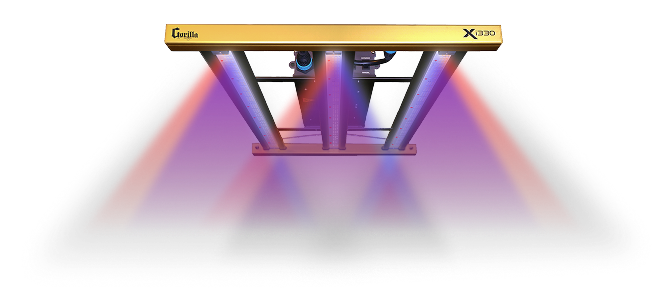
For most 4x4 operations, a single high-quality fixture offering true 4x4 to 5x5 coverage provides optimal results. The bar-style configuration of premium systems like the Xi750 distributes light evenly across the entire canopy, eliminating the coverage compromises of cheaper single-point designs.
Height Considerations for 4x4 Tents
Standard grow tents offer 6-7 feet of height, but Gorilla Grow Tents provide 6'11" standard height, extendable to 8'11" with height extension kits. This extra vertical space proves invaluable for 4x4 lighting because:
Higher ceilings allow optimal light positioning (12-18 inches above canopy during flowering) while accommodating taller plants. You're not forced to choose between proper light distance and plant height—you can optimize both.
The additional height enables better heat management. Hot air rises, and extra vertical space prevents heat accumulation at canopy level even with high-power lighting. Combined with proper ventilation, this prevents heat stress that plagues standard-height tents using powerful lights.
Maintenance becomes simpler with adequate headroom. You can comfortably work under lights without constantly bumping fixtures or struggling in cramped conditions. This seemingly minor convenience dramatically improves the growing experience over multiple cycles.

Top Features to Look for in 4x4 Grow Lights
Not all 4x4-capable grow lights deliver equal results. Understanding which features provide genuine value versus marketing gimmicks helps you invest wisely.
Full-Spectrum Output with UV/IR Channels
Quality 4x4 grow lights provide complete spectrum coverage from UV through infrared—not just blue and red wavelengths. Full-spectrum output supports all growth stages and plant functions, eliminating the need for multiple light systems as plants develop.
The most advanced systems feature separately controlled UV and IR channels allowing you to customize spectrum for specific growth stages. Vegetative growth benefits from emphasizing blue wavelengths with minimal UV, while late flowering demands enhanced red spectrum plus UV/IR for maximum resin production and flower density.
The Xi Series LED grow lights exemplify this approach with tri-channel spectrum control. Independent adjustment of main spectrum, UV, and IR wavelengths enables precise optimization throughout the entire growth cycle—flexibility impossible with fixed-spectrum systems.
Programmable Control and Automation
Managing 4x4 grow lights manually quickly becomes tedious. Programmable systems automate light schedules, spectrum adjustments, and intensity ramping—ensuring consistency without constant attention.
Smartphone app control represents the current state-of-the-art. The GXi wireless technology enables complete light management from your phone: adjust spectrum balance, create custom schedules, implement sunrise/sunset transitions, and monitor system status remotely. This automation ensures optimal conditions even when you can't physically tend your grow.
Sunrise/sunset ramping deserves special mention. Gradually increasing light intensity over 15-30 minutes mimics natural dawn, preventing shock that can stress plants. Evening dimming provides similar benefits while reducing the abrupt environmental change sudden darkness creates. These gentle transitions improve plant health and development compared to harsh on/off switching.
Premium Component Quality
The difference between budget and quality 4x4 grow lights comes down to components. Premium systems use:
Top-tier LED chips from Samsung, OSRAM, or equivalent manufacturers. These diodes provide superior efficacy (more light per watt), consistent output over 50,000+ hours, and reliable spectrum characteristics. Generic chips from unknown manufacturers degrade rapidly and produce inconsistent results.
Mean Well drivers represent the gold standard for LED power supplies. These components account for 90% of grow light failures, making quality selection critical. Mean Well drivers offer efficiency exceeding 95%, power factor correction, and proven reliability across millions of installations worldwide.
Aircraft-grade aluminum construction ensures effective heat dissipation and structural integrity. Quality heat sinks maintain optimal LED operating temperatures, maximizing efficiency and longevity. Cheap plastic housings fail to manage heat properly, reducing light output and shortening lifespan dramatically.
The investment in premium components pays dividends through years of consistent performance, lower electricity costs, and superior growing results that budget alternatives simply can't match.
Warranty and Customer Support
A 4x4 grow light represents significant investment—protect it with comprehensive warranty coverage. Quality manufacturers offer 3-5 year warranties because they're confident in their products' reliability and longevity.
Beware of lights with 1-year warranties or unclear coverage terms. These short warranty periods signal manufacturers who know their products won't last. The repair hassles, growing interruptions, and replacement costs of failed lights far exceed any initial savings from choosing budget alternatives.
Customer support quality matters as much as warranty duration. Can you reach actual technical support when issues arise, or are you left troubleshooting alone? The Gorilla Xi Series comes backed by comprehensive support from growing experts who understand cultivation—not just generic customer service reading scripts.
Best 4x4 Grow Light: The Xi750 LED System
After evaluating specifications, features, and real-world performance, one system stands out as the optimal choice for 4x4 grow tent operations: the Gorilla Xi750 LED Grow Light.
Why the Xi750 Dominates 4x4 Applications
The Xi750 was specifically engineered for 4x4 to 5x5 spaces, making it the perfect match for standard 16 square foot tents. Here's what sets it apart:
750W Actual Power Draw positions it perfectly in the 480-800 watt optimal range for 4x4 flowering. This power level provides abundant light intensity for maximum yields while maintaining reasonable electricity consumption. You're not over-lighting (wasted energy) or under-lighting (reduced yields)—the power perfectly matches the application.
Premium OSRAM and Samsung LED Diodes deliver 2.7 µmol/J efficacy—among the highest in the industry. This means more usable plant light per watt consumed, translating directly into lower operating costs and cooler operation compared to less efficient alternatives.
True 4x4 to 5x5 Coverage with exceptional uniformity eliminates the weak corners and hot spots that plague cheaper lights. Bar-style configuration distributes light evenly across the entire canopy, ensuring edge plants receive nearly the same PPFD as center specimens. This uniformity translates directly into consistent harvest quality.
Tri-Channel Spectrum Control enables independent adjustment of main spectrum, UV, and IR wavelengths. Emphasize blue during vegetative growth, shift toward red during flowering, and activate UV/IR during late flowering for maximum quality enhancement. This flexibility optimizes conditions throughout the entire growth cycle.
Real-World Performance and Results
Specifications tell part of the story—real-world results complete it. Growers consistently report the Xi750 producing:
10-30% Yield Increases compared to their previous lighting systems. The combination of optimal PPFD levels, even coverage, and proper spectrum delivers measurably better results than under-powered or poorly distributed alternatives.
Enhanced Flower Quality with denser buds, superior resin production, and more complex terpene profiles. The separately controlled UV channel triggers quality-enhancing responses impossible with standard spectrum lights.
Reduced Electricity Costs despite the substantial power draw. The 2.7 µmol/J efficiency means you're getting more plant-usable light per watt than budget alternatives claiming similar wattage. Over months and years, these efficiency gains add up to significant savings.
Trouble-Free Operation with minimal maintenance and consistent performance. Premium components eliminate the driver failures, diode burnouts, and degraded output that plague budget systems after 6-12 months of use.
Installation and Setup for Optimal Results
Maximizing Xi750 performance requires proper installation. Follow these best practices:
Mount lights 12-18 inches above canopy during flowering, adjusting as plants grow. The Xi750's efficient design runs cool enough for this proximity without burning leaves, while the distance provides optimal PPFD delivery.
Center fixture over the 4x4 space for even coverage. Use quality rope ratchets allowing easy height adjustment as plants develop. The sturdy all-metal frame of Gorilla Grow Tents supports the Xi750 without sagging or instability.
Connect to reliable timers or use GXi app automation for consistent light schedules. The programmable features enable sophisticated light recipes that optimize results, but even basic on/off timing delivers excellent performance when properly configured.
Ensure adequate ventilation to manage the modest heat output. While the Xi750 runs dramatically cooler than HID alternatives, any 750W system produces some thermal energy. Proper exhaust and circulation maintain optimal growing temperatures even in sealed environments.

Alternative 4x4 Grow Light Options and Considerations
While the Xi750 represents the optimal choice for most 4x4 operations, understanding alternative approaches helps you make informed decisions based on specific circumstances.
Budget-Conscious Options: The Xi420 Dual-Light Approach
If budget constraints make a single Xi750 challenging, consider two Xi420 LED Grow Lights positioned strategically across your 4x4 space. Each Xi420 draws 420 watts and covers 2x4 to 3x4 areas, meaning two units provide 840 total watts across your 16 square feet.
This approach offers several advantages:
Flexible positioning allows you to optimize coverage for specific plant layouts. Position lights to emphasize certain areas or create intentional intensity gradients if growing different varieties with varying light requirements.
Redundancy protection means light system failure won't completely darken your tent. If one unit experiences issues, the second continues providing light while you address the problem—preventing total cultivation interruptions.
Lower entry cost makes getting started more affordable. You can purchase one Xi420 initially and add a second when budget allows, scaling your operation over time rather than requiring full investment upfront.
The tradeoffs: doubled mounting complexity, multiple control systems to manage, and slightly increased total power consumption (840W vs 750W) compared to the single Xi750 approach.
Commercial-Scale Options: Multiple Bar Systems
Large commercial operations growing in multiple 4x4 spaces benefit from modular bar-style systems that scale efficiently. The Kind LED commercial lights offer configurations optimized for warehouse-scale cultivation.
These systems provide:
Exceptional coverage uniformity across large canopies through multiple LED bars working in coordination. The distributed light source eliminates shadowing and creates incredibly even PPFD distribution.
Simplified installation in commercial environments with purpose-built mounting systems. Rather than positioning individual fixtures, these systems install as integrated lighting infrastructure.
Professional reliability with 5-year warranties and industrial-grade components designed for continuous operation. Commercial cultivation can't tolerate lighting failures—these systems deliver the dependability large operations require.
For single 4x4 home setups, these commercial systems represent overkill. But for operations running 5+ tents or dedicated grow rooms, the infrastructure and reliability benefits justify consideration.
Upgrading from HID to LED for 4x4 Spaces
Many growers transitioning from HID (High-Intensity Discharge) lighting wonder how LED wattage compares to their existing systems. Here's the conversion:
A 1000W HID system (actual draw often 1100W+ with ballast) roughly equals a 600-750W quality LED in terms of light delivery to plants. The LED provides equivalent or superior growing results while consuming 350-500W less electricity—substantial savings over time.
The transition considerations:
Heat management dramatically improves with LED. Where your 1000W HID required extensive cooling, the Xi750 produces 40-50% less heat while delivering similar or better growing results. You may actually need to add supplemental heating in cool climates.
Light quality exceeds HID output through optimized spectrum and even distribution. HID bulbs waste significant energy on wavelengths plants don't use efficiently. LEDs concentrate energy in photosynthetically active wavelengths, providing better results with less total power.
Operating costs drop substantially through reduced electricity consumption, eliminated bulb replacements ($100+ annually for HID), and decreased cooling requirements. Most LED vs HID comparisons show LEDs paying for themselves within 12-24 months through these combined savings.
Maximizing 4x4 Grow Light Performance
Investing in quality lighting represents half the equation—proper implementation completes it. These optimization strategies ensure you extract maximum value from your 4x4 grow light system.
Reflective Environment Optimization
The Gorilla Grow Tent features diamond-pattern reflective walls that bounce up to 95% of light back toward plants. This reflectivity effectively increases light intensity by 30-40% compared to growing in non-reflective environments.
Maintain reflective surface cleanliness for optimal performance. Dust, splashed nutrients, or foliar spray residue reduces reflectivity substantially. Wipe walls monthly with damp microfiber cloths to maintain peak efficiency.
Consider adding supplemental reflective materials in strategic locations. Side panels or reflective sheeting on the tent floor can capture light that would otherwise be absorbed, bouncing it back to lower foliage and improving overall utilization.
Canopy Management for Even Light Penetration
Even the best 4x4 grow lights can't overcome poor canopy management. Dense, uneven canopies create shaded zones where light can't penetrate, wasting potential.
Training techniques like SCROG (Screen of Green), LST (Low-Stress Training), and strategic defoliation create even canopies that capture light efficiently across the entire 4x4 footprint. Your goal: a relatively flat canopy where all bud sites receive similar light intensity.
Plant spacing affects light utilization dramatically. Overcrowded plants shade each other unnecessarily, while sparse layouts waste growing space. For most 4x4 setups, 4-9 plants depending on variety and training method creates optimal density for maximum light capture without excessive competition.
Learn more about plant counts for 4x4 tents to optimize your specific growing style and variety selection.
Height Adjustment Throughout Growth Cycle
Light requirements change dramatically as plants develop. Optimal positioning during seedling stage differs completely from flowering requirements. Adjustable mounting systems enable you to optimize distance throughout the growth cycle.
Seedling stage: Position lights 24-36 inches above to provide gentle 200-400 µmol/m²/s PPFD. Young plants can't utilize intense light and may suffer stress from excessive intensity.
Vegetative growth: Lower lights to 18-24 inches as plants develop, increasing PPFD to 400-600 µmol/m²/s. This enhanced intensity drives robust structural development while maintaining compact, sturdy growth.
Flowering stage: Position lights 12-18 inches above canopy (adjust based on plant response) to deliver 600-1000 µmol/m²/s PPFD. This maximum intensity drives flower development and resin production for optimal yields and quality.
Quality rope ratchets make height adjustment effortless. The minimal investment in proper mounting hardware pays dividends through the flexibility to optimize positioning throughout the entire growth cycle.
Environmental Integration
4x4 grow lights affect more than just illumination—they influence temperature, humidity, and overall growing environment. Successful cultivation requires coordinated environmental management.
Temperature control becomes critical with high-power lighting. The Xi750's efficient design minimizes heat output, but 750W still produces thermal energy requiring management. Proper exhaust ventilation (typically 400-600 CFM for 4x4 spaces) maintains optimal temperatures without excessive cooling costs.
Humidity management interacts with lighting intensity. Plants transpire more vigorously under intense light, increasing humidity. Balance this through ventilation and dehumidification as needed to maintain optimal ranges (40-60% depending on growth stage).
CO2 supplementation becomes worthwhile with quality lighting. If you're already providing optimal light, temperature, and humidity, supplemental CO2 (1200-1500 PPM) represents the next yield optimization opportunity. The increased photosynthetic capacity high CO2 enables fully utilizes the abundant light your Xi750 provides.
Comprehensive grow tent setup guides provide detailed strategies for coordinating all environmental factors for maximum growing success.
Common 4x4 Grow Light Mistakes to Avoid
Learning from others' mistakes saves money, time, and frustration. These common errors plague many 4x4 operations—avoid them to ensure success.
Undersizing Lights to Save Money
The most expensive light is one that doesn't adequately illuminate your space. A 300W "budget" light might cost $200 less than a proper 750W system, but the reduced yields, inferior quality, and extended growing times quickly erase any savings.
Plants grown under insufficient light produce noticeably smaller yields—often 30-50% less than properly lit specimens. They also take longer to mature, reducing annual harvest cycles. The "savings" from cheaper, lower-powered lights evaporate through reduced productivity.
Invest appropriately from the start. A quality 600-800W system for 4x4 spaces costs more initially but pays for itself many times over through superior results, lower operating costs, and years of reliable performance.
Ignoring Coverage Patterns
Raw wattage means nothing if light doesn't reach your plants evenly. A 1000W light creating a 2x2 hot spot in your 4x4 tent leaves 75% of your space inadequately illuminated—wasting both light and growing potential.
Always verify actual coverage area from manufacturer specifications or independent testing. Marketing claims of "4x4 coverage" mean little without PPFD maps showing actual light distribution at appropriate mounting heights.
Bar-style LED configurations inherently provide better coverage uniformity than older single-point designs. The distributed light sources create even illumination that eliminates weak zones and hot spots plaguing cheaper alternatives.
Neglecting Spectral Quality for Pure Power
Some growers obsess over wattage while ignoring spectrum quality. A 1000W light using inefficient diodes and poor spectrum might underperform a well-designed 600W system with optimized wavelengths and premium components.
Full-spectrum output with proper red/blue ratios plus UV/IR channels delivers superior results compared to basic white LEDs or old-school "blurple" lights regardless of wattage. The quality of light matters as much as quantity.
Prioritize systems with proven spectrum technology, separate UV/IR control, and components from reputable manufacturers over generic lights with impressive power specifications but mediocre actual performance.
Poor Mounting and Inadequate Ventilation
Even the best 4x4 grow light underperforms with sloppy installation. Lights mounted insecurely can vibrate, shift position, or even fall—damaging plants and equipment. Inadequate ventilation causes heat accumulation that stresses plants regardless of light quality.
Invest in quality mounting hardware. Sturdy rope ratchets, reliable carabiners, and proper attachment to tent framework ensure lights remain exactly where you position them. The nominal cost of quality hardware prevents expensive accidents.
Plan ventilation before installing lights. A 4x4 space typically requires 400-600 CFM exhaust capacity to manage heat from high-power lighting while maintaining optimal growing temperatures. The ventilation system is as critical as the lights themselves.
Frequently Asked Questions About 4x4 Grow Lights
What wattage LED grow light do I need for a 4x4 tent?
For optimal flowering performance in a 4x4 tent (16 square feet), you need 480-800 watts of quality LED lighting based on the standard 30-50 watts per square foot calculation. The 600-750 watt range represents the sweet spot, providing abundant light intensity for maximum yields without excessive power consumption. The Xi750 LED Grow Light at 750W delivers ideal performance for 4x4 flowering operations with professional-grade coverage and efficiency. Lower wattages (480-600W) work for vegetative growth or less light-demanding crops, while higher wattages (750-800W) maximize flowering results for high-light plants.
Can I use two smaller lights instead of one large light for 4x4?
Yes, two medium-power lights can effectively illuminate a 4x4 space, offering some advantages over single fixtures. Two 400-450W lights positioned strategically provide flexible coverage with redundancy protection (if one fails, you still have light). However, this approach requires doubled mounting hardware, multiple control systems, and slightly increased total power consumption. For most growers, a single purpose-built 4x4 light like the Xi750 offers simpler installation, unified control, and optimized coverage. The dual-light approach works well when scaling up operations gradually or growing different varieties with varying light requirements in the same space.
How far should a 4x4 grow light be from plants?
Distance varies by growth stage and light power. For a 600-800W LED in a 4x4 tent: position lights 24-36 inches above seedlings (200-400 µmol/m²/s PPFD), 18-24 inches during vegetative growth (400-600 µmol/m²/s), and 12-18 inches during flowering (600-1000 µmol/m²/s). Monitor plants closely—if you see bleached leaves or heat stress, raise lights 2-4 inches. If plants stretch with long internodes, lower lights slightly. Quality systems like the Xi Series with adjustable intensity allow fine-tuning output without constantly changing height. Learn more about optimal LED distance for your specific setup.
Do I need UV and IR wavelengths for a 4x4 grow light?
UV and IR wavelengths provide significant quality benefits for flowering plants, though they're not absolutely necessary for basic growth. UV exposure (especially during late flowering) triggers increased resin production, enhanced terpene profiles, and more compact plant structure—measurable improvements worth having. IR wavelengths improve flower density and canopy penetration. The key: separately controlled UV/IR channels like those in the Xi750 allow you to activate these wavelengths only when beneficial (late flowering) rather than running them continuously. This targeted approach maximizes quality enhancement without unnecessary energy consumption or plant stress during vegetative stages.
How much will it cost to run a 4x4 grow light?
Operating costs depend on your light's actual wattage and local electricity rates. A 750W LED running 12 hours daily costs approximately $27-35 monthly at typical U.S. electricity rates ($0.10-0.13 per kWh). Calculate your specific costs: watts × hours/day × days/month × rate ÷ 1000. For example, 750W × 12 hours × 30 days × $0.12 = $32.40 monthly. While this seems substantial, quality LED systems like the Xi750 use 40-60% less electricity than equivalent HID systems while delivering superior results. Over a year, the energy savings versus traditional lighting adds hundreds of dollars back to your budget—making quality LEDs the most economical long-term choice despite higher initial cost.
Making Your 4x4 Grow Light Investment
You now understand exactly what your 4x4 grow tent needs: 480-800 watts of quality LED power, even coverage across 16 square feet, full-spectrum output with UV/IR channels, and reliable components that last for years. The question becomes: which system deserves your investment?
The decision boils down to long-term value versus short-term cost. Budget lights saving $200-300 initially cost more through reduced yields, higher electricity consumption, frequent replacements, and operational headaches. Quality systems cost more upfront but deliver superior results consistently over 5-10 years of reliable service.
For 4x4 operations, the Gorilla Xi750 LED Grow Light represents the optimal investment. The 750W power level perfectly matches 4x4 flowering requirements. Premium OSRAM and Samsung diodes deliver industry-leading efficiency and reliability. Tri-channel spectrum control with separate UV/IR management optimizes results throughout the growth cycle. And comprehensive GXi app integration automates optimization while providing professional-grade control.
The 3-year warranty backing Xi750 performance reflects genuine confidence in the system's reliability. This isn't a light that'll fail after 12 months, requiring expensive replacement at the worst possible time. It's professional-grade equipment designed for years of consistent, trouble-free operation—the dependability serious cultivation demands.
Start Growing with Confidence
Don't let inadequate lighting limit your 4x4 tent's potential. Browse the complete selection of LED grow lights optimized for 4x4 coverage and discover which system matches your growing style and quality ambitions. Whether you choose the flagship Xi750 or explore other options, you're investing in technology that consistently delivers professional results.
For those creating the ultimate 4x4 growing environment, combine premium lighting with a Gorilla Grow Tent 4x4 providing the durable framework, superior height, and environmental control serious cultivation requires. The 6'11" standard height (extendable to 8'11") accommodates both powerful lighting and tall plants without compromise. The 1680D thick fabric and sturdy steel construction supports heavy equipment while maintaining light-tight conditions for optimal photoperiod control.
Transform your 4x4 space into a high-performance growing operation. Explore the Xi Series LED grow lights today and unlock the yields, quality, and consistency your genetics deserve. Your plants' potential awaits—give them the light they need to shine.