Why Growers Are Switching from HLG to Gorilla Grow Lights
When growers first get into indoor cultivation, many start with what they’ve heard works. For a lot of people, that includes HLG.
But as setups get more dialed, more tents get added, and expectations go up, some growers start running into limitations they didn’t expect. And that’s where things start to shift. We’ve been seeing more experienced growers move away from HLG setups in favor of more flexible, full-system lighting solutions. Not because HLG doesn’t work, but because it doesn’t always scale the way growers need it to.
A Real Grower’s Experience
After starting with HLG, he began transitioning his rooms over time.

Here’s how he put it:
“I started with HLG lights before switching. A major drawback was the ‘R spec’ limitation. I couldn’t use them universally and had to dedicate tents just for flowering. They also run hotter and didn’t cover as well. Since switching, I now run your lights in five of my seven tents, and my HLGs are sitting in storage.”
That’s not a beginner talking. That’s a grower who’s already invested, already tested, and made the switch based on real-world performance.
So what’s actually driving that decision?
1. Spectrum Limitations That Force You to Change Your Setup
One of the biggest friction points growers run into with certain HLG models is the “R-spec” spectrum.
These lights are heavily optimized for flowering. Sounds fine at first, until you try to run a full cycle.
Now you’re dealing with a decision:
-
Swap lights mid-grow
-
Or dedicate entire tents strictly to flowering
Neither is ideal. Switching lights over a full canopy isn’t a small task. It adds complexity, risk, and time to your workflow. And dedicating tents limits flexibility, especially as your grow evolves.
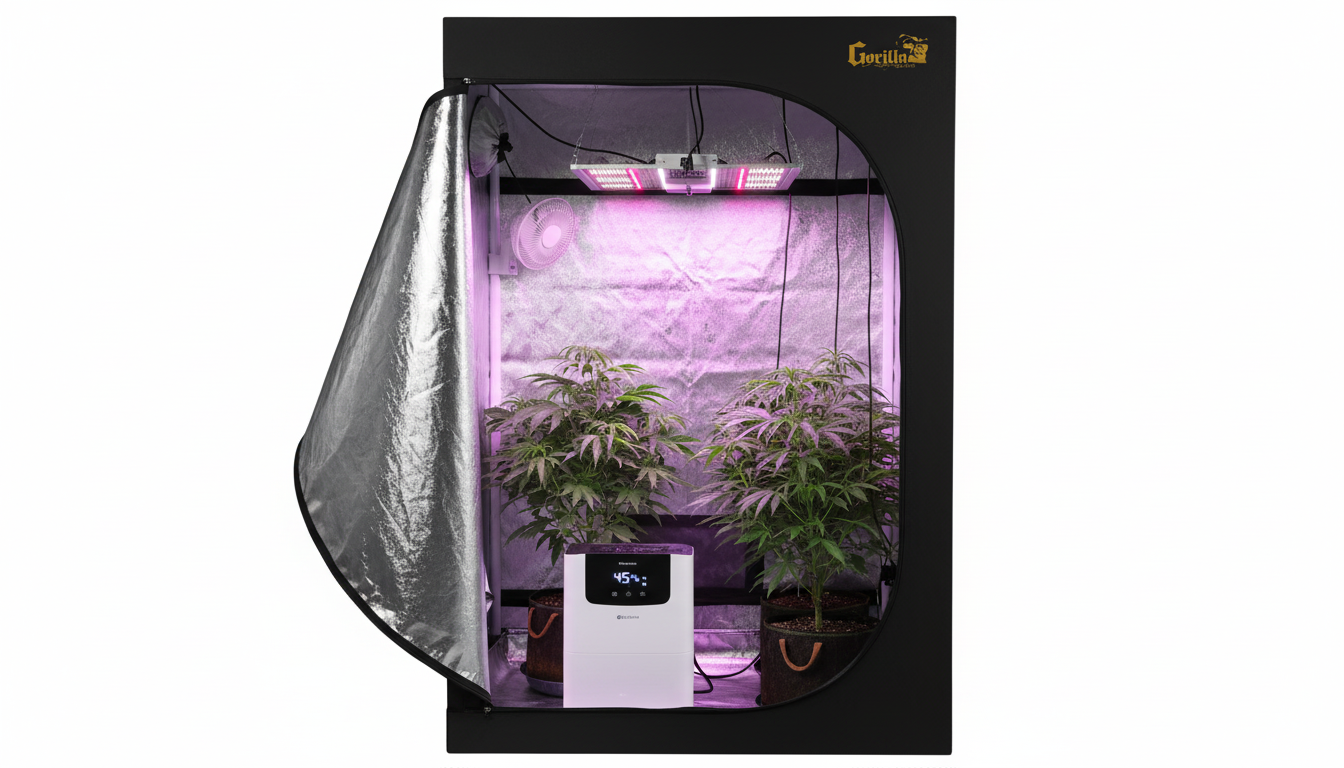
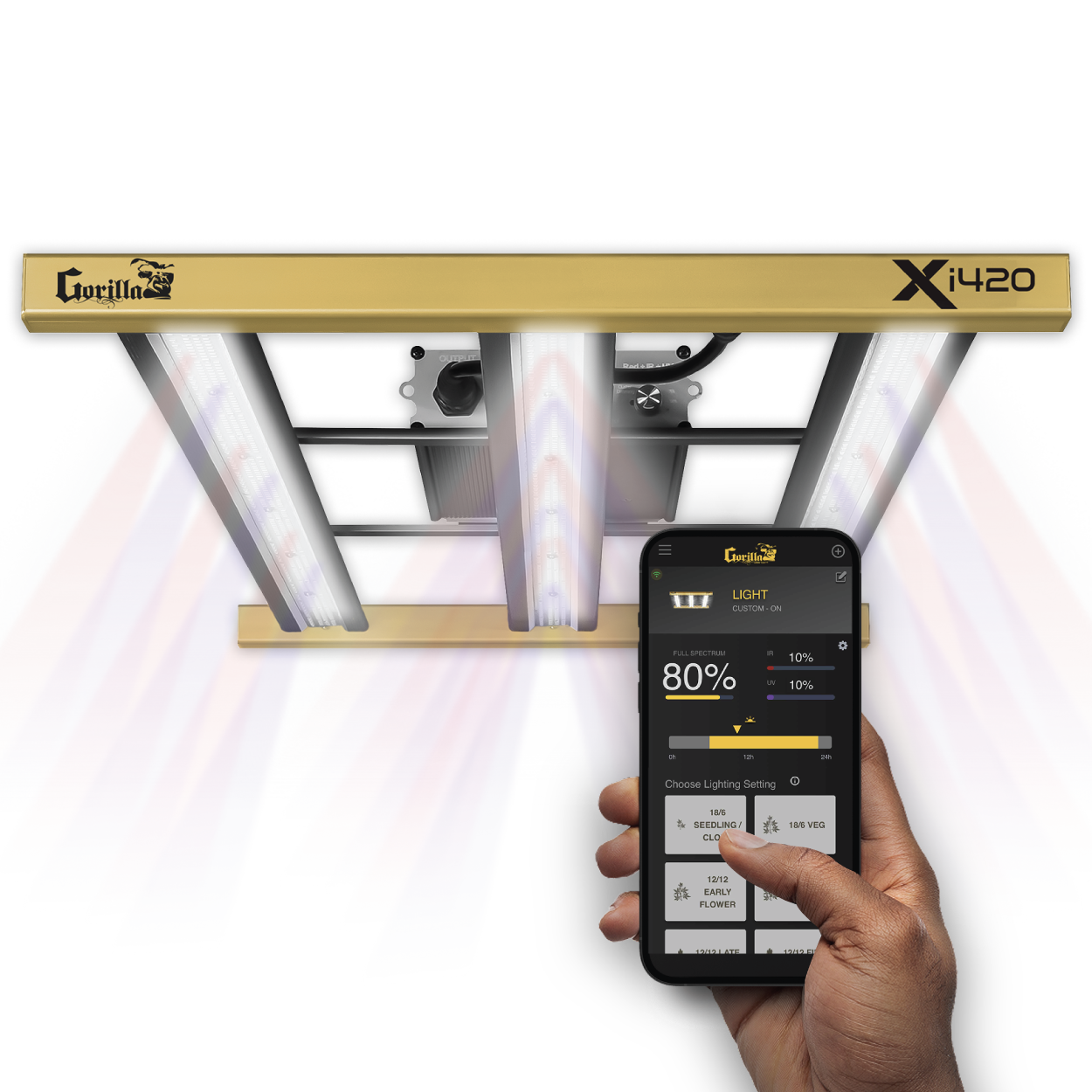
With a full-cycle spectrum system, you can run veg through flower without changing your setup.
That means:
-
Less interruption
-
Fewer variables
-
More consistency from start to finish
2. Heat Management Isn’t Just Comfort... It’s Control
Another issue that comes up is heat.
Many traditional LED designs use a fixed driver mounted directly to the fixture. That heat has to go somewhere. In most cases, it ends up in your tent.
Over time, that creates:
-
Higher ambient temperatures
-
More strain on your ventilation system
-
Less stable environmental control
And if you’re trying to dial in VPD, that matters. Modern lighting systems with detached drivers allow you to:
-
Move heat outside the tent
-
Free up usable vertical space
-
Maintain tighter control over your environment
It’s not just about running cooler. It’s about giving you more control over the conditions that actually drive plant performance.
3. Coverage: Edge-to-Edge vs. Hotspots
Light coverage is one of those things you don’t fully notice until you upgrade.
At first, everything looks fine.
Then you start seeing:
-
Uneven canopy development
-
Stronger growth directly under the fixture
-
Weaker growth around the edges
That’s a coverage issue. Some lighting setups create more centralized intensity, which leads to inconsistent results across your canopy.
With better distribution, you get true edge-to-edge coverage, not just strong output in the center.
That translates to:
-
More uniform plant growth
-
Better canopy utilization
-
More consistent yields across the entire tent
4. What Happens After Switching
The biggest difference isn’t just one feature. It’s how everything comes together.
Growers who switch tend to notice:
-
Simpler setups (no swapping lights mid-cycle)
-
More stable environments
-
Better use of space inside the tent
-
More consistent results across runs
And in some cases, like Chris, it leads to a pretty telling outcome: Lights that used to be in rotation end up sitting in storage.
Is HLG Still a Good Option?
HLG lights have been a solid choice for a long time, and plenty of growers still run them successfully.
But as expectations increase, especially in multi-tent or more advanced setups we've found that flexibility, thermal control, and coverage start to matter more. That’s where many growers begin exploring other options.
Final Thoughts
If you’re running a single tent and keeping things simple, a lot of lighting options can get the job done.
But if you’re:
-
Expanding your setup
-
Looking for more consistency
-
Trying to eliminate unnecessary complexity
It’s worth paying attention to the details that actually impact your grow over time.
Because the goal isn’t just to grow.
It’s to grow in a way that’s repeatable, efficient, and fully under your control.

Explore Gorilla Grow Lights
If you’re looking for a lighting system designed to run your full cycle, manage heat more effectively, and deliver true edge-to-edge coverage, Gorilla Grow Lights are built to support that from day one.
Explore the full collection and find the setup that fits your grow.