Do LED Lights Help Plants Grow
Shedding Light on LED: Do LED Lights Help Plants Grow Indoors
LED lights are becoming increasingly popular among indoor gardeners who want to grow plants in environments with insufficient natural light. The technology behind LED lights has advanced significantly in recent years, and there is growing evidence that LED lights can indeed help plants grow.

Grow Your Indoor Garden with LED Lights
Photosynthesis is the process by which plants convert light energy into chemical energy to fuel their growth. Plants primarily use red and blue light for photosynthesis, while green light is mostly reflected and not absorbed by the plants. LED lights can be engineered to emit specific wavelengths of light, including red and blue light, making them ideal for use in plant growth.
Studies have shown that LED lights can be used to promote plant growth in various ways. For example, one study found that tomato plants are grown under red and blue LED lights had higher dry weight and better fruit quality than those grown under fluorescent lights. Similarly, another study found that lettuce plants grown under red, and blue LED lights had higher biomass and better growth characteristics than those grown under traditional high-pressure sodium lights.
Brightening Up Your Indoor Garden: The Benefits of LED Lights
LED lights are also energy-efficient and long-lasting, which makes them an attractive option for indoor gardening. They use less energy than traditional light bulbs, reducing energy costs and making them more environmentally friendly. Additionally, LED lights have a longer lifespan than traditional bulbs, which means they need to be replaced less often, reducing maintenance costs.
LED lights also emit less heat than traditional bulbs, which can be beneficial for indoor gardening. Plants grown under LED lights are less likely to experience heat stress, which can occur when the temperature of the growing environment exceeds the optimal range for plant growth. This can lead to stunted growth, leaf curling, and other negative effects on plant growth.
Another advantage of LED lights is their versatility. They can be used to create specific lighting conditions that are ideal for different stages of plant growth. For example, plants in the vegetative stage require more blue light, while those in the flowering stage require more red light. By adjusting the wavelength of light emitted by the LED lights, indoor gardeners can create the ideal lighting conditions for their plants at each stage of growth.
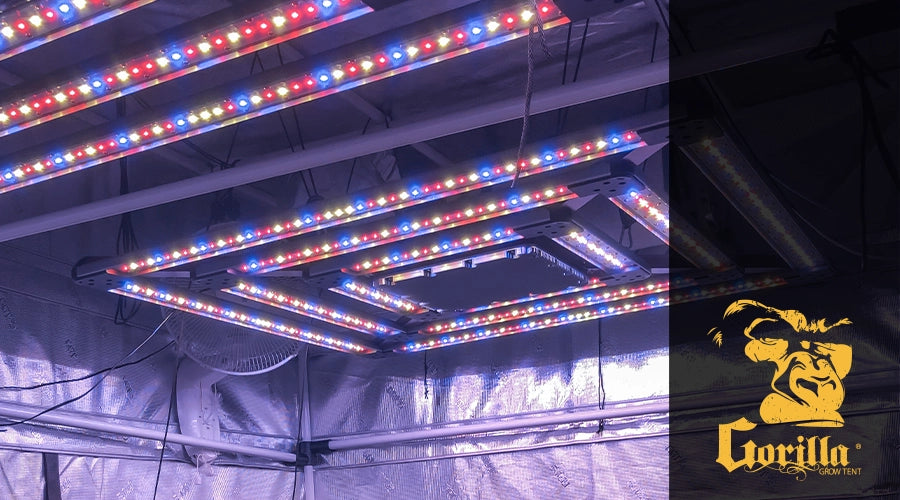
LED lights have several other benefits that make them ideal for indoor gardening. For example, they are compact and easy to install, which makes them an excellent choice for small-scale indoor gardens. LED grow lights can be mounted on a rack or hung from the ceiling, making them ideal for a range of indoor gardening setups, from small herb gardens to large-scale hydroponic systems.
How LED Lights Revolutionize Indoor Gardening
LED lights can also be used to create a specific light spectrum that is ideal for different plant species. Different plants have different light requirements, and LED lights can be customized to provide the ideal light spectrum for each type of plant. This means that indoor gardeners can grow a range of plant species under LED lights, from vegetables and herbs to flowering plants.
Another advantage of LED lights is that they are cool to the touch, which means they can be placed close to plants without causing heat damage. Traditional grow lights, such as high-pressure sodium and metal halide bulbs, emit a lot of heat, which can damage plants if they are placed too close. LED lights, on the other hand, emit very little heat, which makes them ideal for use in small, enclosed spaces.
LED lights are also easy to control and adjust, which allows indoor gardeners to fine-tune their growing conditions for optimal plant growth. Many LED grow lights come with built-in controls that allow gardeners to adjust the intensity and color spectrum of the light depending on the needs of their plants. This makes it easy to optimize growing conditions for different stages of plant growth, from seedling to harvest.
In addition, LED lights are available in a range of sizes and styles, which makes them suitable for a range of indoor gardening setups. For example, LED strip lights can be used to create a uniform light source for small-scale indoor gardens, while larger LED grow lights can be used for larger hydroponic setups or indoor garden rooms.
The Future of Indoor Gardening: LED Lights and Plant Growth
There are also several factors to consider when choosing LED lights for indoor gardening. One of the most important factors is the light spectrum the LED light emits. Plants require specific wavelengths of light for different stages of growth, and LED lights can be engineered to emit different wavelengths of light to meet those requirements.
Red light is essential for plant flowering and fruiting, while blue light is necessary for plant vegetative growth. Full-spectrum LED lights, which emit a range of wavelengths, can be used throughout the entire plant growth cycle, from seedling to harvest.
Another important factor to consider when choosing LED lights for indoor gardening is the wattage and output of the light. The wattage of the LED light determines how much energy it consumes, while the output determines the intensity of the light.
The size of the indoor garden and the type of plants being grown will determine the ideal wattage and output for the LED light. Larger gardens will require higher wattage and output to provide adequate light to all plants, while smaller gardens may be able to use lower wattage and output.
It is also important to consider the quality of the LED light. High-quality LED lights will last longer and provide more consistent light output than lower-quality lights. When choosing an LED light, it is important to look for a reputable manufacturer and read reviews from other indoor gardeners to ensure that the light is high quality and will meet the needs of the plants being grown.
LED lights are an excellent choice for indoor gardening. They provide the specific wavelengths of light that plants need for photosynthesis, are energy-efficient, long-lasting, and versatile, and can be customized to meet the needs of different plant species. With their compact size, cool operation, and easy adjustability, LED lights are a superior option for promoting plant growth in indoor environments.