How to Successfully Grow Fresh Vegetables Indoors Using Grow Lights
Introduction
Growing vegetables indoors with lights has transformed from a niche hobby into a mainstream gardening practice. In 2026, over 35% of urban households in the United States now grow at least some of their produce indoors, according to the National Gardening Association's latest survey.
Whether you live in an apartment without outdoor space, experience harsh winters, or simply want year-round access to fresh produce, indoor vegetable gardening offers a reliable solution. The key to success lies in understanding how artificial lighting replicates natural sunlight to fuel photosynthesis—the process plants use to convert light energy into growth.
This comprehensive guide draws from our 15+ years of experience helping indoor growers achieve impressive harvests. You'll learn exactly which vegetables thrive under grow lights, how to set up your indoor garden correctly, and the proven techniques that maximize your yields. By the end, you'll have the confidence and knowledge to grow crisp lettuce, juicy tomatoes, and fresh herbs regardless of the season or your outdoor conditions.
Understanding Grow Lights for Indoor Vegetable Production
Indoor vegetable cultivation requires artificial lighting that mimics the sun's spectrum. Without proper lighting, your plants simply cannot produce the energy needed for healthy growth and fruit production.
How Grow Lights Enable Photosynthesis
Photosynthesis requires specific light wavelengths measured in nanometers (nm). Plants primarily absorb blue light (400-500nm) for vegetative growth and red light (600-700nm) for flowering and fruiting. Full-spectrum LED grow lights deliver both wavelengths efficiently, making them ideal for vegetables.
The light intensity matters significantly. Vegetable plants need between 400-600 µmol/m²/s of Photosynthetic Photon Flux Density (PPFD) for optimal growth. This measurement indicates the amount of usable light reaching your plants each second.
If you're new to grow lights, our guide on how to use grow lights covers the fundamentals of setup, positioning, and timing for beginners.
LED vs. Other Grow Light Technologies in 2026
| Light Type | Energy Efficiency | Heat Output | Lifespan | Best For |
| LED | 2.5-3.0 µmol/J | Low | 50,000+ hours | All vegetables |
| Fluorescent | 1.0-1.5 µmol/J | Medium | 20,000 hours | Leafy greens, seedlings |
| HPS | 1.7 µmol/J | High | 10,000 hours | Fruiting vegetables |
| CMH | 1.9 µmol/J | High | 20,000 hours | Full-cycle growing |
LED technology dominates indoor vegetable growing in 2026 for good reason. Modern LEDs convert over 60% of electrical energy into usable plant light, compared to just 30% for traditional HPS systems. This efficiency translates directly into lower electricity bills and reduced heat management challenges.

Best Vegetables to Grow Indoors Under Lights
Not all vegetables perform equally under artificial lighting. Your success depends partly on choosing crops suited to indoor conditions.
Fast-Growing Leafy Greens (Harvest in 30-45 Days)
Leafy vegetables represent the easiest entry point for indoor growers. They require lower light levels (200-400 PPFD) and mature quickly.
- Lettuce (all varieties) – 30-day harvest
- Spinach – 40-day harvest
- Arugula – 35-day harvest
- Kale – 45-day harvest
- Swiss chard – 45-day harvest
- Microgreens – 7-14-day harvest
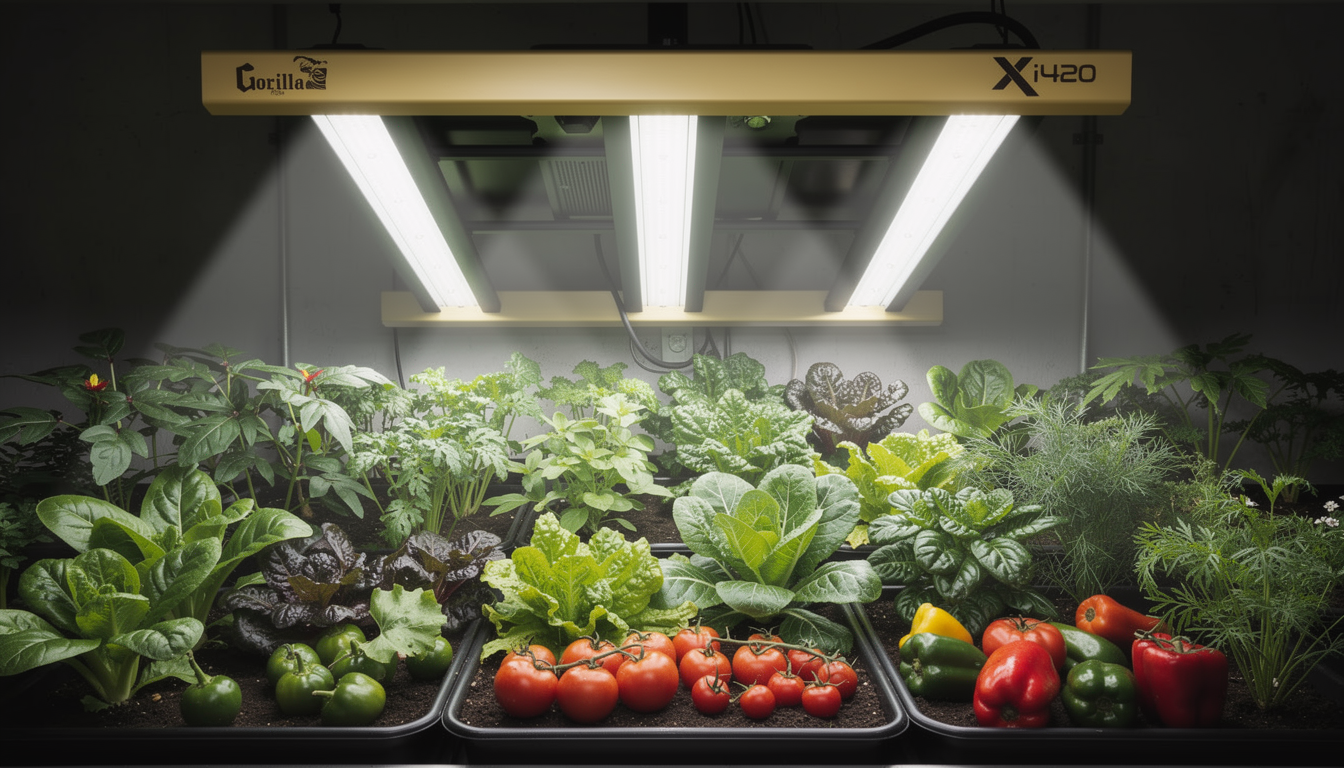
These crops grow successfully with just 10-12 hours of light daily. A single Gorilla Grow Tent setup can produce enough salad greens for a family of four year-round.
Fruiting Vegetables (60-90+ Days)
Tomatoes, peppers, and cucumbers require more light and patience but reward you with flavorful homegrown produce.
Requirements for fruiting vegetables:
- Light intensity: 500-600+ PPFD
- Daily light hours: 14-16 hours
- Support structures for vining plants
- Proper pollination (manual or fan-assisted)
Cherry tomatoes and compact pepper varieties perform exceptionally well indoors. Determinate tomato varieties like 'Tiny Tim' and 'Red Robin' stay manageable in size while producing abundant fruit.
For comprehensive information about selecting the right lighting, check out our article on the best grow light for indoor plants which covers spectrum requirements for different plant types.
Herbs and Specialty Crops
Fresh herbs deliver perhaps the highest value for indoor growers. Store-bought herbs cost $3-5 per small package, while homegrown herbs cost pennies per harvest.
Best indoor herbs:
- Basil (requires warmth and high light)
- Cilantro (cool temperatures, moderate light)
- Parsley (tolerates lower light)
- Mint (easy, but contain in separate pot)
- Chives (nearly indestructible)

Setting Up Your Indoor Vegetable Garden Step-by-Step
A proper setup ensures your plants receive consistent conditions for healthy growth. Follow this framework for reliable results.
Step 1 – Choose Your Growing Space
Select a location with:
- Access to electrical outlets (minimum 15-amp circuit)
- Temperature stability (65-75°F ideal)
- Adequate vertical clearance (minimum 5 feet for most vegetables)
- Easy water access
A dedicated Grow Tent Kit provides the optimal environment by containing light, controlling climate, and maximizing efficiency. These all-in-one systems include everything needed to start growing immediately.
Step 2 – Install Your Lighting System
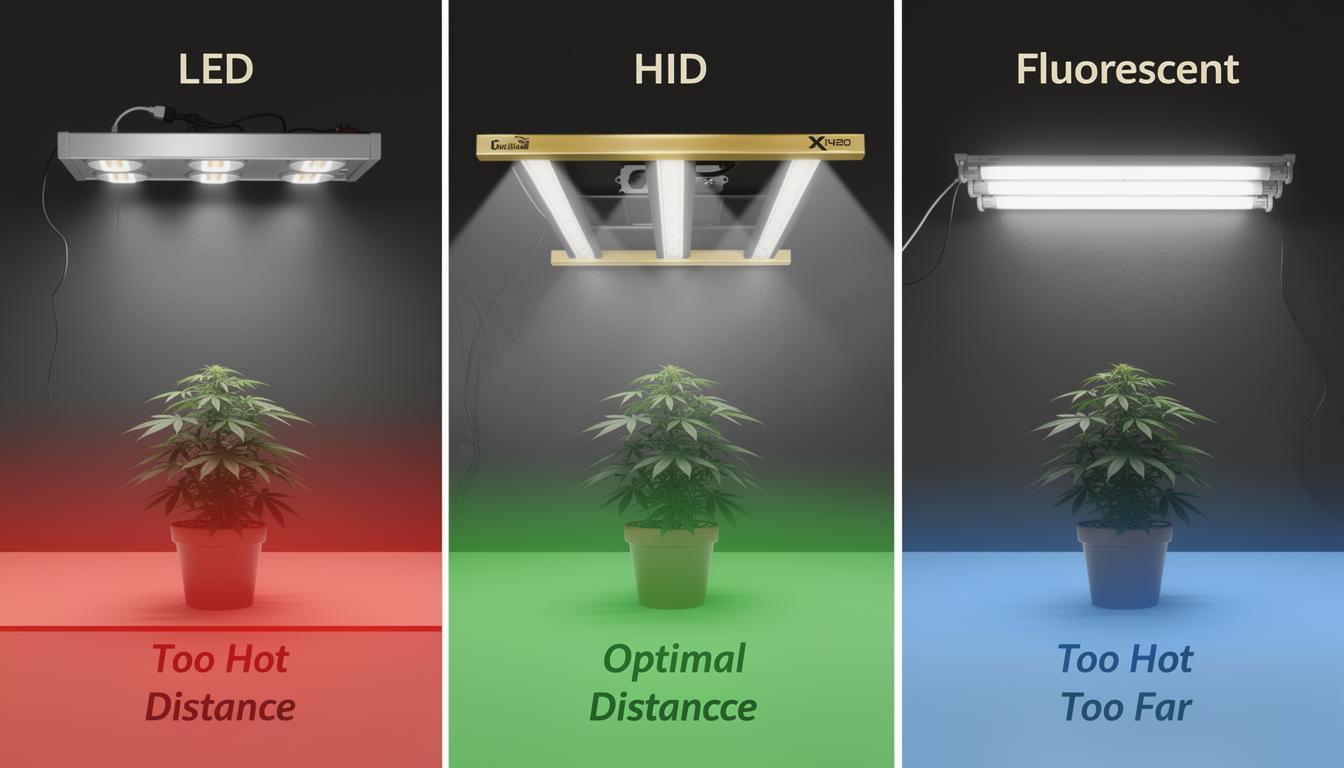
Position lights 12-24 inches above plant canopy for LEDs (closer for seedlings, further for mature plants). Use adjustable hangers to raise lights as plants grow.
Critical lighting schedule:
- Seedlings: 16-18 hours light / 6-8 hours dark
- Vegetative growth: 14-16 hours light / 8-10 hours dark
- Fruiting stage: 12-14 hours light / 10-12 hours dark
Invest in a programmable timer. Consistency matters more than total light hours. Our deep-dive on indoor grow lights explains how Kind LED full-spectrum technology optimizes plant development.
Step 3 – Establish Climate Control
Indoor vegetables thrive when you maintain:
- Daytime temperature: 70-80°F
- Nighttime temperature: 60-70°F
- Relative humidity: 50-70% for seedlings, 40-60% for mature plants
- Consistent airflow (small oscillating fan)
The Gorilla Grow Box offers a self-contained system that automates climate management, making it perfect for beginners who want hassle-free growing.
Step 4 – Select Growing Medium and Containers
Growing medium options:
- Potting mix with perlite (traditional, forgiving)
- Coco coir (excellent drainage, requires nutrients)
- Hydroponic systems (fastest growth, higher complexity)
Container size directly impacts plant size. Use minimum 3-gallon containers for tomatoes and peppers. Lettuce and herbs grow well in 1-gallon containers or smaller.

Maximizing Your Indoor Vegetable Yields
Experienced indoor growers consistently outperform beginners by applying these proven techniques.
Light Positioning and Coverage
The inverse square law governs light intensity: doubling the distance between light and plant reduces intensity by 75%. Keep your lights as close as possible without causing light burn (leaf bleaching or curling).
Signs of insufficient light:
- Stretched, leggy growth
- Pale green or yellowing leaves
- Slow growth rate
- Failure to flower or fruit
Signs of excessive light:
- Bleached or white patches on leaves
- Leaf curling or cupping
- Brown, crispy leaf edges
Nutrient Management for Indoor Vegetables
Indoor plants cannot access soil nutrients naturally. You must provide complete nutrition through fertilizers.
Essential macronutrients:
- Nitrogen (N) – Leaf and stem growth
- Phosphorus (P) – Root development and flowering
- Potassium (K) – Overall plant health and fruit quality
Start with half-strength fertilizer for seedlings. Increase to full strength as plants mature. Feed every 1-2 weeks for soil growing; daily for hydroponic systems.
Pollination Strategies for Fruiting Crops
Unlike outdoor gardens, indoor vegetables lack natural pollinators. For tomatoes, peppers, and cucumbers, you must assist pollination.
Effective pollination methods:
- Gently shake flowering plants daily
- Use an electric toothbrush on flower stems
- Direct a small fan toward flowering plants
- Hand-pollinate using a small brush
Without proper pollination, plants will flower but fail to produce fruit—a common frustration for new indoor growers.
Frequently Asked Questions About Growing Vegetables Indoors
Q1: How many hours of light do vegetables need to grow indoors?
Most vegetables require 12-16 hours of artificial light daily for healthy growth. Leafy greens like lettuce thrive with 10-12 hours, while fruiting vegetables like tomatoes need 14-16 hours. Always provide a dark period, as plants perform essential functions during darkness.
Q2: Can any vegetable grow indoors under lights?
While most vegetables can technically grow indoors, some perform significantly better than others. Leafy greens, herbs, cherry tomatoes, peppers, and bush beans excel under grow lights. Large plants like corn, pumpkins, and full-size watermelons require too much space and light for practical indoor growing.
Q3: What color grow light is best for vegetables?
Full-spectrum LED lights containing both blue (400-500nm) and red (600-700nm) wavelengths work best for vegetables. Blue light promotes compact, leafy growth while red light supports flowering and fruiting. Modern full-spectrum LEDs appear white or slightly pink and support all growth stages.
Q4: How much does it cost to grow vegetables indoors with lights?
Initial setup costs range from $200-800 depending on scale and equipment quality. Monthly electricity costs average $15-50 for a small-to-medium setup using efficient LEDs. Most growers recover their investment within the first year through savings on store-bought produce.
Q5: Do vegetables grown under lights taste different?
Indoor-grown vegetables often taste better than store-bought produce because you harvest at peak ripeness. Commercial vegetables are picked early for shipping durability, sacrificing flavor. Proper lighting, nutrition, and harvest timing ensure your indoor vegetables develop full flavor compounds.
Q6: How close should grow lights be to vegetable plants?
LED grow lights should hang 12-24 inches above vegetable plants, depending on light intensity and plant stage. Keep lights closer (12-18 inches) for seedlings and leafy greens. Maintain greater distance (18-24 inches) for mature fruiting plants. Adjust based on plant response.
Q7: Can I grow vegetables indoors year-round?
Yes, indoor growing with lights enables true year-round vegetable production regardless of outdoor weather. You control temperature, light, and humidity independently of seasons. Many indoor growers maintain continuous harvests by staggering plantings every 2-3 weeks.
Conclusion: Start Your Indoor Vegetable Garden Today
Growing vegetables indoors with lights offers a reliable path to fresh, flavorful produce regardless of your outdoor space or climate. Here's what you've learned:
- LED grow lights provide the most efficient, cost-effective lighting for indoor vegetables in 2026
- Leafy greens and herbs offer the easiest starting point with harvests in 30-45 days
- Proper setup including controlled environment, adequate lighting, and consistent care determines your success
- Climate control and nutrition require attention but become routine with practice
- Year-round growing is absolutely achievable with the right equipment and knowledge
Your next step is simple: assess your space, choose your first crops, and invest in quality equipment that will serve you for years. Starting small with herbs or lettuce builds confidence before expanding to tomatoes and peppers.
👉 Shop Complete Grow Tent Kits – Everything You Need in One Package