How to Lower Humidity in a Grow Tent: The Ultimate Guide
Maintaining the right humidity levels in a grow tent is essential for healthy plant growth. Too much humidity can lead to mold, mildew, bud rot, and slow plant growth.
If you’re struggling with high humidity in your grow tent, this guide will cover:
✅ Why humidity control is important
✅ Optimal humidity levels for each growth stage
✅ Proven methods to reduce humidity effectively
✅ Common mistakes and how to avoid them
Why Is Humidity Control Important in a Grow Tent?
Humidity plays a crucial role in how plants absorb water and nutrients. High humidity can:
🚨 Slow down transpiration, leading to nutrient deficiencies
🚨 Cause mold, mildew, and bud rot in flowering plants
🚨 Attract pests like fungus gnats and spider mites
Keeping humidity at ideal levels will ensure faster growth, stronger plants, and bigger yields.
Optimal Humidity Levels for Plants
📌 Seedling Stage: 65-70% (High humidity helps root development)
📌 Vegetative Stage: 50-60% (Encourages strong leaf and stem growth)
📌 Flowering Stage: 40-50% (Prevents mold and bud rot)
📌 Late Flowering/Harvest: 30-40% (Enhances resin production)
🌡️ Too much humidity = Mold & slow growth
🔥 Too little humidity = Stunted growth & dry plants
How to Lower Humidity in a Grow Tent
If humidity is too high, follow these proven methods to fix the issue:
1. Improve Ventilation & Air Circulation
💨 Why? Good airflow removes excess moisture and prevents stagnant air.
✅ How to Fix:
✔ Use an exhaust fan to pull humid air out.
✔ Increase intake fan speed for better fresh air circulation.
✔ Position oscillating fans to move air evenly around plants.
🔥 Pro Tip: Set up a negative pressure system (exhaust fan stronger than intake fan) to control humidity better.
2. Use a Dehumidifier
💧 Why? A dehumidifier removes excess moisture from the air quickly.
✅ How to Fix:
✔ Place a small dehumidifier inside the tent.
✔ If space is tight, use a dehumidifier outside the tent in the grow room.
✔ Set the dehumidifier to maintain 40-50% RH during flowering.
🔥 Pro Tip: Choose a dehumidifier with auto shut-off to maintain stable humidity levels.
3. Reduce Watering Frequency
🚿 Why? Overwatering increases humidity as excess water evaporates.
✅ How to Fix:
✔ Water plants only when the top 1-2 inches of soil are dry.
✔ Use fabric pots (like Smart Pots) to improve aeration and reduce excess moisture.
✔ Water in the morning so moisture evaporates throughout the day.
🔥 Pro Tip: Avoid watering at night, as humidity rises in dark periods.
4. Increase Grow Tent Temperature
🌡️ Why? Warmer temperatures help reduce humidity by improving evaporation.
✅ How to Fix:
✔ Increase tent temperature by 2-3°F to lower humidity.
✔ Use LED grow lights instead of HPS to reduce heat buildup.
✔ Run exhaust fans at higher speeds to remove warm, moist air.
🔥 Pro Tip: Keep day temps at 75-82°F and night temps at 65-75°F for best results.
5. Use a Silica-Based Absorbent (DampRid or Rock Salt)
🧂 Why? Silica gel and rock salt absorb excess moisture.
✅ How to Fix:
✔ Place DampRid, rock salt, or silica packets in the tent.
✔ Replace every 1-2 weeks as they become saturated.
🔥 Pro Tip: This is a low-cost, passive way to reduce humidity without fans or dehumidifiers.
6. Reduce Humidity from Air Intake
🔄 Why? Bringing in humid air increases tent humidity.
✅ How to Fix:
✔ Ensure intake air comes from a cool, dry source (not a humid basement).
✔ If the grow room is humid, place a dehumidifier outside the tent.
✔ Run AC or a fan in the grow room to keep air dry before it enters the tent.
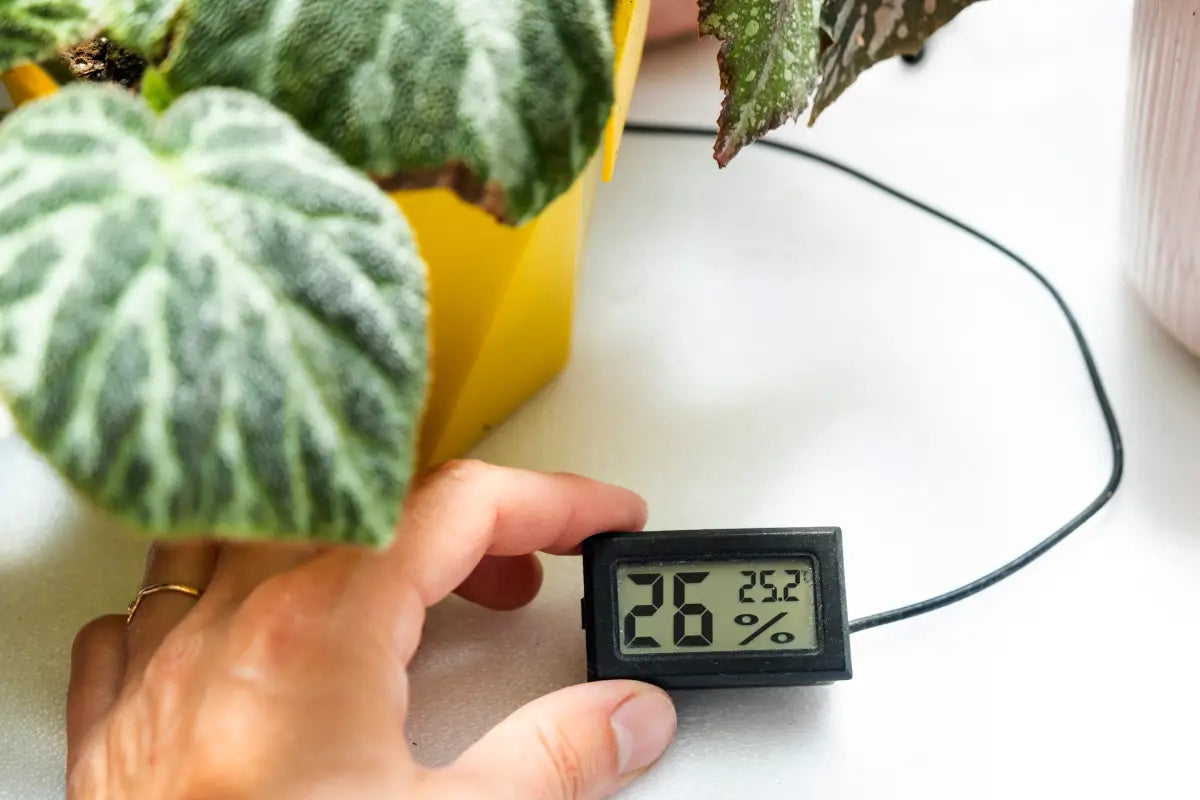
🔥 Pro Tip: Measure RH% in the intake air to see if it’s adding to the problem.
7. Defoliate & Prune Excess Leaves
🍂 Why? Large, dense canopies trap moisture and increase humidity.
✅ How to Fix:
✔ Remove lower leaves to improve airflow.
✔ Thin out excess foliage to reduce trapped humidity.
✔ Use low-stress training (LST) to keep an open canopy.
🔥 Pro Tip: Always prune before watering to avoid excess humidity buildup.
8. Avoid Humidifiers & Wet Trays
🚫 Why? If humidity is too high, humidifiers & wet trays make it worse.
✅ How to Fix:
✔ Remove humidifiers or water trays from the grow tent.
✔ Ensure runoff water drains properly after watering.
🔥 Pro Tip: If your humidity is still too high, check for leaks in your tent setup.
Common Grow Tent Humidity Mistakes (And How to Avoid Them)
🚨 Mistake #1: Running Exhaust & Intake Fans at the Same Speed
🚫 This creates stagnant air pockets that trap humidity.
✔ Solution: Increase exhaust fan speed higher than the intake fan.
🚨 Mistake #2: Ignoring Nighttime Humidity Spikes
🚫 Humidity rises at night as temperatures drop.
✔ Solution: Run an exhaust fan during dark periods or use a dehumidifier.
🚨 Mistake #3: Overwatering Plants
🚫 Too much water increases soil evaporation, leading to high humidity.
✔ Solution: Water only when the soil is dry.
🚨 Mistake #4: Placing a Dehumidifier Inside the Tent Without an Exhaust Fan
🚫 A dehumidifier alone won’t lower humidity effectively without airflow.
✔ Solution: Always pair a dehumidifier with an exhaust system.
AQs About Lowering Humidity in a Grow Tent
1. What is the fastest way to reduce humidity in a grow tent?
💨 Increase exhaust fan speed, use a dehumidifier, and reduce watering.
2. How do I lower humidity at night?
🌙 Keep exhaust fans running and slightly increase temperature.
3. Does airflow lower humidity?
💨 Yes! More air movement = faster evaporation & lower humidity.
4. What humidity level causes bud rot?
🚨 Above 55% RH in flowering stage increases the risk of bud rot and mold.
5. Should I keep a dehumidifier inside or outside the tent?
✅ Inside for small tents, outside for large tents to control intake air humidity.
Final Thoughts: How to Keep Humidity Low in a Grow Tent
✅ Best Ways to Lower Humidity:
✔ Use an exhaust fan & increase airflow
✔ Add a dehumidifier (inside or outside the tent)
✔ Reduce watering frequency & improve drainage
✔ Increase temperature slightly to evaporate moisture
✔ Use silica-based moisture absorbers (DampRid or rock salt)
✔ Thin out plant foliage to improve airflow
By following these proven methods, you’ll prevent mold, mildew, and bud rot, ensuring your plants stay healthy and produce higher yields! 🌿💨
🚀 Start optimizing your grow tent humidity today!