How to Choose the Perfect Plant Cabinet with Grow Lights for Your Home
Introduction
Growing plants indoors has never been more accessible—or more rewarding. A plant cabinet with grow lights creates a self-contained ecosystem right in your living space, letting you cultivate herbs, vegetables, tropicals, and seedlings regardless of outdoor weather conditions.
According to the National Gardening Association's 2025 survey, 55% of American households now participate in some form of indoor gardening, a 23% increase since 2020. This surge reflects our collective desire for fresh food, improved air quality, and the mental health benefits that nurturing plants provides.
Whether you're a seasoned grower frustrated by inconsistent natural light or a complete beginner seeking a foolproof setup, this guide delivers everything you need. We'll cover essential specifications, setup techniques, and equipment recommendations based on real-world testing. By the end, you'll understand exactly what makes a plant cabinet with grow lights successful—and how to build or buy one that thrives.
At Gorilla Grow Tent, we've spent over a decade engineering controlled growing environments. This guide reflects our hands-on experience helping thousands of indoor gardeners succeed.
What Is a Plant Cabinet with Grow Lights?
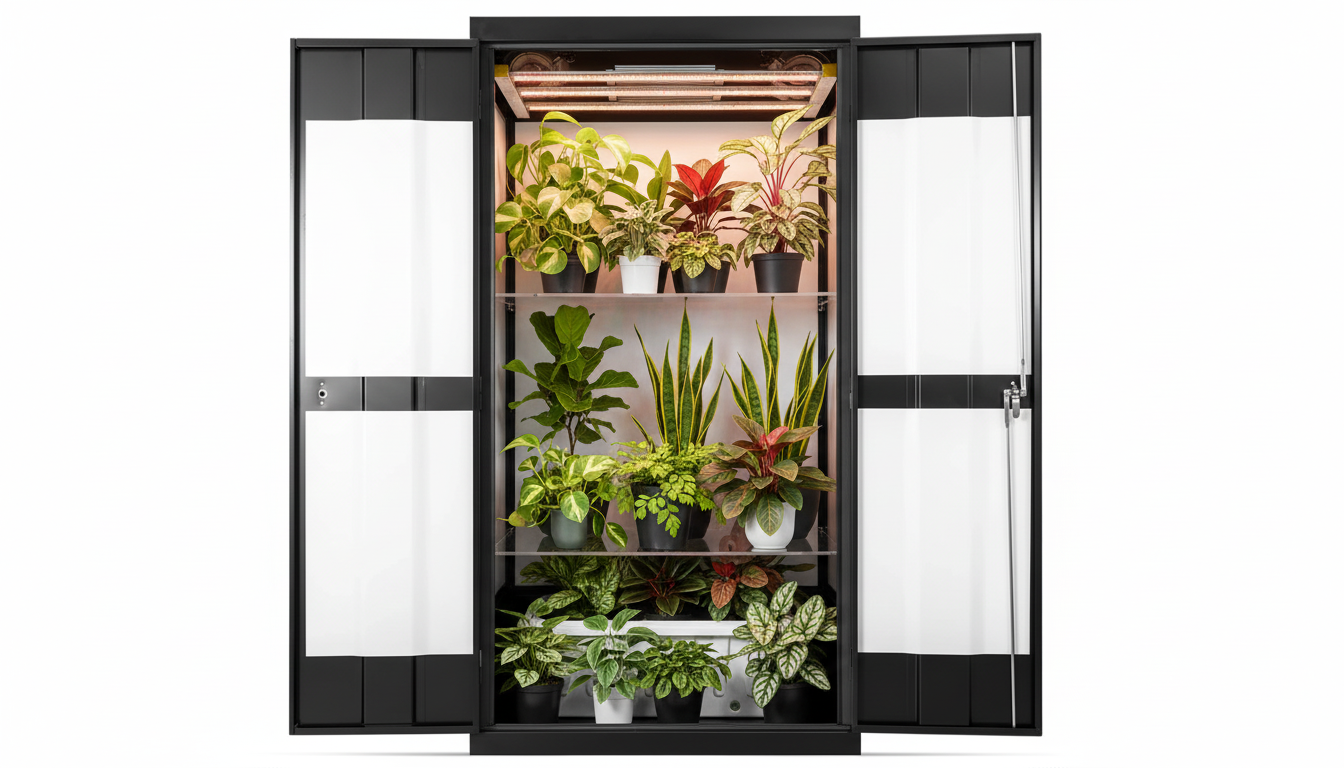
A plant cabinet with grow lights is an enclosed growing space that combines storage furniture design with integrated artificial lighting. Unlike open shelving units, these cabinets create a controlled microenvironment where you manage light, humidity, and temperature independently from your home's ambient conditions.
Key Components of a Quality Plant Cabinet
- Grow lights: LED panels or bars providing full-spectrum illumination (typically 3,000K-6,500K color temperature)
- Reflective interior: Mylar or white surfaces maximizing light distribution (ideally 90%+ reflectivity)
- Ventilation system: Intake and exhaust ports maintaining airflow and preventing heat buildup
- Adjustable shelving: Customizable heights accommodating plants at various growth stages
- Light-tight construction: Sealed seams preventing light leaks and maintaining photoperiod control
Definition: Photoperiod refers to the duration of light exposure plants receive daily. Most vegetables require 14-16 hours, while flowering plants may need specific light/dark ratios.
The enclosed design distinguishes plant cabinets from simple grow light setups. This containment allows precise environmental control—a critical factor for consistent results.

Benefits of Using an Enclosed Plant Cabinet vs. Open Shelving
When comparing growing options, enclosed cabinets consistently outperform open alternatives. Here's why serious indoor gardeners prefer contained systems.
Environmental Control Advantages
| Factor | Open Shelving | Enclosed Cabinet |
|---|---|---|
| Light efficiency | 40-60% (light escapes) | 90-95% (reflected back) |
| Temperature stability | Varies with room | ±3°F consistency |
| Humidity control | Difficult | Easily maintained |
| Pest protection | Minimal | Excellent barrier |
| Energy costs | Higher (compensating losses) | 30-40% lower |
Enclosed cabinets also eliminate light pollution in your living space. You won't disturb sleep patterns or deal with harsh grow light glare during evening hours.
Space Optimization and Aesthetics
Modern plant cabinets integrate seamlessly into home décor. They look like furniture—not industrial equipment. This matters when your growing space shares room with daily living.
For those needing larger capacity, a Gorilla Large Grow Tent offers commercial-grade construction while maintaining a surprisingly compact footprint. These setups excel when you've outgrown cabinet-sized systems but still need indoor control.
How to Choose the Right Grow Lights for Your Plant Cabinet
Light quality determines your growing success more than any other single factor. Understanding specifications helps you select equipment that matches your plants' needs.
Understanding Light Spectrum and PAR Values
Plants use light differently than humans perceive it. Photosynthetically Active Radiation (PAR) measures light in the 400-700 nanometer range—wavelengths plants actually absorb for photosynthesis.
Key metrics to evaluate:
- PPFD (Photosynthetic Photon Flux Density): Measured in μmol/m²/s; seedlings need 200-400, mature vegetables need 400-600
- Spectrum composition: Full-spectrum LEDs covering blue (vegetative growth) and red (flowering/fruiting) wavelengths
- Efficacy: Measured in μmol/J; modern LEDs achieve 2.5-3.0 μmol/J efficiency
Research published in the Journal of the American Society for Horticultural Science (2024) confirms that full-spectrum LED systems produce 27% higher yields compared to single-spectrum alternatives in controlled cabinet environments.
For comprehensive guidance on lighting technology, our article on Full Spectrum LED Grow Lights explains why these systems have become the industry standard.
Sizing Your Lights Correctly
Match light wattage to cabinet dimensions:
| Cabinet Size | Recommended Wattage | Coverage Area |
|---|---|---|
| 2' x 2' | 100-150W | 4 sq ft |
| 2' x 4' | 200-300W | 8 sq ft |
| 3' x 3' | 250-350W | 9 sq ft |
| 4' x 4' | 400-500W | 16 sq ft |
Pro tip: Position lights 12-24 inches above plant canopy. Adjust height as plants grow to maintain optimal PPFD levels without causing light burn.

Step-by-Step Plant Cabinet Setup Guide
Step 1 – Choose Your Location
Select a spot meeting these criteria:
- Stable ambient temperature (65-75°F ideal)
- Access to electrical outlet (dedicated circuit preferred)
- Level flooring supporting weight when loaded
- Proximity to water source for easy maintenance
Avoid locations near heating vents, exterior doors, or direct sunlight exposure. Temperature fluctuations stress plants and complicate environmental control.
Step 2 – Install Reflective Materials
Line interior surfaces with reflective material before adding equipment. Options include:
- Mylar film: 90-95% reflectivity, affordable, easy installation
- Flat white paint: 85-90% reflectivity, durable, no tearing
- Panda film: Black/white poly, 90% reflectivity, moisture resistant
Gorilla Grow Tent products feature diamond-reflective interior technology achieving maximum light distribution without hotspots—a design element that significantly boosts growing efficiency.
Step 3 – Mount and Configure Grow Lights
Secure lights to cabinet ceiling using manufacturer-provided hardware. Ensure:
- Even coverage across growing area
- Adjustable hanging height (ratchet hangers work well)
- Timer connection for automated photoperiod control
If you're starting seeds, our guide on Grow Lights for Seed Starting provides specific intensity recommendations for delicate seedlings.
Step 4 – Establish Ventilation
Install small inline fans providing air exchange. Calculate CFM (cubic feet per minute) needs:
Formula: Length × Width × Height × 1.5 = Required CFM
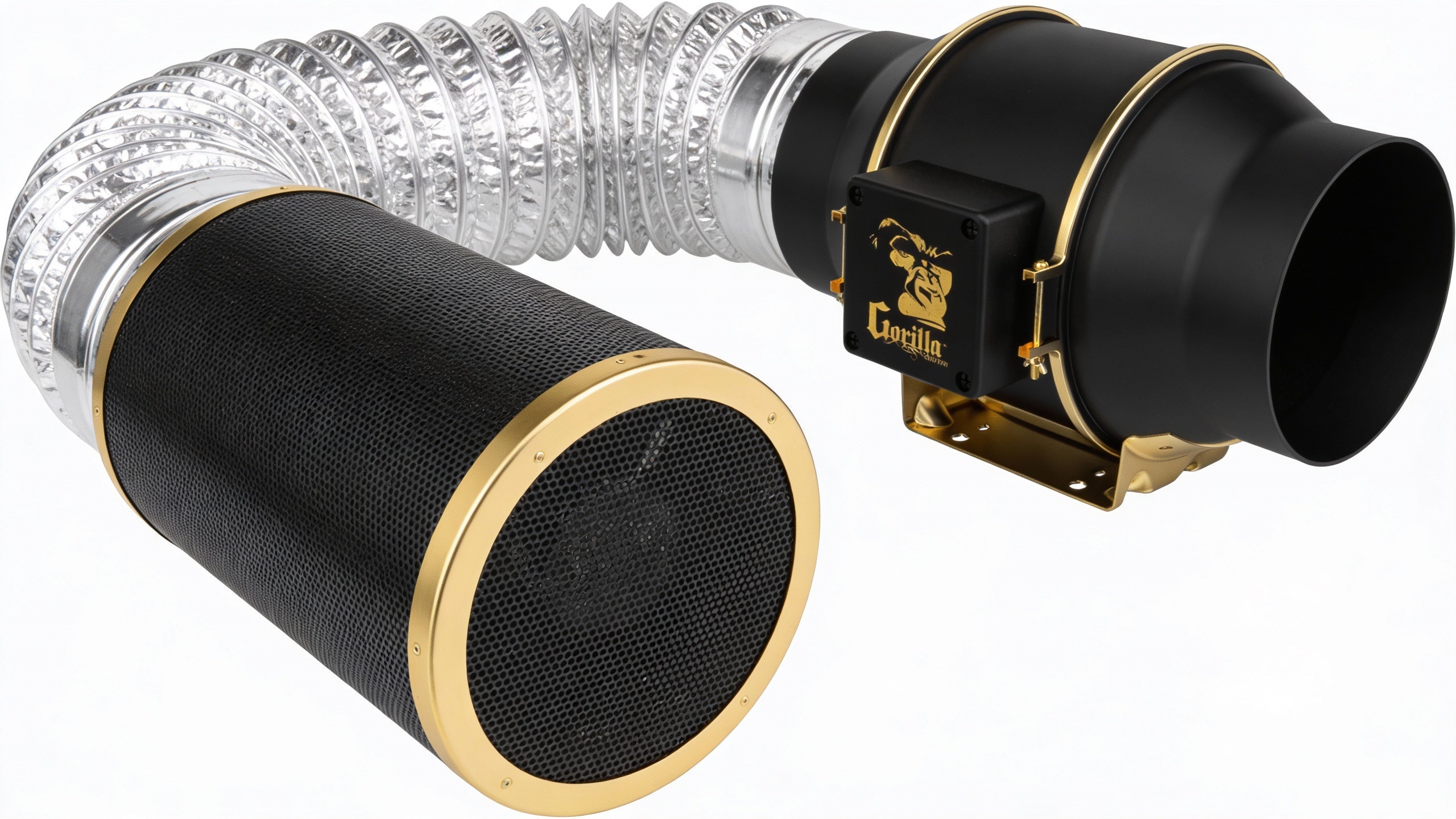
A 2' × 4' × 5' cabinet needs approximately 60 CFM minimum. Add carbon filtration if odor control matters for your application.
Step 5 – Add Growing Infrastructure
Complete your setup with:
- Waterproof trays catching runoff
- Humidity/temperature monitor
- Small oscillating fan for air circulation
- Timer-controlled power strip
Best Plants for Cabinet Growing
Certain species thrive in enclosed cabinet environments. Match your choices to available space and light intensity.
Ideal Candidates for Plant Cabinets
Herbs (compact, fast-growing):
- Basil, cilantro, parsley, mint, chives
- Harvest-ready in 4-6 weeks from seed
Leafy greens (high yield per square foot):
- Lettuce varieties, spinach, arugula, kale
- Continuous harvest with cut-and-come-again method
Compact vegetables (determinate varieties):
- Cherry tomatoes, peppers, dwarf beans
- Require stronger light (500+ PPFD)
Tropicals and houseplants:
- Pothos, philodendrons, prayer plants
- Lower light requirements (150-300 PPFD)
For comprehensive indoor cultivation information, explore The Best Indoor Grow Lights for Your Plants to match lighting to specific plant requirements.

Frequently Asked Questions About Plant Cabinets with Grow Lights
How much does a plant cabinet with grow lights cost?
Budget setups start around $150-300 for basic enclosures with entry-level LED lights. Mid-range systems with quality components run $400-800. Professional-grade cabinets with premium lighting exceed $1,000. Consider a Grow Box | Self-Contained System for all-in-one convenience with guaranteed component compatibility.
How many hours should grow lights run in a plant cabinet?
Most edible plants require 14-16 hours of light daily during active growth. Seedlings benefit from 16-18 hours. Always provide a dark period—plants perform essential metabolic processes during "night" hours. Use programmable timers for consistent scheduling.
Can I build a plant cabinet from a regular wardrobe or cabinet?
Yes, repurposing furniture works well with proper modifications. Line interior surfaces with reflective material, add ventilation ports, and install appropriate grow lights. Ensure construction handles humidity without warping. Many successful growers convert IKEA cabinets or old armoires.
What temperature should I maintain inside my plant cabinet?
Maintain 70-80°F during light hours and 60-70°F during dark periods for most plants. LED grow lights generate less heat than older technologies, but monitor temperatures with a digital thermometer. Add ventilation if readings consistently exceed 85°F.
Do plant cabinets need drainage systems?
Waterproof trays beneath containers handle normal watering runoff. For larger operations or hydroponic setups, install drain-to-waste systems with small reservoirs. Always protect cabinet flooring from moisture damage with waterproof barriers.
How often should I replace grow lights in my plant cabinet?
Quality LED grow lights maintain effective output for 50,000+ hours—approximately 8-10 years at 16 hours daily. Replace lights when you notice reduced growth rates, dimming output, or visible LED failures. Lower-quality lights may degrade faster, typically requiring replacement after 2-3 years.
What's the difference between a grow tent and a plant cabinet?
Grow tents use collapsible fabric construction with metal framing, offering easy setup and affordability. Plant cabinets feature rigid construction resembling furniture, integrating better into living spaces. Tents provide more size options; cabinets offer superior aesthetics. The New Grow Tent Kit represents an excellent middle-ground with complete equipment packages.
Conclusion: Start Growing with Confidence
Creating a successful plant cabinet with grow lights requires understanding five essential elements: proper enclosure construction, appropriate light specifications, adequate ventilation, correct plant selection, and consistent environmental monitoring.
Key takeaways from this guide:
- Enclosed cabinets outperform open shelving with 30-40% better light efficiency
- Full-spectrum LED lights with 200-600 PPFD suit most indoor plants
- Proper ventilation (CFM = L×W×H×1.5) prevents heat and humidity problems
- Cabinet growing suits herbs, leafy greens, compact vegetables, and tropicals
- Quality equipment pays for itself through longevity and better results
Don't let another season pass watching grocery prices climb while your potential growing space sits unused. The time to start indoor gardening is now—while 2026's best equipment remains readily available.