How a Wireless Temperature and Humidity Sensor Transforms Your Grow Tent Results
Introduction
Are you tired of guessing your grow tent's climate conditions? A wireless temperature and humidity sensor eliminates the guesswork and puts precision control at your fingertips.
Indoor growers who monitor environmental conditions see up to 30% better yields compared to those who don't track climate data, according to 2025 controlled environment agriculture studies. That's because plants respond dramatically to temperature swings and humidity fluctuations—often before you can see visible damage.
I've tested dozens of monitoring solutions over the past eight years of indoor growing. The difference between basic thermometers and laboratory-grade wireless sensors is genuinely transformative. You'll catch problems hours before they become disasters.
This guide covers everything you need to know about wireless temperature and humidity sensors in 2026. You'll learn how these devices work, where to place them, and how to integrate them with your grow tent automation system. Whether you're a beginner or experienced cultivator, you'll find actionable strategies to optimize your growing environment.
Let's dive into the science and practical application of climate monitoring.
What Is a Wireless Temperature and Humidity Sensor?
A wireless temperature and humidity sensor is an electronic device that measures ambient air temperature and relative humidity, then transmits data wirelessly to a receiver, smartphone app, or central controller. These sensors use WiFi, Bluetooth, or proprietary radio frequencies to communicate readings in real-time.
How Wireless Sensors Work
Modern sensors contain two primary components. A thermistor measures temperature by detecting resistance changes as heat fluctuates. A capacitive humidity element measures moisture by detecting changes in electrical capacitance as water vapor interacts with a polymer film.
The sensor's microprocessor converts these electrical signals into digital readings. It then transmits data via your home WiFi network to cloud servers. You access this information through mobile apps or web dashboards from anywhere in the world.

Key Specifications to Understand
When shopping for sensors, these specifications matter most:
| Specification | Budget Sensors | Premium Sensors (Lab-Grade) |
|---|---|---|
| Temperature Accuracy | ±1.0°F | ±0.4°F |
| Humidity Accuracy | ±5% RH | ±1.8% RH |
| Sampling Rate | Every 5 minutes | Every 10 seconds |
| Data Logging | 7 days | Unlimited cloud storage |
| Alert Speed | 2-5 minutes | Instant push notifications |
Laboratory-grade accuracy matters for serious growers. The Gorilla GXi Temperature & Humidity Sensor delivers ±0.4°F temperature accuracy and ±1.8% relative humidity precision—specifications that match professional research equipment.
WiFi vs. Bluetooth Sensors
WiFi sensors connect directly to your router. They offer unlimited range (anywhere with internet) and seamless smart home integration. The tradeoff is higher power consumption, typically requiring USB power or frequent battery changes.
Bluetooth sensors pair with nearby smartphones. Range is limited to approximately 30 feet. They're excellent for simple monitoring but lack remote access capabilities without a Bluetooth gateway.
For grow tent applications, WiFi sensors provide superior functionality. You'll want alerts at 3 AM when your HVAC fails—not just when you're standing in your grow room.
Why Grow Tents Need Precise Climate Monitoring
Temperature and humidity directly control plant metabolic processes. Getting these parameters wrong doesn't just slow growth—it can trigger pest infestations, mold outbreaks, and nutrient lockout.
The Science of Vapor Pressure Deficit (VPD)
VPD measures the "drying power" of air. It combines temperature and humidity into a single metric that predicts transpiration rates. Plants thrive within specific VPD ranges:
- Seedlings/Clones: 0.4–0.8 kPa
- Vegetative Growth: 0.8–1.2 kPa
- Flowering/Fruiting: 1.0–1.5 kPa
Our article on maintaining optimal conditions in growing tents explains how the Gorilla GXi sensor automatically calculates VPD so you don't need complex charts or manual formulas.
Real Consequences of Poor Monitoring
Without accurate sensors, growers commonly experience:
- Bud rot and powdery mildew from humidity spikes above 65% RH during flowering
- Stunted growth when temperatures drop below 65°F during lights-off periods
- Nutrient deficiencies caused by temperature-induced pH swings
- Spider mite explosions in hot, dry conditions above 85°F with low humidity
- Stretched, weak stems from excessive heat near light fixtures
I've personally lost entire crops to overnight humidity spikes. A $99 sensor would have prevented thousands of dollars in losses. That experience convinced me that monitoring isn't optional—it's essential insurance.

How to Set Up Your Wireless Temperature and Humidity Sensor
Proper sensor placement determines data accuracy. Position sensors incorrectly and you'll make decisions based on misleading information.
Step-by-Step Placement Guide
Follow this framework for optimal sensor positioning:
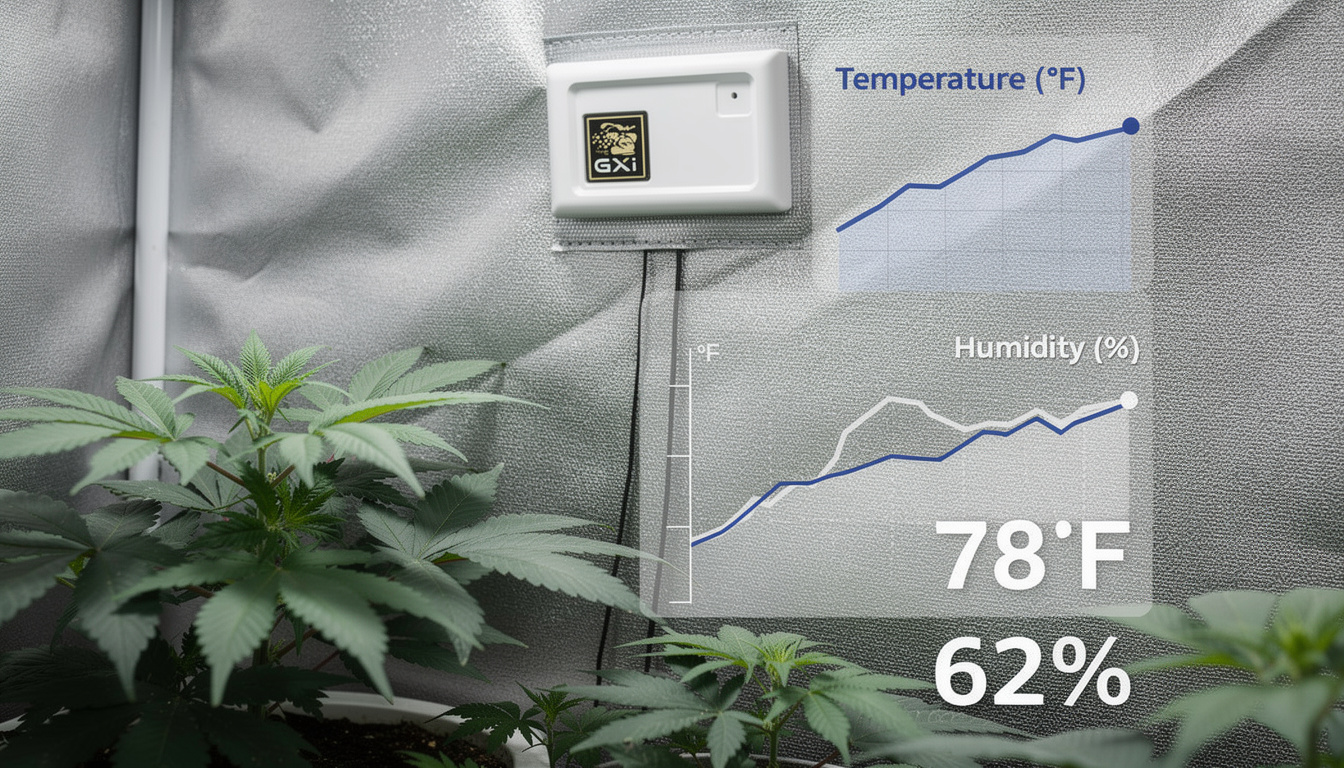
- Mount at canopy level. Place the sensor at the same height as your plant tops—not on the floor or ceiling. This location captures the microclimate your plants actually experience.
- Avoid direct light exposure. Radiant heat from grow lights artificially inflates temperature readings. Position sensors in slight shade or use a radiation shield.
- Stay away from fans and vents. Airflow directly hitting the sensor skews humidity readings downward. Place sensors in representative ambient air, not in air streams.
- Use multiple sensors for large tents. Tents larger than 4x4 feet benefit from two or more sensors. Monitor both canopy and root zone temperatures for complete data.
- Connect to your ventilation system. Pair your sensor with an Inline Duct Fan that responds automatically to environmental readings. This creates true closed-loop climate control.
Integrating Sensors With Smart Controllers
The real power of wireless sensors emerges through automation. Modern systems allow you to:
- Trigger exhaust fans when humidity exceeds your threshold
- Activate heaters when temperatures drop below setpoints
- Dim LED grow lights when heat climbs too high
- Receive instant smartphone alerts for any parameter deviation
- Log historical data to identify patterns and optimize settings
The Smart Duct Inline Fan article demonstrates how true wireless integration creates adaptive air management systems that maintain exact environmental levels automatically.
Calibration and Maintenance
Sensors drift over time. Verify accuracy every 6 months using these methods:
- Salt test for humidity: Sealed container with saturated salt solution reads 75% RH at room temperature
- Ice bath for temperature: Properly made ice bath reads 32°F (0°C)
- Cross-reference with known-accurate device: Laboratory thermometers provide reliable benchmarks
Replace batteries proactively in battery-powered units. Low voltage causes erratic readings before complete failure.
Choosing the Best Wireless Sensor for Your Grow Space
Not all sensors suit all applications. Consider your specific needs before purchasing.
Features That Matter for Indoor Growing
Prioritize these capabilities:
- VPD calculation: Eliminates manual math and provides actionable data
- Customizable alerts: Set your own thresholds, not just factory presets
- Historical graphing: Spot trends over days, weeks, and grow cycles
- Multiple device support: Monitor several tents from one app
- Data export: Download CSV files for detailed analysis
2026 Sensor Technology Advances
This year's sensors offer capabilities unavailable even 12 months ago:
- AI-powered predictions that forecast environmental changes before they happen
- Integration with CO2 monitors for complete atmospheric analysis
- Voice assistant compatibility with Alexa, Google Home, and Apple HomeKit
- Solar-powered options eliminating battery replacement entirely
Our coverage of indoor gardening trends in 2025 predicted many of these developments. The technology continues advancing rapidly.
Frequently Asked Questions About Wireless Temperature and Humidity Sensors
Q: How accurate does a grow tent sensor need to be?
For serious cultivation, seek sensors with ±0.5°F temperature accuracy and ±2% relative humidity accuracy. Budget sensors with ±2°F and ±5% RH margins introduce too much uncertainty for precise VPD management. Laboratory-grade accuracy prevents costly environmental mistakes.
Q: Where should I place a wireless sensor in my grow tent?
Mount your sensor at plant canopy height, away from direct light, fans, and ventilation ducts. This position captures the actual microclimate your plants experience. Avoid floor placement, which reads cooler, and ceiling placement, which reads warmer than canopy level.
Q: Can wireless sensors connect to grow tent automation systems?
Yes, WiFi-enabled sensors integrate with smart controllers, inline fans, humidifiers, and climate management systems. The best setups create closed-loop automation where equipment responds automatically to real-time sensor data without manual intervention.
Q: How often do wireless temperature and humidity sensors need calibration?
Calibrate sensors every 6 months for optimal accuracy. Use salt tests for humidity verification and ice baths for temperature checking. Some premium sensors include automatic calibration features that maintain accuracy without manual intervention.
Q: What's the difference between VPD and relative humidity?
Relative humidity measures moisture percentage in air at current temperature. VPD (Vapor Pressure Deficit) calculates the difference between current moisture and saturation point, factoring in temperature. VPD better predicts plant transpiration rates and is the preferred metric for professional cultivators.
Q: Do I need multiple sensors in one grow tent?
Tents 4x4 feet or smaller typically need one sensor positioned at canopy level. Larger tents benefit from multiple sensors to capture temperature stratification and humidity variations. Two sensors placed at opposite corners provide comprehensive coverage for 5x5+ spaces.
Q: How long do wireless sensor batteries last?
Battery life varies by model and transmission frequency. Typical WiFi sensors last 3-6 months on AA batteries with 60-second update intervals. USB-powered options eliminate battery concerns entirely. Low-battery alerts prevent unexpected monitoring gaps.
Conclusion: Take Control of Your Grow Environment Today
A wireless temperature and humidity sensor transforms guesswork into precision growing. You've learned that laboratory-grade accuracy (±0.4°F, ±1.8% RH) prevents costly environmental mistakes. Proper sensor placement at canopy level delivers reliable data your plants actually experience.
VPD monitoring—automatically calculated by premium sensors—optimizes transpiration throughout every growth stage. Integration with smart ventilation creates truly automated climate control.
Your action steps:
- Assess your current monitoring setup for accuracy gaps
- Choose a sensor with WiFi connectivity and VPD calculation
- Position at canopy height away from lights and fans
- Connect to your ventilation system for automated response
- Review historical data weekly to optimize settings
🚀 Ready to Upgrade Your Climate Monitoring?
Don't let another grow cycle suffer from environmental uncertainty.
The Gorilla GXi Temperature & Humidity Sensor delivers laboratory-grade accuracy with automatic VPD calculation, instant smartphone alerts, and seamless integration with Gorilla's complete grow tent ecosystem.
👉 Shop Temperature & Humidity Sensors Now — Your plants deserve precision monitoring.