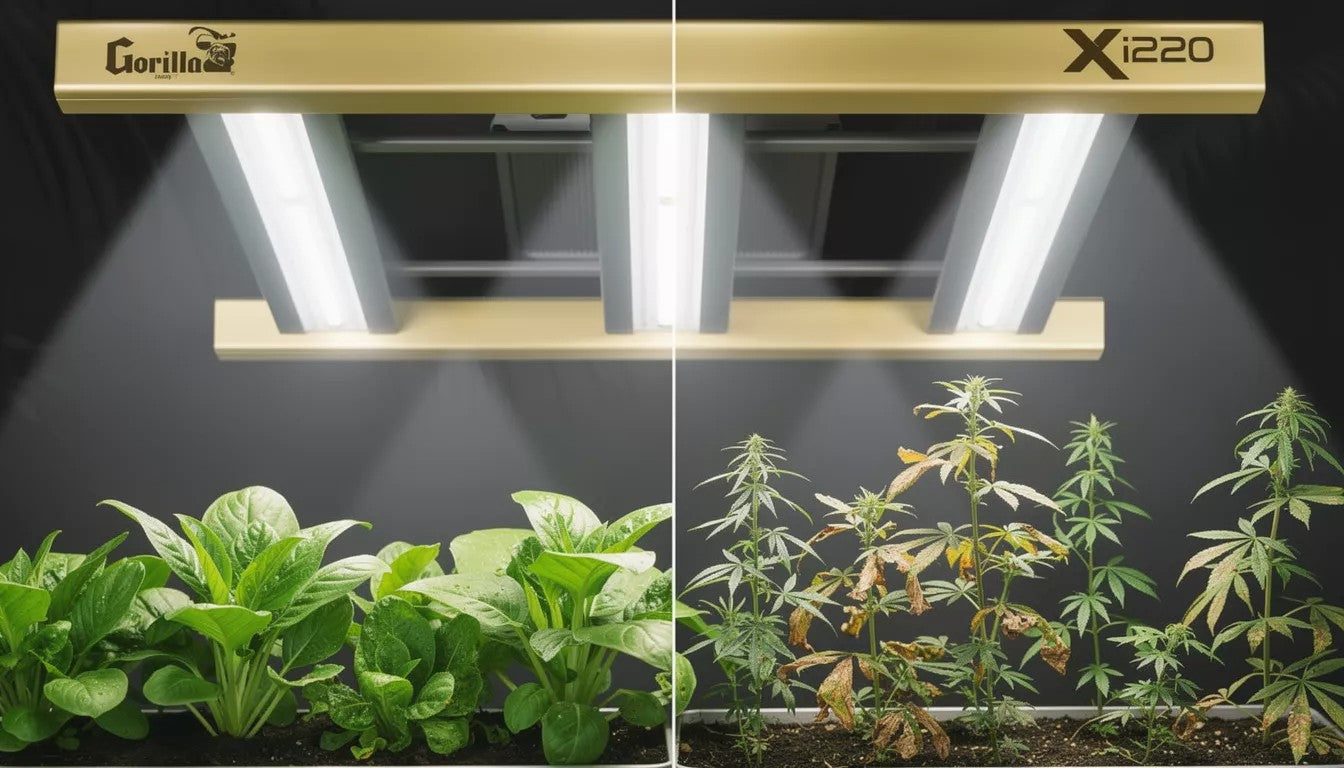
Best Grow Light for 4x4 Tent: The Ultimate Guide to Maximum Yields
Standing in front of your new 4x4 grow tent, you face one of the most crucial decisions in your indoor growing journey: which grow light will power your garden to maximum potential? Choose wrong and you'll waste hundreds of dollars on inadequate equipment that delivers disappointing harvests. Choose right and you'll unlock the full productive capacity of those 16 square feet, achieving professional-grade results that rival commercial operations.
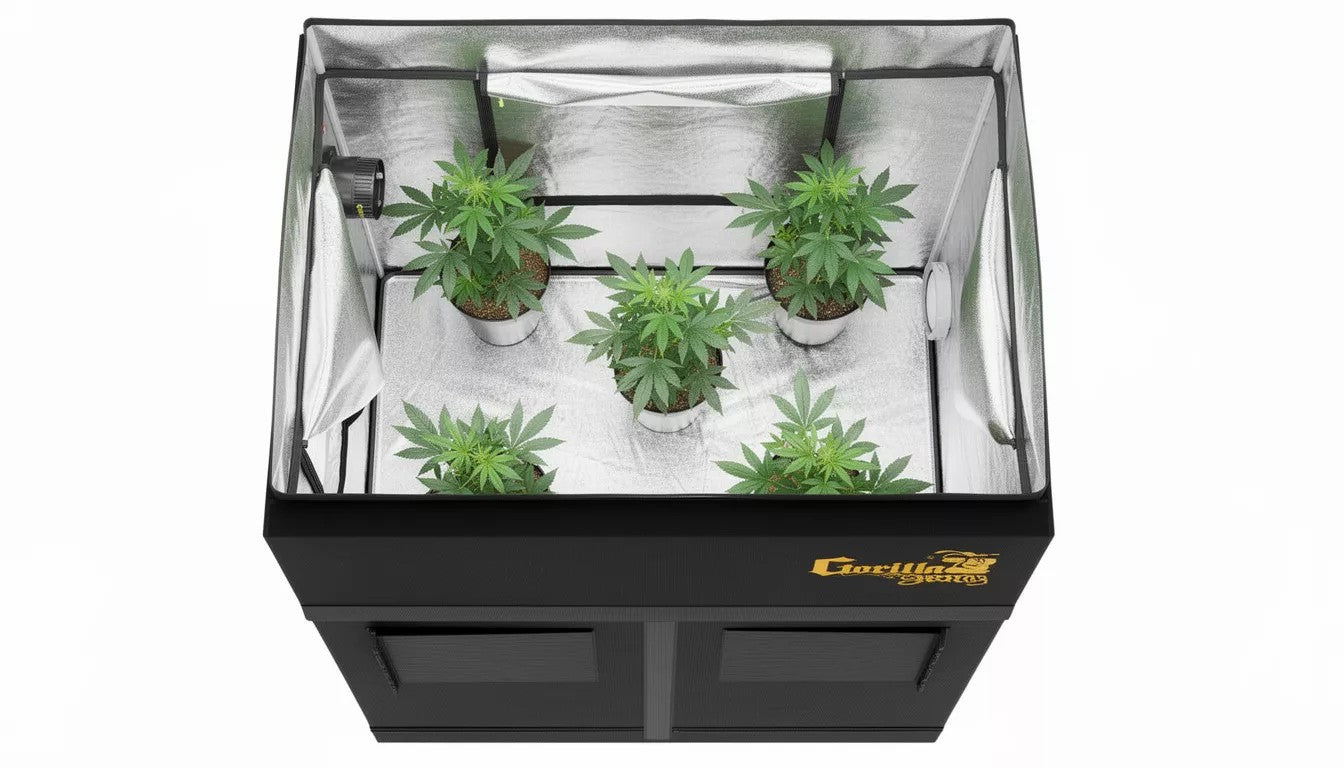
A 4x4 grow tent represents the sweet spot for serious home growers—large enough to produce substantial yields from 4-9 plants, yet compact enough for spare rooms, basements, or garages. This popular size offers incredible versatility, but only when paired with appropriate lighting that delivers adequate intensity across the entire canopy.
The challenge? The grow light market overflows with confusing specifications, misleading marketing claims, and wildly varying price points. Manufacturers tout "equivalent wattage" numbers that mean nothing, while others emphasize features you don't need while missing essentials you do. This comprehensive guide cuts through the confusion, revealing exactly what makes a grow light excel in 4x4 spaces.
From understanding wattage requirements and coverage patterns to comparing top systems and avoiding common mistakes, you'll discover practical, tested guidance that helps you select the perfect light for your specific growing goals. Whether you're cultivating vegetables, herbs, flowers, or specialized crops, the right 4x4 grow light transforms your tent from adequate to exceptional. Let's find your perfect match.
Understanding 4x4 Grow Tent Lighting Requirements
Before diving into specific product recommendations, understanding the science behind adequate lighting helps you make informed decisions.
The 30-50 Watts Per Square Foot Rule
A 4x4 tent provides 16 square feet of growing space. Industry experience and countless grow operations confirm that quality LED systems require approximately 30-50 watts per square foot for optimal results, depending on what you're growing.
Calculating Your Wattage Needs:
- Minimum adequate lighting: 16 sq ft × 30 watts = 480 watts
- Optimal performance: 16 sq ft × 40 watts = 640 watts
- Maximum intensity: 16 sq ft × 50 watts = 800 watts
Herbs and leafy greens thrive at the lower end (480-550 watts), while fruiting vegetables and flowering plants maximize yields at the higher end (640-800 watts). This wattage refers to actual power draw—not meaningless "equivalent wattage" marketing numbers.
For detailed guidance on power requirements, explore our comprehensive resource on what size grow light for 4x4 tent cultivation.
Understanding PPFD and Light Distribution
PPFD (Photosynthetic Photon Flux Density) measures the actual usable light reaching your plants, expressed as micromoles per square meter per second (μmol/m²/s). This metric matters far more than wattage alone.
Target PPFD Levels for 4x4 Tents:
- Seedlings and clones: 200-400 μmol/m²/s
- Vegetative growth: 400-600 μmol/m²/s
- Flowering and fruiting: 600-1000 μmol/m²/s
The best grow lights for 4x4 tents maintain consistent PPFD across the entire canopy rather than creating a bright center with dim edges. Edge-to-edge uniformity ensures all plants receive adequate light, maximizing overall yields rather than producing a few stellar center plants surrounded by disappointing edge specimens.
Single Fixture vs. Multiple Lights
You can illuminate a 4x4 space using either:
Single Fixture Approach: One 450-650 watt LED with a form factor designed for 4x4 coverage. This simplifies installation and typically costs less than multiple fixtures.
Multiple Fixture Approach: Two 250-350 watt LEDs positioned strategically. This often creates more uniform light distribution and allows independent height adjustment for different plant heights, though it requires more mounting hardware and electrical connections.
For most growers, a single high-quality fixture designed specifically for 4x4 coverage delivers the best combination of performance, simplicity, and value.

Top Grow Light Options for 4x4 Tents
After evaluating dozens of systems across various price points, these lights represent the best options for 4x4 grow tent cultivation.
Best Overall: Gorilla Xi750 LED Grow Light
The Gorilla Xi750 LED Grow Light delivers championship-caliber performance specifically engineered for 4x4 to 5x5 spaces. This 750-watt powerhouse represents the pinnacle of LED grow light technology, combining Northern California cultivation expertise with cutting-edge engineering.
Key Features:
- 750W actual power draw providing 46+ watts per square foot
- Targeted full-spectrum optimized for all growth stages
- Tri-channel control with independent UV/IR adjustment via smartphone app
- 2.7+ μmol/J efficacy delivering maximum usable photons per watt
- Even PPFD distribution maintaining 800-1000 μmol/m²/s across entire 4x4 canopy
- Samsung/Osram diodes ensuring reliability and longevity
- Wireless GXi connectivity for programmable schedules and sunrise/sunset ramping
- 3-year warranty backing commercial-grade build quality
The Xi750 excels in 4x4 tents by providing professional-level intensity without excessive wattage that wastes electricity. The smartphone app control eliminates the need for separate controllers, while tri-channel spectrum adjustment lets you optimize light quality throughout growth stages.
Best For: Serious growers seeking maximum yields, advanced control features, and professional results. The investment pays for itself through superior efficiency and yields that exceed budget alternatives by 20-30%.
Best Value: Gorilla Xi420 LED Grow Light
The Gorilla Xi420 LED Grow Light hits the sweet spot for 4x4 cultivation, delivering 420 watts of targeted full-spectrum illumination at a more accessible price point.
Key Features:
- 420W actual power draw (26 watts per square foot—perfect for the 4x4 footprint)
- Full-spectrum with UV/IR channels supporting all growth stages
- Optimized 2x4 to 3x4 coverage that extends comfortably to 4x4 spaces
- Wireless app control with programmable scheduling
- Professional-grade diodes ensuring consistent output for years
- Compact form factor fitting perfectly in standard 4x4 tents
- Exceptional efficiency consuming less power than competitors while delivering equivalent or better results
The Xi420 represents the ideal choice for most 4x4 growers. It provides adequate intensity for excellent yields across various plant types while operating efficiently and economically. The slightly lower wattage compared to the Xi750 still delivers outstanding results—this light generates professional harvests without excessive power consumption.
Best For: Home growers wanting professional features and performance at a reasonable investment. Perfect for vegetables, herbs, and moderate-intensity flowering plants.
Budget-Conscious Option: Consider Your Priorities
While we strongly recommend investing in quality lighting—the single most important component determining growing success—budget-conscious growers should prioritize these features when evaluating lower-priced alternatives:
Essential Features (Don't Compromise):
- True full-spectrum output (not just purple "blurple")
- Minimum 400-500W actual power draw for 4x4 spaces
- Reputable brand with verified reviews and support
- Minimum 2-year warranty
- Samsung or comparable diode quality
Nice-to-Have Features (Can Sacrifice for Budget):
- Smartphone app control (use manual timers instead)
- Advanced spectrum adjustment (full spectrum works fine)
- Premium aesthetics (function over form)
Avoid the cheapest fixtures claiming "1000W equivalent" while drawing only 100-150W actual power. These severely underpowered lights waste money producing disappointing results that frustrate growers and kill plants.
Key Features That Matter in 4x4 Grow Lights
Not all specifications deserve equal attention. Focus on features that genuinely impact growing success.
Full-Spectrum vs. Targeted Spectrum
Full-Spectrum LEDs produce white light containing all wavelengths from blue through red, plus UV and far-red. These versatile systems support plants through all growth stages without requiring multiple lights or spectrum changes. They also produce pleasant, natural-looking illumination that allows accurate visual assessment of plant health.
The full-spectrum LED grow lights recommended in this guide all provide complete spectrum coverage optimized specifically for plant cultivation—not generic white LEDs designed for home lighting.
Targeted Spectrum (Blurple) Lights emphasize blue and red wavelengths, appearing purple or pink. While plants can grow adequately under these lights, the unpleasant purple glow makes it difficult to assess plant health and most growers find them aesthetically unpleasant in home environments.
Verdict: Choose full-spectrum for versatility, pleasant working conditions, and complete support for all plant processes.
Heat Management and Efficiency
Quality LED systems operate cool enough to position 12-18 inches from canopy without burning foliage. This close positioning delivers maximum intensity—the key to explosive growth and heavy yields.
Check specifications for:
- Passive cooling (heat sinks) or active cooling (fans)
- Efficiency rating (μmol/J)—higher numbers mean more light per watt consumed
- Operating temperature ensuring comfortable tent conditions
The benefits of using LED grow lights become especially apparent in enclosed tents where heat management directly impacts success. Cool-running LEDs eliminate the expensive ventilation required by older HID systems.
Dimming and Spectrum Control
Advanced systems allow intensity adjustment and spectrum modification throughout growth stages. While not essential for beginners, these features provide optimization capabilities that advanced growers appreciate:
Dimming Capability: Reduce intensity for seedlings, then increase for mature plants without changing light height. Also useful for managing heat during summer months.
Spectrum Adjustment: The Gorilla GXi Series features tri-channel control allowing independent adjustment of main spectrum, UV, and IR wavelengths. This precision optimizes growth during vegetative phases and enhances flowering/fruiting during reproductive stages.
Build Quality and Warranty
A grow light represents a multi-year investment. Quality construction ensures reliable operation throughout thousands of hours while inadequate build quality leads to premature failure.
Evaluate:
- Diode brand (Samsung and Osram lead the industry)
- Driver quality (Mean Well sets the standard)
- Housing materials (aluminum heat sinks dissipate heat effectively)
- Warranty coverage (minimum 2 years; 3+ years indicates confidence)
Premium manufacturers like Gorilla Grow Tent stand behind their products with comprehensive warranties because they build lights that last. Budget manufacturers offer minimal warranties because they expect high failure rates.

Positioning Your 4x4 Grow Light Correctly
Buying the perfect light means nothing if you position it incorrectly. Proper placement maximizes your investment.
Optimal Hanging Height by Growth Stage
Seedlings and Clones: 24-36 inches above plant tops. Young plants with undeveloped root systems can't handle intense light. Position fixtures higher or dim to 40-60% intensity.
Vegetative Growth: 18-24 inches for most plants. Established plants with robust roots utilize increased intensity for rapid foliage development.
Flowering and Fruiting: 12-18 inches for high-light plants producing flowers or fruit. This closer positioning delivers maximum intensity translating to denser flowers and heavier yields.
These distances serve as starting points. Monitor plants closely and adjust based on response:
Signs of Excessive Light:
- Leaf bleaching or pale patches
- Foliage curling or cupping downward
- Brown, crispy leaf edges
- Stunted growth despite good conditions
Signs of Insufficient Light:
- Elongated stems stretching toward light
- Large spacing between leaf nodes
- Pale, yellowish foliage
- Reduced or absent flowering
For comprehensive positioning guidance, reference our detailed grow light distance chart covering various plant types and LED systems.
Ensuring Even Coverage
Position your light to provide uniform illumination across the entire 4x4 footprint. Plants at tent edges shouldn't receive dramatically less light than center plants.
The reflective interior of quality 4x4 grow tents maximizes efficiency by bouncing photons back toward plants. Gorilla Grow Tents feature Diamond Reflection Technology that redirects light with exceptional efficiency, increasing effective intensity by 20-30% compared to standard reflective materials.
Hang lights level and centered within the tent. Use adjustable rope ratchets for easy height modification as plants grow. The robust ceiling bars in Gorilla tents support 300+ pounds, easily handling even the heaviest grow lights plus fans and accessories.
Managing Temperature Under Grow Lights
Even cool-running LEDs generate some heat in enclosed 4x4 spaces. Monitor temperature at canopy level—where plants actually experience conditions—not at floor level or tent top.
Optimal Temperature Ranges:
- Lights on (day): 70-80°F for most plants
- Lights off (night): 65-75°F
Install circulation fans to prevent hot spots while strengthening stems through gentle movement. For complete tent setups, inline exhaust fans remove heat while drawing in fresh, CO2-rich air essential for photosynthesis.
Proper environmental control matters as much as light quality. For comprehensive guidance, explore our tutorial on 4x4 grow tent setup covering all essential systems.
Setting Up Your Complete 4x4 System
Grow lights work best as part of an integrated environment controlling all variables affecting plant health.
Complete Grow Tent Packages
Complete grow tent kits provide everything needed for successful 4x4 cultivation—tent, lighting, ventilation, and accessories all designed to work together seamlessly. These integrated systems eliminate compatibility concerns while simplifying setup for beginners.
A typical complete 4x4 setup includes:
- 4x4 Gorilla Grow Tent with height extension capability
- Appropriate LED grow light (Xi420 or Xi750 depending on intensity needs)
- Inline exhaust fan (4" or 6") with ducting
- Circulation fans for air movement
- Carbon filter if odor control needed
- Timer(s) for automated light scheduling
- Thermometer/hygrometer for environmental monitoring
Light Scheduling for Different Plant Types
Different crops require varying photoperiods (day/night cycles):
Vegetables and Herbs: 16-18 hours light during vegetative growth; maintain through harvest for non-flowering plants
Fruiting Crops (tomatoes, peppers): 16-18 hours vegetative; 12-14 hours when flowering/fruiting
Photoperiod-Dependent Plants: Follow specific requirements (often 12/12 for flowering)
Day-Neutral Plants: Flexible schedules; optimize based on energy costs and growth response
The smart GXi LED systems feature programmable scheduling via smartphone app. Set your desired photoperiod once and the system maintains it automatically, including gradual sunrise/sunset ramping that prevents light shock.
Maximizing Your 4x4 Space
Proper planning maximizes productive capacity:
Plant Count: 4-9 plants depending on size
- Large plants (tomatoes, peppers): 4 plants
- Medium plants (herbs, small vegetables): 6 plants
- Small plants (lettuce, herbs): 9 plants
Training Techniques: Employ topping, LST (low-stress training), or SCROG (screen of green) to maximize canopy coverage and light utilization. Proper training creates even canopies that utilize light efficiently rather than allowing a few tall plants to shade shorter neighbors.
Vertical Space: Gorilla Grow Tents offer adjustable height extending from standard 6'11" to 7'11" or 8'11" with extension kits. This vertical flexibility accommodates taller plants while maintaining optimal light distances.
For detailed setup guidance, reference our comprehensive tutorial on how to set up your growing tent with step-by-step instructions.
Common Mistakes to Avoid
Learning from others' errors saves time, money, and plant casualties.
Choosing Underpowered Lighting
Mistake: Buying the cheapest 4x4 grow light available, prioritizing initial cost over performance.
Consequence: Inadequate intensity produces leggy, weak plants with disappointing yields—wasting months of effort.
Solution: Invest in quality lighting providing minimum 400-500W actual draw for adequate results; 600-750W for professional yields. Calculate cost per harvest over 3-5 years rather than focusing solely on purchase price.
Positioning Lights Incorrectly
Mistake: Setting lights at random heights without considering manufacturer recommendations or plant response.
Consequence: Light burn from excessive proximity or stretching from excessive distance—both reduce yields dramatically.
Solution: Follow distance guidelines based on growth stage, then adjust based on plant response. Use adjustable hangers making height changes quick and easy as plants develop.
Neglecting Environmental Control
Mistake: Focusing exclusively on lighting while ignoring temperature, humidity, and air circulation.
Consequence: Even perfect lighting fails when environmental conditions stress plants.
Solution: Install proper ventilation creating complete air exchange every 3-5 minutes. Add circulation fans for air movement. Monitor conditions with reliable thermometer/hygrometer.
Skipping Light Scheduling
Mistake: Manually turning lights on/off without consistent schedules.
Consequence: Irregular photoperiods stress plants and reduce flowering/fruiting.
Solution: Use reliable timers or smart controllers maintaining automated schedules. Consistency matters more than absolute duration for most plants.
Budget Considerations and ROI
Quality grow lights represent significant investments. Understanding costs and returns helps you make smart decisions.
Initial Investment vs. Long-Term Value
Budget Option ($200-400): Basic LED providing minimum adequate lighting
- Lower initial cost
- Higher operating costs (less efficient)
- Shorter lifespan (2-3 years typical)
- Reduced yields
- Limited features
Professional Option ($600-1200): Premium LED like Gorilla Xi Series
- Higher initial investment
- Lower operating costs (superior efficiency)
- Extended lifespan (5-10+ years)
- Maximum yields (20-30% increase typical)
- Advanced features (app control, spectrum adjustment)
Calculate total cost of ownership over 5 years including purchase price, electricity, and projected yields. Premium lights typically pay for themselves within 2-3 grows through electricity savings and increased production.
Operating Costs
Calculate monthly electricity costs: (Watts ÷ 1000) × Hours per day × Days per month × Rate per kWh = Monthly cost
Example: 600W LED running 16 hours daily at $0.12/kWh (600 ÷ 1000) × 16 × 30 × $0.12 = $34.56 monthly
Compare to older HID systems requiring 750-1000W for equivalent results at $45-60 monthly. LED savings accumulate to hundreds annually while producing superior results.
Expected Yields
Proper lighting in 4x4 tents produces substantial harvests:
Herbs and Leafy Greens: 2-4 pounds per harvest (every 4-8 weeks) Vegetables (tomatoes, peppers): 8-15 pounds per plant per growing season Flowering Plants: Varies widely by species; expect maximum genetic potential
Quality lighting represents the difference between adequate results and exceptional yields that exceed outdoor growing in most climates. For comprehensive guidance on maximizing production, explore our resource on plant growing lights and optimization strategies.
Frequently Asked Questions
What wattage LED do I need for a 4x4 grow tent?
For a 4x4 grow tent (16 square feet), you need 480-800 watts of actual LED power draw depending on plant type. Minimum adequate lighting is 30 watts per square foot (480W total); optimal performance requires 40 watts per square foot (640W); maximum intensity for demanding plants uses 50 watts per square foot (800W). Always verify actual power draw, not misleading "equivalent wattage" marketing claims.
Can one grow light cover a 4x4 tent?
Yes, a single quality LED grow light designed for 4x4 coverage can effectively illuminate the entire space. Systems like the Gorilla Xi750 or Xi420 provide uniform PPFD distribution across the full 16 square feet when properly positioned. Avoid underpowered lights that claim 4x4 coverage but deliver inadequate intensity at tent edges.
How far should a grow light be from plants in a 4x4 tent?
LED grow lights should position 12-36 inches from plants depending on growth stage: 24-36 inches for seedlings, 18-24 inches during vegetative growth, and 12-18 inches during flowering/fruiting. Monitor plants for signs of light stress (bleaching, curling) or insufficient light (stretching, pale color) and adjust accordingly. Specific distances vary by light intensity and plant type.
Is 600W enough for a 4x4 grow tent?
Yes, 600W of quality LED lighting (37.5 watts per square foot) provides excellent results in 4x4 tents for most plants. This wattage delivers strong vegetative growth and good flowering/fruiting for vegetables, herbs, and moderate-intensity flowers. Demanding plants or those targeting maximum yields benefit from 700-800W, while less-demanding plants like herbs and leafy greens thrive with 500-600W.
How many plants can I grow in a 4x4 tent with proper lighting?
A 4x4 tent accommodates 4-9 plants depending on mature size: 4 large plants (tomatoes, peppers), 6 medium plants (herbs, small vegetables), or 9 small plants (lettuce, compact herbs). Proper training techniques (topping, LST, SCROG) maximize space utilization. Adequate lighting matters more than plant count—ensure your grow light provides sufficient intensity across the entire canopy regardless of plant number.
Featured Snippet Summary
The best grow light for 4x4 tent cultivation requires 480-800 watts actual LED power draw (30-50 watts per square foot) with full-spectrum output and even PPFD distribution. The Gorilla Xi750 (750W) delivers championship results for serious growers seeking maximum yields, while the Xi420 (420W) provides excellent performance at a more accessible price point. Position lights 12-24 inches from canopy depending on growth stage, run on consistent 12-18 hour photoperiods, and ensure proper ventilation. Quality LED systems last 5-10+ years while consuming 50-70% less electricity than older technologies, paying for themselves through energy savings and superior yields within 2-3 growing cycles.
Transform Your 4x4 Tent Into a Productive Powerhouse
Selecting the best grow light for your 4x4 tent represents the single most important decision impacting your indoor growing success. The right light transforms those 16 square feet into a productive garden rivaling or exceeding outdoor growing results, while poor lighting wastes your investment and months of effort on disappointing harvests.
The grow lights recommended in this guide—particularly the Gorilla Xi Series LED systems—represent the pinnacle of LED technology, combining professional features, exceptional efficiency, and proven performance that serious growers depend on. These lights don't just illuminate plants—they optimize every aspect of cultivation through precise spectrum control, intelligent programming, and reliable operation that lasts for years.
Ready to achieve those impressive yields you've been dreaming of? Browse the complete selection of LED grow lights and complete 4x4 grow tent systems specifically engineered for professional results. Whether you're growing vegetables for your family, cultivating herbs year-round, or pursuing specialized crops, Gorilla Grow Tent provides the professional-grade equipment and expert guidance you need for success. Stop settling for adequate results—invest in the lighting your garden deserves and watch your plants transform into the vigorous, productive specimens they were meant to be!