Why Proper Fan Setup is Critical for Your Grow Tent Success
Growing plants indoors requires careful attention to environmental factors, and nothing impacts your grow tent environment more directly than proper ventilation. A well-designed fan grow tent system creates the perfect growing conditions for healthy plants, robust growth, and maximum yields. Whether you're growing vegetables, herbs, or flowering plants, understanding how to implement the right fan setup can make the difference between mediocre results and championship harvests.
In this comprehensive guide, we'll explore everything you need to know about grow tent fans - from why they're absolutely essential to how to select, install, and optimize them for your specific growing situation.
The Science Behind Grow Tent Ventilation: Why Fans Are Non-Negotiable

A proper fan system in your grow tent serves multiple critical functions that directly impact plant health and productivity:
Temperature Regulation
Indoor grow lights, especially high-intensity options, generate significant heat. Without proper air circulation, temperatures inside your grow tent can quickly reach levels that stress or damage plants.
High temperatures cause plants to transpire excessively, depleting moisture reserves and potentially leading to nutrient deficiencies. Additionally, many beneficial enzymes and growth processes function optimally only within specific temperature ranges.
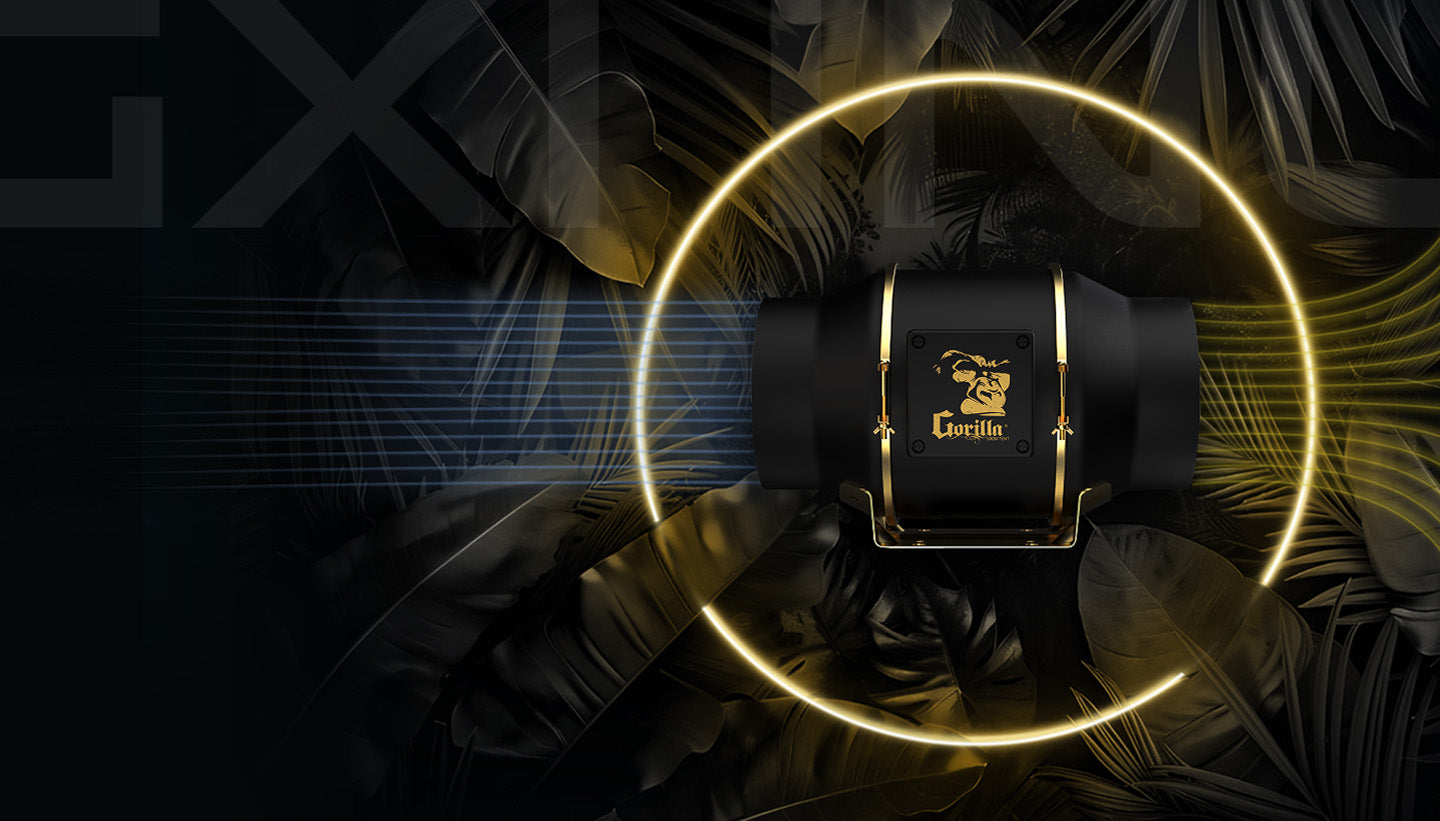
Gorilla GXi Inline Fans feature advanced temperature control technology that automatically adjusts fan speeds based on real-time temperature readings, maintaining the perfect growing environment without constant manual adjustments.
Humidity Management
Plants constantly release moisture through transpiration, creating a humidity cycle inside your grow tent. Too much humidity promotes mold, mildew, and fungal diseases, while insufficient humidity causes water stress and slowed growth.
A properly designed fan system removes excess moisture during high humidity periods and helps maintain optimal levels for each growth stage. Different growth phases require different humidity levels:
- Seedlings/clones: 70-75% RH
- Vegetative growth: 40-70% RH
- Flowering/fruiting: 40-50% RH
CO₂ Replenishment
Plants consume carbon dioxide during photosynthesis, rapidly depleting available CO₂ in an enclosed grow tent. Without fresh air exchange, growth slows dramatically as this essential building block becomes limited.
Inline fans create a continuous exchange of air, bringing in fresh, CO₂-rich air while expelling depleted air. This constant replenishment ensures your plants never experience the growth limitations of CO₂ deficiency.
Pest and Disease Prevention
Stagnant air creates ideal conditions for many pests and pathogens. Spider mites, fungus gnats, powdery mildew, and botrytis thrive in still, humid environments. Continuous airflow creates a hostile environment for these threats, significantly reducing the risk of infestation.
Strengthening Plant Structure
Unlike outdoor plants that develop strong stems from wind resistance, indoor plants can grow weak and spindly without air movement. Oscillating fans create gentle air movement that stimulates plants to develop stronger cell walls and sturdier stems - leading to plants better able to support heavy flowers and fruit.
Essential Components of a Complete Grow Tent Fan System
A properly ventilated grow tent requires a system of components working together:
1. Inline Exhaust Fans
The powerhouse of your ventilation system, inline exhaust fans actively remove hot, humid air from your grow tent. These fans connect to ducting and often a carbon filter, creating negative pressure that pulls fresh air in while pushing stale air out.
Gorilla offers three sizes of their revolutionary GXi Inline Fans:
- 4 Inch Inline Fan - Perfect for small grow tents (2x2 to 3x3), operating at a whisper-quiet 28dB-A
- 6 Inch Inline Fan - Ideal for medium setups (3x3 to 4x4), delivering powerful airflow while maintaining quiet operation at just 32dB-A
- 8 Inch Inline Fan - Professional solution for larger growing spaces (4x4+), providing maximum ventilation capacity
The GXi series features revolutionary AdaptiveAir™ technology that automatically adjusts fan speeds to maintain perfect growing conditions based on temperature and humidity readings from the GXi Temperature and Humidity Sensor.
2. Oscillating Circulation Fans
While inline fans handle air exchange, oscillating fans ensure proper air circulation within the grow tent. These fans prevent "dead zones" of stagnant air and help equalize temperatures throughout the growing space.
Position circulation fans to create a gentle breeze across all plants, being careful not to aim too directly at young plants or seedlings. For larger tents, multiple oscillating fans may be required to ensure complete coverage.
3. Carbon Filters

For plants that produce strong aromas, a carbon filter is essential. These cylindrical filters contain activated carbon that neutralizes odors as air passes through. Carbon filters are typically installed inside the grow tent, connected to the exhaust fan with ducting.
Gorilla Carbon Filters feature premium Australian virgin charcoal with maximum odor absorption capacity and 1680D synthetic fabric wrap for superior performance and longevity.
4. Ducting and Accessories
Proper ducting connects your inline fan to carbon filters and exhaust ports. Flexible, reflective ducting is standard, though rigid ducting offers less airflow resistance for maximum efficiency.
Additional helpful accessories include:
- Duct clamps - Secure connections and prevent air leaks
- Duct mufflers - Reduce noise from high-powered fans
- Fan speed controllers - Adjust airflow manually if not using automated systems
How to Calculate the Right Fan Size for Your Grow Tent
Selecting the proper fan size is crucial for effective ventilation. Fans are rated by CFM (Cubic Feet per Minute), indicating how much air they move. Here's how to calculate your requirements:
Basic Calculation Formula
- Calculate your tent volume: Length × Width × Height = Cubic Feet
- For basic ventilation, aim to exchange all air every 1-3 minutes
- Divide tent volume by desired minutes for air exchange = Required CFM
For example, a 4'×4'×6'11" Gorilla Grow Tent:
- Volume = 4' × 4' × 6.92' = 110.72 cubic feet
- For 1-minute exchange: 110.72 CFM needed
Adjustment Factors
The basic calculation must be adjusted for these factors:
- Carbon Filter: Add 25% (multiply by 1.25)
- Ducting: Add 15% for each 90° bend (multiply by 1.15 per bend)
- Light Heat: Add 20% for LED, 40% for HID (multiply by 1.2 for LED, 1.4 for HID)
For our example with a carbon filter, one bend, and LED lights:
- Adjusted CFM = 110.72 × 1.25 × 1.15 × 1.2
- Adjusted CFM ≈ 191 CFM
Based on this calculation, a 6-inch Gorilla GXi Inline Fan would be appropriate, providing enough airflow while allowing for speed adjustment as needed.
Optimal Placement for Maximum Efficiency
Fan placement dramatically impacts ventilation efficiency:
Inline Exhaust Fan Positioning
The most efficient setup places the carbon filter inside the tent at the top (since heat rises), connected to the inline fan, which can be mounted either inside or outside the tent depending on noise concerns and space constraints.
Outside mounting reduces noise and heat inside the tent but requires proper sealing around ducting ports.
Intake Considerations
Passive intake ports at the bottom of your tent allow fresh air to enter as the exhaust fan creates negative pressure. For larger tents, an active intake fan may be beneficial but should always be set at a lower CFM than the exhaust to maintain negative pressure.
Circulation Fan Placement
Position oscillating fans to create a complete air circulation pattern without direct aim at plants. A common approach uses one fan near the bottom blowing upward and one higher up blowing downward, creating a circular airflow pattern.
Setting Up a Complete Smart Ventilation System
Modern grow tent ventilation can be fully automated with Gorilla's GXi wireless ecosystem:
1. Install GXi Temperature and Humidity Sensor
Place this sensor at plant canopy level for the most accurate readings of your plants' actual environment.
2. Set Target Parameters in the Gorilla App
The free Gorilla Grow Tent App allows you to set precise targets for:
- Temperature control
- Humidity control
- VPD (Vapor Pressure Deficit) optimization
- Day/night scheduling for different growth phases
3. Connect GXi Inline Fans
The fans automatically adjust speed based on real-time sensor data, maintaining your perfect growing environment without constant monitoring or adjustment.
4. Monitor Performance Remotely
Check conditions, receive alerts, and adjust settings from anywhere using the Gorilla app, ensuring your plants always have optimal growing conditions.
Common Ventilation Problems and Solutions
Even well-designed systems can encounter issues. Here's how to troubleshoot:
High Humidity Problems
Symptoms: Readings above 70% RH, condensation on tent walls, wet surfaces
Solutions:
- Increase exhaust fan speed
- Add a dehumidifier for extreme cases
- Ensure proper plant spacing for adequate airflow
- Consider reducing watering frequency
Temperature Issues
Symptoms: Temperatures consistently above 85°F (29°C)
Solutions:
- Increase fan speed during light periods
- Mount lights on adjustable hangers to increase distance from canopy
- Add additional exhaust capacity
- Consider air conditioning for large operations
Negative Pressure Imbalance
Symptoms: Tent walls collapsing inward
Solutions:
- Install the Gorilla High CFM Kit with support bars
- Add more passive intake ports
- Reduce exhaust fan speed slightly
- Consider active intake fans (at lower CFM than exhaust)
Maintaining Your Fan System for Longevity
Proper maintenance ensures optimal performance throughout multiple growing cycles:
Regular Cleaning Schedule
- Carbon Filters: Replace every 12-18 months depending on usage
- Inline Fans: Clean blades and housing every 3-6 months
- Ducting: Inspect monthly and replace annually or when damaged
- Circulation Fans: Wipe blades and grill weekly to prevent dust buildup
The GXi Inline Fans feature a revolutionary detachable motor housing and blades that allow thorough cleaning without special tools—extending equipment life while maintaining peak performance.
FAQ: Fan Grow Tent Questions Answered
Do I need a fan in my grow tent?
Yes, fans are absolutely essential in any grow tent setup. Without proper ventilation, plants suffer from heat stress, humidity issues, CO₂ depletion, increased pest/disease risk, and weaker structural development. Even the smallest grow tents require at minimum an exhaust fan and circulation fan.
How many fans do I need in my grow tent?
Most grow tents require at minimum:
- One inline exhaust fan (sized appropriately for your tent volume)
- One or more circulation fans (depending on tent size)
Larger tents may benefit from additional circulation fans to prevent dead zones and ensure complete air movement throughout the growing space.
Should grow tent fans run 24/7?
Yes, ventilation should remain active 24/7, though fan speeds can be reduced during dark periods when heat generation is lower. Plants continue to transpire at night, and proper airflow remains essential for maintaining optimal humidity levels and preventing mold issues.
Where should I place fans in my grow tent?
Position the inline exhaust fan at the top of your tent (either inside or outside), with intake ports at the bottom to create natural convection. Place circulation fans strategically to create gentle, indirect airflow that reaches all plants without directly blowing on them too forcefully.
How loud are grow tent fans?
Fan noise varies significantly between models. The Gorilla GXi Inline Fans utilize advanced WhisperFlow design and EC motor technology to create the quietest operation in their class:
- 4" GXi Fan: 28dB-A (quieter than a whispered conversation)
- 6" GXi Fan: 32dB-A (similar to a quiet library)
- 8" GXi Fan: 51dB-A (comparable to moderate rainfall)

Conclusion: Invest in Quality Ventilation for Growing Success
The question isn't whether you need a fan in your grow tent—it's how many fans you need and how to position them for optimal results. Proper ventilation directly impacts every aspect of plant health, from structural strength to disease resistance to overall yield.
By implementing the strategies outlined in this guide and utilizing quality equipment like the Gorilla GXi Inline Fans and smart monitoring systems, you'll create an environment where your plants can thrive. Remember that ventilation is a dynamic system that should evolve as your plants grow and environmental conditions change.
Investing in proper airflow is one of the most important decisions you'll make as an indoor grower. Your plants will reward your attention to this critical detail with robust growth, resistance to pests and diseases, and ultimately, impressive harvests.
Shop Gorilla's complete line of ventilation equipment to create the perfect growing environment for your plants.