The Complete Guide to Grow Lights for African Violets: Achieve Year-Round Blooms
Picture a windowsill filled with vibrant African violets displaying velvety purple, pink, and white blossoms against lush green foliage. Now imagine maintaining that stunning display year-round, regardless of cloudy days, short winter sunlight, or north-facing windows. This isn't a dream—it's the reality that proper grow lights for African violets make possible.
African violets (Saintpaulia) rank among the world's most popular houseplants for good reason. These charming plants produce abundant flowers for months on end when given proper care. However, inadequate lighting remains the number one reason African violets fail to bloom or produce disappointing results. Even plants positioned in bright windows often lack the consistent light intensity needed for continuous flowering.
The secret to transforming reluctant bloomers into prolific flower-producers? Quality grow lights specifically suited to African violet requirements. Modern LED technology has revolutionized indoor African violet cultivation, making it easier than ever to achieve the steady, moderate-intensity illumination these plants crave. Whether you're nurturing a small collection on a kitchen counter or maintaining a dedicated violet stand with dozens of plants, understanding proper lighting unlocks your plants' full flowering potential.
This comprehensive guide walks you through everything you need to know about selecting, positioning, and using grow lights to cultivate continuously blooming African violets. Let's dive into the fascinating world of Saintpaulia cultivation and discover how proper lighting transforms your violets from green-only plants into non-stop bloomers.
Understanding African Violet Light Requirements
African violets evolved in the shaded understory of East African forests, growing on moss-covered rocks beneath the protective canopy of taller trees. Unlike desert succulents that demand intense direct sunlight, African violets prefer bright but filtered illumination—think dappled forest light rather than scorching midday sun.
The Goldilocks Principle: Not Too Much, Not Too Little
African violets exemplify the "Goldilocks principle" in plant care—they need lighting that's just right. Too little light and your violets refuse to bloom, producing only foliage with long, stretched petioles (leaf stems) reaching desperately toward windows. Too much direct sun and those gorgeous velvety leaves develop unsightly brown scorch marks or bleached patches.
The sweet spot for African violets sits at moderate light intensity—approximately 200-300 PPFD (Photosynthetic Photon Flux Density) or 10,000-12,000 lux. For comparison, this represents about 20-30% of full outdoor sunlight intensity. It's bright enough to fuel flower production but gentle enough to protect delicate foliage.
The remarkable news for African violet enthusiasts? These plants actually bloom more prolifically and consistently under quality LED grow lights than they typically do in natural windowsill light. Grow lights provide the stable, day-after-day consistency violets crave, eliminating the frustrating variables of changing seasons, cloudy weather, and varying window exposure.
Why Window Light Often Disappoints
Even south-facing windows rarely provide ideal conditions for African violets. Natural light intensity fluctuates dramatically throughout the day, across seasons, and with weather conditions. A window providing perfect light in June might deliver inadequate illumination by December when day length shortens and the sun's angle drops.
Additionally, window glass filters some beneficial wavelengths, and light intensity drops exponentially with distance from the window. An African violet positioned just 3-4 feet from a bright window receives only a fraction of the light available directly on the sill. This explains why violets bloom beautifully right in the window but refuse to flower when moved back into the room.
Temperature fluctuations near windows create another challenge. Cold winter drafts or hot summer sun can stress violets even if light levels seem adequate. Grow lights eliminate these variables, providing consistent conditions that keep violets blooming regardless of weather or season.

Choosing the Best Grow Lights for African Violets
Not all grow lights suit African violet cultivation equally well. Understanding your options helps you invest wisely in equipment that delivers spectacular blooms rather than disappointing performance.
LED Grow Lights: The Modern Standard
Full-spectrum LED lights represent the optimal choice for modern African violet growers. These advanced systems provide the complete wavelength range violets need for robust foliage growth and prolific flowering while consuming minimal electricity and producing low heat—both crucial factors when positioning lights close to delicate violet foliage.
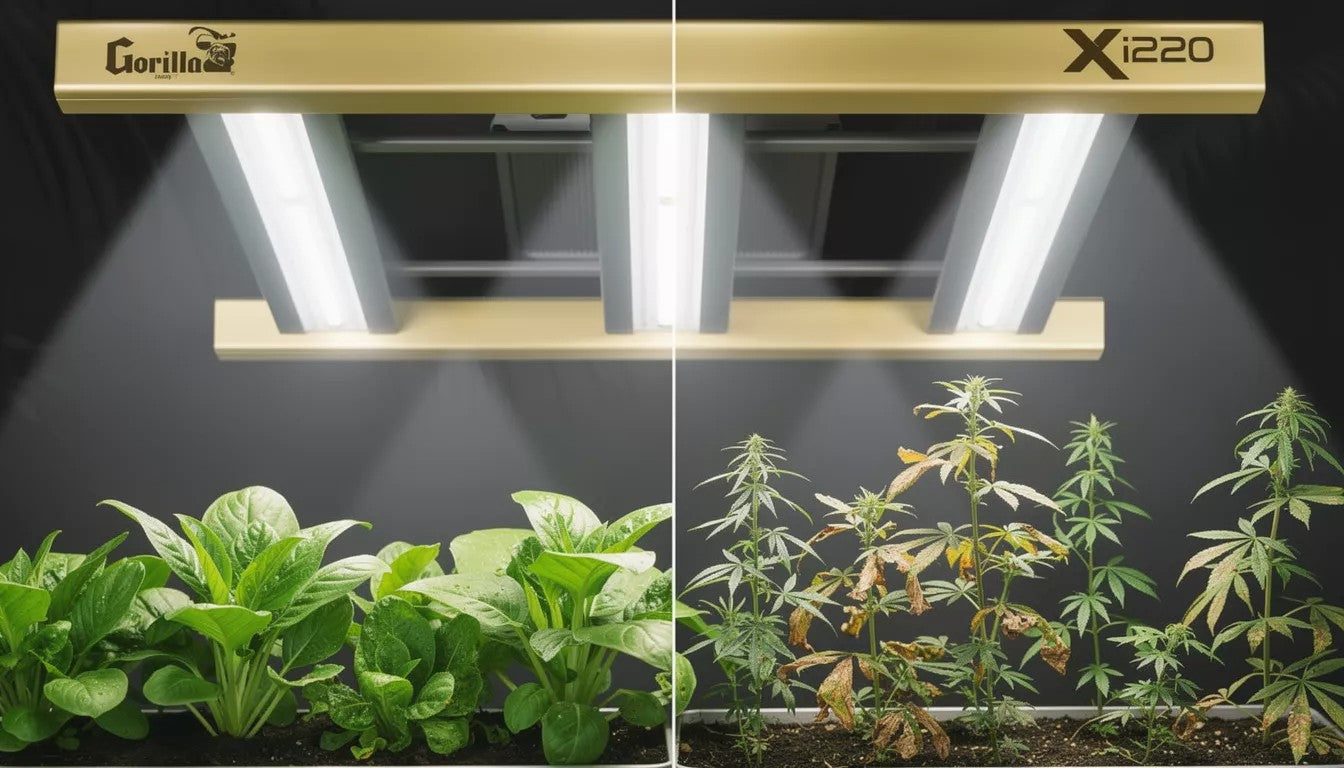
The Gorilla Xi220 LED Grow Light delivers perfect moderate-intensity illumination for small to medium African violet collections in 2x2 to 2.5x2.5 foot spaces. Its full-spectrum output and adjustable intensity allow you to dial in precisely the light levels African violets prefer without risk of over-illumination.
LED technology offers game-changing advantages for violet cultivation. These systems consume 50-70% less electricity than fluorescent alternatives while lasting 50,000+ hours—that's 10+ years of operation at 12 hours daily. The efficiency matters enormously for violet enthusiasts who run lights year-round to maintain continuous blooming.
The exceptionally low heat output of quality LEDs allows positioning them closer to plants without risking heat damage to leaves. African violets are particularly sensitive to excessive heat, which causes leaf cupping, faded flowers, and reduced blooming. Cool-running LEDs maintain comfortable temperatures while delivering the moderate intensity violets love.
Fluorescent Lights: The Traditional Favorite
For decades, fluorescent tubes represented the gold standard for African violet cultivation. Many successful violet growers still use T5 or T8 fluorescent fixtures with excellent results. These lights provide even, diffused illumination that suits violets beautifully.
If you're continuing with proven fluorescent setups, they certainly work well. However, when replacement time arrives or you're starting fresh, modern LEDs deliver superior performance with better efficiency and longevity. The difference in electricity costs alone often justifies the LED upgrade within 2-3 years.
Understanding the Best Spectrum for Blooming
African violets respond particularly well to full-spectrum lighting that includes both blue and red wavelengths plus the complete spectrum between them. Blue light (400-500nm) promotes compact, healthy foliage growth with strong, short petioles. Red light (600-700nm) stimulates flowering and enhances bloom production.
The full-spectrum LED grow lights for plants provide precisely this complete wavelength range. Unlike older purple "blurple" lights that emphasize only blue and red, full-spectrum LEDs produce natural-looking white light that allows you to appreciate your violets' true colors while supporting all growth and flowering processes.
Research shows African violets bloom most prolifically under lights providing balanced full-spectrum output rather than just targeted blue/red combinations. The complete spectrum supports the complex biochemical processes involved in flower bud initiation and development.
Compact vs. Panel Grow Lights
For small collections of 3-10 plants, compact grow light strips or clip-on fixtures work beautifully. These space-efficient options fit easily on shelves, counters, or dedicated plant stands without consuming excessive space or looking out of place in living areas.
Larger collections benefit from panel-style LED fixtures that provide even coverage across wider areas. The Gorilla Xi330 LED Grow Light covers 2x3 to 3x3 foot spaces perfectly, accommodating 20-40 standard-sized African violet pots comfortably with consistent illumination across the entire collection.

How to Position Grow Lights for Maximum Blooming
Proper positioning determines whether your grow light investment delivers spectacular continuous blooms or disappointing results.
Optimal Distance Above Plants
Position full-spectrum LED grow lights 8-12 inches above African violet foliage for optimal results. This distance provides the moderate intensity violets prefer—bright enough to fuel abundant flowering but not so intense that it stresses plants or damages leaves.
Compact varieties with smaller rosettes often perform best with lights at the closer end of this range (8-10 inches). Larger standard or semi-miniature varieties appreciate slightly greater distance (10-12 inches) that spreads light more evenly across their broader leaf spans.
Watch your plants closely for the first week or two after installing grow lights. Leaves cupping downward, developing pale centers, or showing brown edges indicate excessive light intensity—raise the fixture 2-3 inches. Conversely, if petioles elongate or flowering slows, lower the lights to provide more intensity.
African violets essentially tell you when lighting hits the sweet spot. Properly illuminated violets display:
- Compact rosette form with short, strong petioles
- Rich, vibrant foliage color without pale or bleached areas
- Continuous bloom production with flowers held just above foliage
- Symmetrical growth all around the plant
Duration: How Many Hours Daily?
African violets bloom most prolifically with 12-14 hours of grow light daily. This duration provides the cumulative light energy needed for continuous flower production while allowing the essential dark period plants need for metabolic processes.
The consistent day length matters more than absolute duration. Violets respond to photoperiod (day length) as a flowering trigger, and the reliable 12-14 hour schedule provided by timers promotes steady blooming far better than irregular natural window light that varies from 9 hours in winter to 15 hours in summer.
Use simple mechanical timers or smart controllers to maintain consistent schedules automatically. African violets appreciate reliability—establishing a routine and sticking with it yields the best blooming results. The smart GXi LED grow lights feature programmable schedules that automate this completely, eliminating any need for daily attention.
Creating the Perfect Display
Many violet enthusiasts create dedicated growing areas that showcase their collections beautifully while providing optimal conditions. Light-colored shelving units with LED fixtures mounted beneath each shelf maximize space efficiency while creating stunning multi-level displays.
A quality grow tent setup provides another excellent option for serious collectors. The reflective interior maximizes light efficiency while the controlled environment maintains ideal humidity and temperature. For African violet collections, small grow tents provide professional growing conditions without consuming excessive floor space.
The reflective lining in grow tents bounces photons that would normally be absorbed by walls back toward your plants. This reflectivity increases effective light intensity by 20-30% compared to growing in standard rooms—delivering better blooming from the same fixtures.
Essential Care Beyond Lighting
While proper lighting forms the foundation of blooming success, African violets need attention to several other factors working synergistically with your grow lights.
Watering Wisdom for Blooming Violets
African violets prefer consistent moisture without waterlogged soil. The classic advice "keep soil evenly moist but never soggy" sounds vague but accurately describes violet preferences. The top surface of soil should feel barely moist to the touch, never bone-dry or dripping wet.
Water from below by setting pots in saucers of room-temperature water for 30 minutes, then draining excess. This bottom-watering method prevents water spotting on leaves (caused by cold water hitting warm foliage) while encouraging roots to grow downward seeking moisture.
Alternatively, water carefully at soil level using a long-spouted watering can, avoiding any water contact with leaves or crown. Cold water on warm leaves creates the characteristic brown or white spots that mar violet foliage.
Under grow lights promoting active growth, violets typically need watering every 3-4 days. Check soil moisture with your finger—when the top half-inch feels barely moist (not wet, not dry), it's perfect. If it feels dry, water immediately. If it feels wet, wait a day or two.
Temperature and Humidity Considerations
African violets thrive in typical home temperatures between 65-75°F—conveniently, the same range humans prefer. Avoid temperature extremes, especially cold drafts from windows or hot spots near heating vents. Consistent temperatures promote steady, continuous blooming.
Humidity levels between 40-60% suit African violets perfectly. Most homes naturally fall within this range. If your home runs dry (especially during winter heating season), simple humidity trays—saucers filled with pebbles and water positioned beneath (but not touching) pots—increase local humidity around plants.
Under grow lights in enclosed spaces, monitor conditions carefully. Even cool-running LEDs generate slight heat that accumulates without air circulation. A small oscillating fan providing gentle air movement benefits violets by strengthening leaf stems and preventing stagnant air that encourages fungal issues.
Fertilizing for Continuous Blooms
Blooming requires energy, and violets producing flowers continuously need regular fertilization to fuel that production. Use fertilizer formulated specifically for African violets—these products provide the nutrient balance violets prefer.
Feed at quarter-strength with every watering rather than full strength monthly. This consistent, gentle approach provides steady nutrition without risk of fertilizer burn. Quality plant fertilizers designed for flowering plants deliver the phosphorus and potassium blooming violets need.
Watch for yellowing lower leaves or reduced flowering—both signal nutrient deficiency requiring increased fertilization. Conversely, dark green leaves, lush foliage growth but no flowers, or brown leaf tips indicate over-fertilization requiring a reduction in feeding frequency or strength.

Common Mistakes to Avoid
Even experienced plant parents sometimes stumble when setting up African violet grow light systems. Learning from common errors saves frustration and accelerates blooming success.
Too Much Light Intensity
The most frequent mistake beginners make is providing too much light intensity. Coming from the succulent or herb growing world where "more light is better," new violet growers often position lights too close or choose overly powerful fixtures.
Remember: African violets prefer moderate light—about 20-30% of full sun intensity. Signs of excessive light include:
- Leaves cupping downward protectively
- Pale or bleached leaf centers
- Brown or crispy leaf edges
- Flowers that fade quickly or develop brown edges
- Compact growth but reduced blooming
If you observe these symptoms, raise grow lights 2-4 inches or reduce operating hours slightly. Quality LED systems with dimming capability let you dial back intensity without changing light height.
Insufficient Light Causing Blooming Failure
Conversely, inadequate light intensity prevents flowering entirely. Violets receiving too little light produce foliage with long petioles reaching toward light sources, display darker green coloring than properly lit plants, and rarely or never produce flowers.
If your violets look healthy but refuse to bloom despite months under grow lights, insufficient intensity is the likely culprit. Lower fixtures 2-3 inches, extend operating hours to 14 hours daily, or upgrade to more powerful lights designed for flowering plants.
Inconsistent Light Schedules
African violets respond to reliable, consistent day length. Running lights on irregular schedules—sometimes 10 hours, sometimes 16, sometimes forgetting entirely—confuses plants' internal rhythms and reduces blooming frequency.
Set up reliable automatic timers and stick with the same schedule year-round. The consistency matters more for blooming success than the exact duration (within the 12-14 hour range).
Neglecting to Rotate Plants
Unless you have grow lights positioned all around your collection (impractical for most setups), plants receive stronger illumination on the side facing the light. Without regular rotation, violets develop lopsided growth with foliage and flowers concentrated on the light-facing side.
Rotate plants quarter-turns weekly to encourage even, symmetrical rosette development. This simple habit produces the beautifully balanced plants that win shows and impress visitors.
Forgetting Leaf Hygiene
Dust accumulation on African violet leaves blocks light absorption, reducing photosynthesis efficiency and blooming capacity. The fuzzy foliage African violets sport traps dust readily, requiring periodic gentle cleaning.
Use a soft, dry paintbrush to gently whisk dust from leaves monthly. Never rinse leaves with water—the fuzzy texture traps moisture, leading to spotting and potential rot issues. Keep foliage clean for maximum light utilization under your grow lights.
Best African Violet Varieties for Grow Light Cultivation
While virtually all African violet varieties grow well under lights, certain types offer special appeal for indoor light-grown collections.
Standard Varieties for Beginners
Standard African violets with 8-16 inch rosettes represent the easiest starting point. Classic varieties like 'Optimara' series, 'Rob's' cultivars, and AVSA (African Violet Society of America) award winners prove consistently reliable bloomers under grow lights.
These robust varieties tolerate minor care variations while producing abundant flowers. Start your collection with proven standard varieties, master the basics, then expand into more specialized types.
Miniatures and Semi-Miniatures
Miniature African violets (rosettes under 6 inches) and semi-miniatures (6-8 inches) create charming collections that fit more plants into limited space under grow lights. These smaller varieties often bloom even more prolifically than standards relative to their size.
Miniatures excel under moderate LED lighting, developing perfectly proportioned tiny rosettes smothered in flowers. Many collectors find them addictively collectible—it's easy to justify "just one more" when plants occupy only 2-3 inches of shelf space.
Trailing Varieties for Vertical Interest
Trailing African violets produce cascading stems rather than typical rosettes, creating elegant hanging basket displays under grow lights. Varieties like 'Rob's Hippity Hop' and 'Ness' Angel Eyes' produce flowing stems covered in flowers.
Position trailing varieties at the front edges of shelves or in hanging locations beneath grow lights, allowing stems to cascade naturally. These varieties add dimensional interest to collections while blooming just as reliably as standard rosettes.
Fantasy and Specialty Blooms
Once you've mastered basics, explore specialty varieties with multicolored "fantasy" patterns, ruffled petals, or unusual color combinations. These show-stopping varieties bloom just as readily under grow lights as simpler types but offer eye-catching flower displays.
Fantasy varieties with splashed, speckled, or striped petals become even more striking under quality full-spectrum LED lighting that renders their colors accurately. Build a collection that showcases the incredible diversity available in modern African violet breeding.
Setting Up Your Complete African Violet Growing System
Creating the perfect environment for blooming African violets combines proper lighting with complementary equipment and smart planning.
Dedicated Growing Shelves
Many successful violet growers create dedicated shelf units specifically for their collections. White-painted or melamine shelving with LED fixtures mounted beneath each shelf creates efficient, attractive multi-level displays.
Standard shelf units typically accommodate 3-4 growing levels with 12-15 inches vertical spacing between shelves—perfect for African violets that rarely exceed 6-8 inches in height. This approach houses 30-60+ plants in a 2x4 foot floor footprint, maximizing limited space.
Use full-spectrum LED strips designed for plant growing, not standard under-cabinet lighting. Horticultural LEDs provide the wavelengths plants need, while home lighting LEDs don't deliver adequate spectrum for blooming.
Grow Tent African Violet Rooms
For serious collectors maintaining 50+ plants, a dedicated grow tent creates an ideal violet growing environment. The 3x3 or 4x4 tent sizes accommodate multiple shelf units inside, creating a dedicated "violet room" with optimized conditions.
The controlled environment maintains stable humidity and temperature while the reflective interior maximizes light efficiency. Complete grow tent kits include everything needed except plants—tent, lighting, ventilation, and accessories all designed to work together seamlessly.
Starting Your Collection
Begin with 5-10 proven varieties rather than immediately investing in rare, expensive specimens. Master the basics of African violet care under grow lights with forgiving, readily available varieties. As your skills and success grow, expand into specialty cultivars.
For those new to indoor gardening, African violets under grow lights provide an excellent introduction to controlled environment cultivation. The skills you develop translate directly to growing other flowering houseplants successfully.
Frequently Asked Questions
What type of grow light is best for African violets?
Full-spectrum LED grow lights are best for African violets. These lights provide moderate intensity (200-300 PPFD) with the complete wavelength range violets need for healthy foliage and prolific flowering. LED systems like the Gorilla Xi Series deliver optimal results while consuming minimal electricity and producing low heat perfect for delicate violet foliage.
How far should grow lights be from African violets?
Position LED grow lights 8-12 inches above African violet foliage for optimal results. This distance provides moderate light intensity—bright enough for abundant flowering but not so intense it stresses plants. Monitor your violets' response and adjust distance based on leaf appearance and blooming performance.
How many hours of light do African violets need daily?
African violets bloom best with 12-14 hours of grow light daily. This consistent day length provides adequate light energy for continuous flower production while allowing the essential dark period plants need. Use automatic timers to maintain reliable schedules—consistency matters more than absolute duration for blooming success.
Will African violets bloom under regular LED bulbs?
Regular LED bulbs designed for home lighting don't provide the spectrum or intensity African violets need for optimal blooming. While plants may survive under household LEDs, they typically won't produce the abundant flowers possible under proper horticultural grow lights. Invest in full-spectrum LED grow lights specifically engineered for plant cultivation.
Why won't my African violet bloom under grow lights?
If your African violet produces healthy foliage but won't bloom, common causes include: insufficient light intensity (lights too far away or not powerful enough), inconsistent lighting schedule, over-fertilization producing lush foliage but no flowers, or the plant being too young (violets need 9-12 months maturity before blooming). Ensure 12-14 hours daily of moderate-intensity light positioned 8-12 inches above foliage for best results.
Featured Snippet Summary
African violets bloom continuously under full-spectrum LED grow lights positioned 8-12 inches above foliage and operated 12-14 hours daily. These plants prefer moderate light intensity (200-300 PPFD)—about 20-30% of full sun—rather than the intense illumination many plants require. Quality LED systems like the Gorilla Xi Series provide the complete spectrum violets need for prolific flowering while consuming minimal electricity. Consistent day length and proper distance matter more than maximum intensity, making violets ideal candidates for energy-efficient LED cultivation year-round.
Transform Your African Violets Into Non-Stop Bloomers Today
Growing spectacular, continuously blooming African violets under proper lighting transforms reluctant plants into prolific flower-producers that brighten your home year-round. With the right LED grow lights, consistent care, and appropriate varieties, you'll achieve the abundant flowering that makes African violets such beloved houseplants.
The investment in quality grow lights pays for itself through years of reliable performance, minimal electricity costs, and the unmatched satisfaction of nurturing a stunning collection of blooming violets. Modern LED technology makes African violet cultivation more successful and rewarding than ever before.
Ready to achieve those spectacular blooms you've been dreaming of? Browse the complete selection of LED grow lights and indoor growing equipment specifically designed to deliver professional results. Whether you're starting with a few plants on the kitchen counter or planning a dedicated collection with dozens of varieties, Gorilla Grow Tent provides the professional-grade equipment you need for vibrant, continuously blooming African violets. Stop wondering why your violets won't flower—give them the consistent, moderate-intensity light they crave and watch them transform into the prolific bloomers they were meant to be!