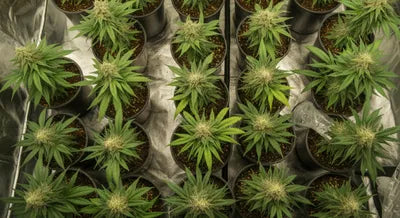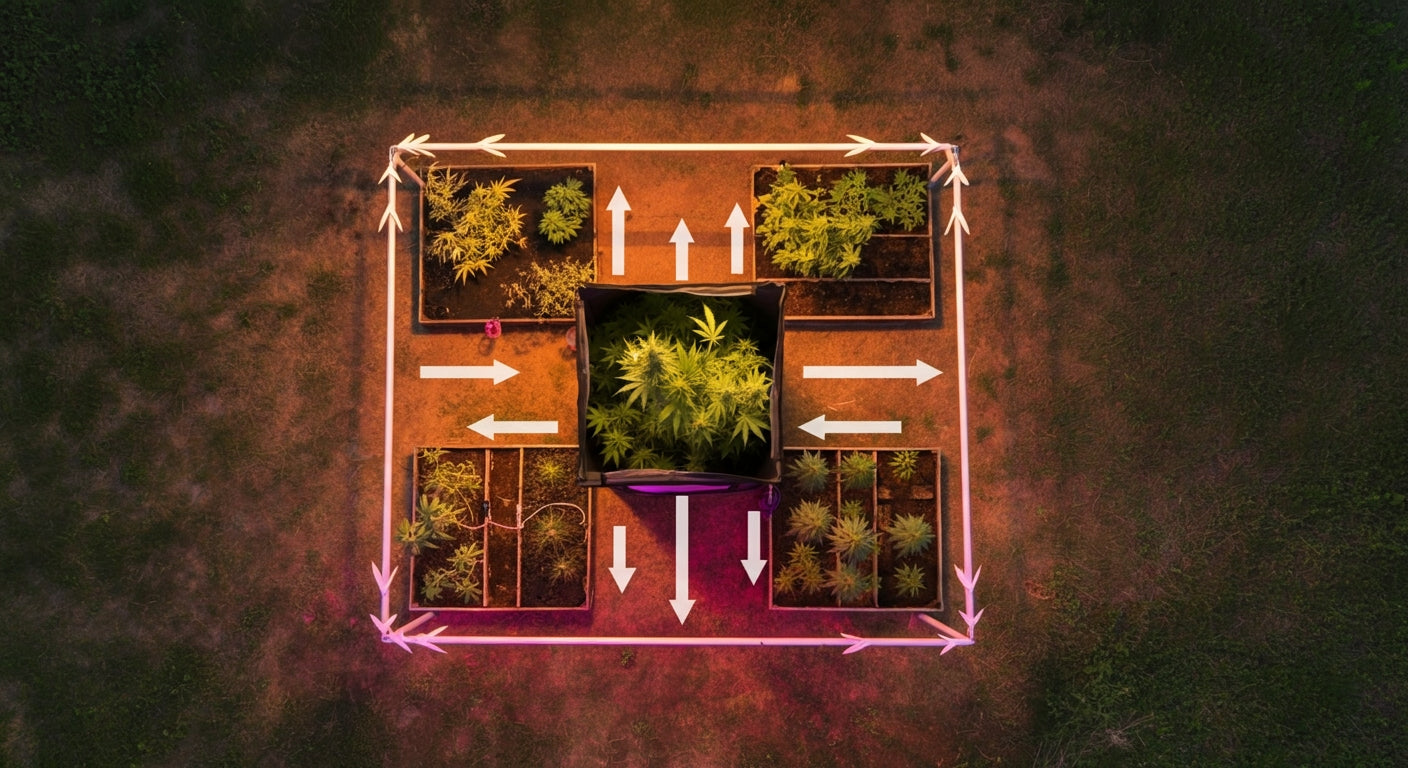
Perpetual Harvest Setup: Continuous Growing in Multiple Tents
Creating a perpetual harvest system transforms indoor growing from seasonal harvests to continuous production cycles that deliver fresh crops every 4-8 weeks. By coordinating multiple grow tents with staggered planting schedules, you can achieve consistent yields throughout the year while maintaining optimal growing conditions for each plant development stage.
A successful perpetual harvest setup requires strategic planning, proper equipment selection, and synchronized timing across multiple growing environments. This advanced technique maximizes annual yields while ensuring you never run out of fresh product between harvests.

Understanding Perpetual Harvest Systems
Perpetual harvesting utilizes multiple growing spaces to maintain plants at different developmental stages simultaneously. Clone tents produce new genetics, vegetative tents develop plant structure, and flowering tents complete the maturation cycle.
Core Components of Perpetual Systems
Multi-tent coordination: Gorilla Grow Tent systems provide consistent environmental control across different tent sizes and configurations, essential for synchronized growing cycles.
Staggered timing: Plants move through the system on predetermined schedules, with new clones starting as mature plants finish flowering.
Specialized environments: Each growth stage requires specific lighting, nutrients, and environmental parameters that dedicated tents optimize perfectly.
The growing timeline guide provides essential information for calculating perpetual harvest schedules based on strain genetics and growing methods.
Essential Equipment for Perpetual Harvests
Success depends on carefully selected equipment that maintains optimal conditions across multiple growth stages simultaneously.
Clone and Seedling Setup
Clone tent kits create perfect environments for rooting new genetics. The Single Tray Clone Tent Kit handles 50-100 clones in minimal space.
Clone tent specifications:
- Compact footprint: Fits in limited space alongside larger tents
- Precise humidity control: Maintains 75-85% RH for optimal rooting
- T5 lighting: Provides gentle, efficient lighting for developing roots
- Environmental monitoring: GXi WiFi sensors track conditions remotely
The 14-Site Hydroponic Clone Kit offers automated cloning with superior rooting rates and faster development times.
Vegetative Growth Environment
2x4 or 3x3 grow tents provide optimal space for vegetative development. Plants spend 3-6 weeks building structure before transitioning to flowering.
Vegetative tent requirements:
- 18/6 light schedule: Promotes rapid growth and strong branching
- Higher humidity: 60-70% RH supports vigorous leaf development
- Nitrogen-rich nutrients: Supports structural development and green growth
- Training space: Room for LST, topping, and canopy management
Best grow tent setup for beginners includes detailed guidance on vegetative environmental management.
Flowering Production Tent
The main flowering tent represents the largest investment and produces the final harvest. 4x4 grow tent kits or 5x9 grow tent kits accommodate multiple mature plants.
Flowering tent optimization:
- 12/12 light schedule: Triggers and maintains flowering response
- Lower humidity: 40-50% RH prevents mold and bud rot
- Phosphorus/potassium nutrients: Supports flower development and density
- Maximum light intensity: Xi750 LED lights provide optimal PPFD for flowering
Perpetual Harvest Timeline Coordination
Successful perpetual systems require precise timing coordination across all growing stages to maintain continuous harvests.

Standard 8-Week Perpetual Cycle
Week 1-2: New clones root in clone tent while Week 6-8 plants flower Week 3-4: Rooted clones move to vegetative tent, new clones start Week 5-6: Vegetative plants continue development, flowering plants mature Week 7-8: Harvest mature plants, move vegetative plants to flowering
This cycle produces harvests every 8 weeks while maintaining consistent plant flow through all development stages.
Advanced 4-Week Staggered System
Experienced growers can implement 4-week harvest cycles by running multiple batches simultaneously:
Batch A: Weeks 1-4 in flowering (harvest ready) Batch B: Weeks 5-8 in flowering (mid-development)
Batch C: Weeks 1-3 in vegetative (structure building) Batch D: Week 1-2 in cloning (root development)
This system requires larger growing areas but doubles annual harvest frequency.
Tent Size and Configuration Strategy
Choose tent combinations that optimize space utilization while supporting your desired harvest frequency and quantity.
Compact Perpetual Setup
Space-efficient configuration:
- Clone tent: Gorilla Clone Tent (2x2.5 footprint)
- Vegetative tent: 2x4 grow tent (supports 4-6 plants)
- Flowering tent: 4x4 grow tent (fits 4-9 mature plants)
This configuration fits in most spare rooms while producing 3-4 harvests annually.
Commercial-Scale Perpetual System
High-volume configuration:
- Clone tent: 14-site hydroponic system
- Vegetative tent: 4x4 grow tent with extension kits
- Flowering tent: 5x9 grow tent or multiple 4x4 tents
This setup supports larger plant counts and faster harvest cycles for serious production goals.
Environmental Control Across Multiple Tents
Each tent requires different environmental parameters, making coordinated control systems essential for perpetual harvest success.
Lighting Coordination
Clone tent lighting: T5 LED systems provide gentle, efficient lighting for root development without excessive heat.
Vegetative lighting: Xi330 LED lights deliver optimal blue spectrum for structural development and leaf production.
Flowering lighting: Xi750 LED lights provide maximum intensity and red spectrum enhancement for dense flower production.
Climate Management Systems
GXi ecosystem technology coordinates environmental controls across multiple tents through wireless connectivity and automated responses.
Temperature control:
- Clone tent: 75-80°F for optimal root development
- Vegetative tent: 70-80°F for vigorous growth
- Flowering tent: 65-75°F for dense flower production
Humidity control strategies vary significantly between growth stages, requiring independent management systems for each tent.
Nutrient Management for Perpetual Systems
Different growth stages require distinct nutrition programs, making perpetual setups more complex than single-tent grows.
Stage-Specific Feeding Programs
Clone nutrition: Minimal feeding with weak rooting hormones and low-EC solutions to prevent nutrient burn during root development.
Vegetative nutrition: High-nitrogen nutrient systems support rapid structural development and leaf production.
Flowering nutrition: Phosphorus and potassium-heavy formulations promote flower development and essential oil production.
Lotus Nutrients provide comprehensive 3-part systems that simplify nutrition management across all growth stages.
Hydroponic vs. Soil Considerations
Hydroponic perpetual systems: Allow precise nutrient control and faster growth cycles but require more sophisticated equipment and monitoring.
Soil-based systems: Provide buffer against nutrient fluctuations and require less intensive management but may slow overall plant development.
DWC hydroponic systems work exceptionally well for flowering tents where explosive growth and maximum yields are priorities.
Plant Training for Perpetual Harvests
Training techniques must coordinate with perpetual schedules to ensure plants fit properly in designated spaces at specific times.
Vegetative Training Timeline
Week 1-2: Begin LST techniques to establish horizontal growth patterns Week 3-4: Implement topping or FIM techniques to increase cola sites Week 5-6: Final canopy shaping before transition to flowering tent
Training must complete before plants move to flowering to prevent disruption during crucial development phases.
Flowering Space Optimization
SCROG netting helps manage canopy height and light distribution in flowering tents with multiple plant batches.
Defoliation timing: Strategic leaf removal optimizes light penetration without disrupting flowering development or harvest schedules.
Common Perpetual Harvest Challenges
Understanding potential problems helps prevent disruptions that can break perpetual cycles.
Timing Coordination Issues
Solution: Maintain detailed schedules with backup plans for delayed or accelerated plant development. Extension kits provide height flexibility when plants grow faster than expected.
Environmental Cross-Contamination
Solution: Proper ventilation design prevents odors and pests from spreading between tents. High CFM kits maintain negative pressure in each tent.
Equipment Failures
Solution: Redundant systems and quality equipment reduce failure rates. Gorilla Grow Tent reliability ensures consistent performance across multiple growing cycles.
Maximizing Annual Yields
Perpetual systems can double or triple annual yields compared to traditional single-tent growing approaches.
Yield Calculation Examples
Traditional growing: 2-3 harvests per year at 1-2 lbs each = 2-6 lbs annually 8-week perpetual: 6-7 harvests per year at 1-1.5 lbs each = 6-10 lbs annually 4-week perpetual: 12-13 harvests per year at 0.5-1 lb each = 6-13 lbs annually
4x4 grow tent yields provide baseline expectations for calculating perpetual harvest potential.
FAQ Section
How much space do I need for a perpetual harvest setup?
A basic perpetual system requires approximately 8x8 feet for three tents plus working space. Small grow tents can create compact perpetual systems in smaller areas.
What's the minimum investment for perpetual harvesting?
Expect $3,000-$8,000 for a complete perpetual setup including tents, lights, ventilation, and environmental controls. Grow tent kits reduce initial costs through bundled equipment.
How do I coordinate different light schedules?
Use separate timers for each tent with appropriate light schedules (24/0 for clones, 18/6 for vegetative, 12/12 for flowering). GXi automation can coordinate complex lighting programs automatically.
Can beginners successfully run perpetual harvests?
Yes, but start with simple 8-week cycles and gradually increase complexity. Beginner grow tent setup guides provide foundation knowledge for perpetual systems.
What strains work best for perpetual harvesting?
Choose consistent, predictable strains with similar flowering times. Indica-dominant varieties often work better due to compact growth patterns and predictable development schedules.
Summary
Perpetual harvest setups use multiple coordinated grow tents to maintain continuous production cycles, delivering fresh harvests every 4-8 weeks through strategic timing and specialized environments. Success requires precise coordination of cloning, vegetative growth, and flowering stages with appropriate equipment for each development phase.
Start Your Perpetual Harvest Journey
Ready to transform your growing operation from seasonal harvests to continuous production? Gorilla Grow Tent systems provide the reliability and precision control essential for successful perpetual harvesting.
Begin with our clone tent kits to establish your genetic pipeline, then expand with professional grow tent kits designed for vegetative and flowering production. With proper planning and quality equipment, you can achieve year-round harvests that maximize your growing potential.