Good LED Grow Lights: How to Choose Quality Systems That Actually Deliver Results
Shopping for good LED grow lights can feel overwhelming when hundreds of products claim to be "the best." The truth is, not all LED systems are created equal. Some deliver exceptional results that justify their price, while others disappoint with poor performance and short lifespans.
The difference between a good LED grow light and a mediocre one isn't always obvious from product descriptions. Understanding what actually makes an LED system effective will save you money, frustration, and failed grows. This guide reveals exactly what separates quality LED grow lights from overpriced disappointments, helping you make a smart investment that pays dividends with every harvest.
What Makes an LED Grow Light "Good" in 2025?
A truly good LED grow light combines several essential qualities that work together to support healthy plant growth and maximize your return on investment.
Quality LEDs deliver consistent light output throughout their lifespan, use energy efficiently, provide the right spectrum for all growth stages, and come from manufacturers who stand behind their products with solid warranties. The best systems also include features that make growing easier and more successful, not just flashy extras that drive up prices.
Good LED grow lights share these core characteristics: premium components like Mean Well drivers and Samsung or OSRAM LED chips, actual specifications instead of vague marketing claims, full-spectrum output with separate UV/IR channels, and build quality designed for years of demanding use.
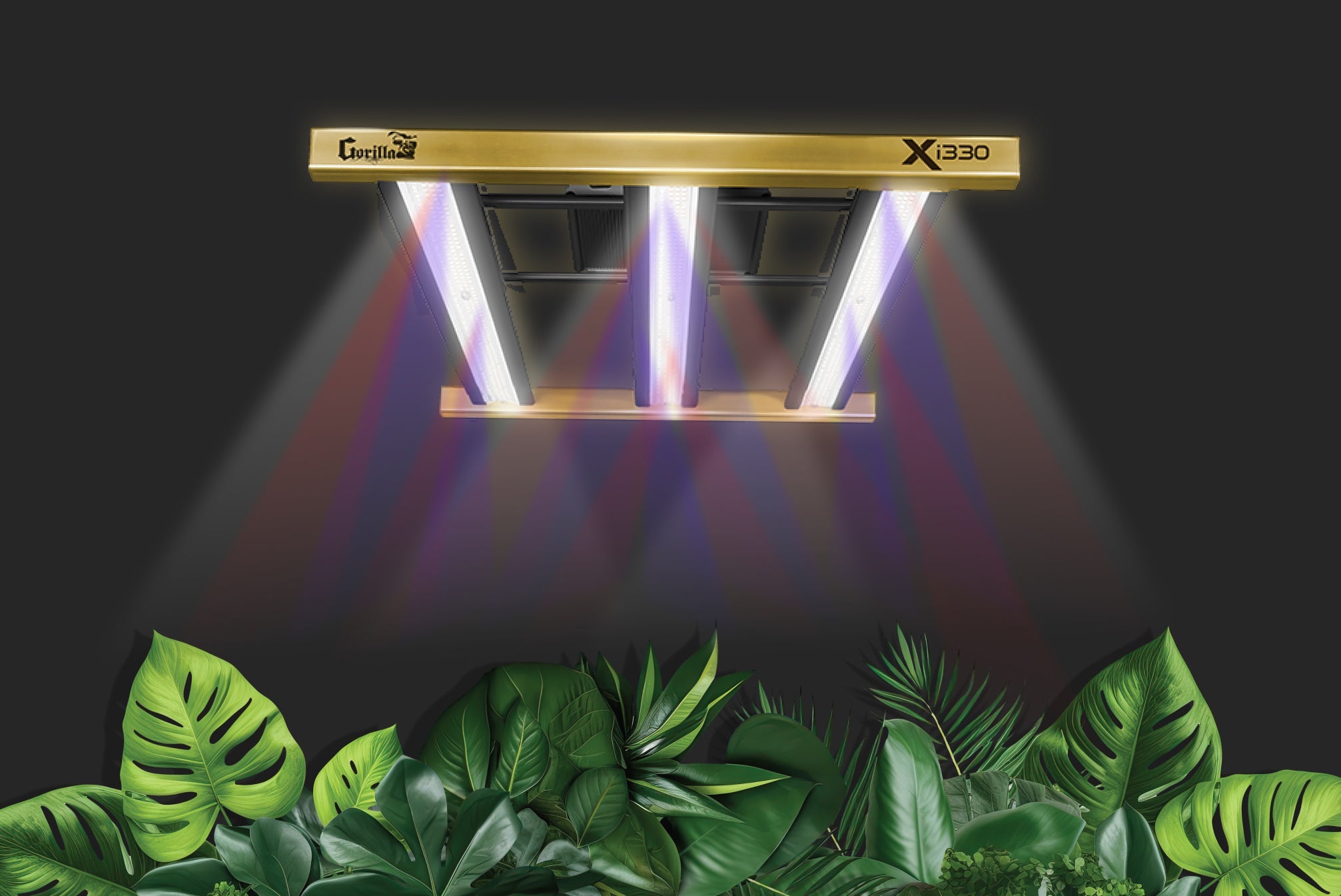
The Gorilla Xi Series demonstrates what good really means with aircraft-grade aluminum construction, 3-year warranties, and targeted full-spectrum technology developed through thousands of hours of field testing by actual cultivators.

The 7 Essential Qualities of Good LED Grow Lights
Understanding what matters most helps you evaluate LED systems objectively instead of falling for marketing hype.
1. Actual Wattage and Energy Efficiency
Good LED grow lights clearly state their actual power draw, not inflated "equivalent wattage" numbers. A quality 400W LED might claim equivalency to 600-800W HID, but what matters is the actual 400 watts it pulls from your wall.
Energy efficiency ratings above 2.5 µmol/J indicate quality systems. Premium models achieve 2.7-3.0+ µmol/J, meaning they convert more electrical energy into usable plant light while wasting less as heat. This efficiency translates directly into lower electricity bills and cooler growing environments.
Calculate your real costs by multiplying actual watts by hours used daily and your local electricity rate. A 300W LED running 12 hours daily at $0.12 per kWh costs approximately $13 monthly, while a 600W HID costs $26 monthly—doubling your power bill for no additional benefit.
2. True Full-Spectrum Coverage
Generic white LEDs were designed for office lighting, not plant cultivation. Good LED grow lights use targeted spectrums specifically engineered for photosynthesis and plant development.
Look for systems that provide optimized blue wavelengths (400-500nm) for vegetative growth, enhanced red content (600-700nm) for flowering, far-red wavelengths (700-800nm) for enhanced flowering speed, and UV capabilities (280-400nm) for increasing secondary metabolite production.
The Xi420 LED Grow Light exemplifies proper spectrum design with separate channels for main spectrum, UV, and IR wavelengths. This tri-channel control lets you optimize light delivery for each growth stage instead of compromising with a fixed spectrum.
3. Multi-Channel Spectrum Control
Single-spectrum lights force compromise—too blue for flowering or too red for vegetative growth. Good LED systems provide independent control over different wavelength groups.
Tri-channel designs allow you to adjust blue content during vegetative stages for compact growth, increase red wavelengths when transitioning to flower, and activate UV/IR channels during late flowering to boost quality. This precision eliminates wasted energy while maximizing results.
Systems with smartphone connectivity take control further, enabling automated schedules and gradual spectrum transitions that simulate natural sunrise and sunset patterns. These features reduce plant stress while improving overall health and yields.
4. Premium Component Quality
The components inside your LED determine how long it performs reliably. Good systems specify their driver manufacturer and LED chip sources because quality brands have nothing to hide.
Mean Well drivers represent the gold standard for reliability, accounting for 90% fewer failures than budget alternatives. Samsung and OSRAM LED chips maintain consistent spectrum and intensity for years without degradation, while generic chips from unknown manufacturers dim rapidly and shift spectrum over time.
Aircraft-grade aluminum construction with proper heat sinks ensures effective thermal management. This keeps LEDs cool, preventing premature failure and maintaining consistent output. Cheap plastic housings and minimal heat management signal lights designed for short lifespans.
5. Accurate PPFD Data and Coverage Maps
PPFD (Photosynthetic Photon Flux Density) measures usable light actually reaching your plants. Good LED manufacturers provide detailed PPFD maps showing light distribution across the coverage area at various mounting heights.
Quality lights deliver 400-600 µmol/m²/s during vegetative growth and 600-900+ µmol/m²/s during flowering, with even distribution from edge to edge. Uneven light creates hot spots in the center while leaving edges dim and unproductive.
Generic lights omit PPFD data because their cheap components deliver poor, inconsistent output. If a manufacturer won't publish real measurements, assume the worst.
6. Appropriate Warranty Coverage
Manufacturers confident in their products back them with comprehensive warranties. Good LED grow lights include minimum 3-year coverage on all components, not just limited warranties excluding drivers or other critical parts.
Short warranties (1 year or less) signal that manufacturers expect failures and want to minimize their liability. Quality systems backed by 3-5 year warranties indicate components and construction designed for long-term reliability.
The Xi750 LED Grow Light comes with Gorilla's 3-year comprehensive warranty, reflecting confidence in premium Mean Well drivers and professional-grade construction that delivers consistent performance in demanding grow environments.
7. Real Reviews from Verified Growers
Marketing copy sounds impressive, but actual user experiences reveal true performance. Good LED systems accumulate genuine reviews from verified growers, not just paid promotions or fake five-star ratings.
Look for detailed feedback covering spectrum quality, build durability, customer service responsiveness, and most importantly—actual growing results. Reviews mentioning increased yields, improved plant health, and problem-free operation indicate lights that deliver on their promises.

How to Match Good LED Grow Lights to Your Space
Selecting the right size and power level ensures optimal results without overspending on unnecessary capacity.
Small Growing Spaces (2x2 to 2.5x2.5 feet)
Compact operations need concentrated power without overwhelming small tents or closets. The Xi220 LED Grow Light delivers professional results for 1-2 plants, providing full tri-channel control and wireless connectivity in a right-sized package.
Small space growers should target 200-300 watts of quality LED power, delivering 30-40 watts per square foot. This provides adequate intensity for vigorous growth without generating excessive heat in confined areas.
Medium Operations (2x3 to 3x3 feet)
This represents the sweet spot for most home growers, accommodating 2-4 plants comfortably. Look for 300-400 watt systems delivering consistent PPFD across the entire canopy.
The Xi330 offers excellent value with all advanced features including spectrum mastery and automated scheduling. This size works perfectly in Gorilla Grow Tents designed for home cultivation.
Standard Growing Spaces (2x4 to 3x4 feet)
Serious home production operations benefit from 400-500 watt systems that provide professional-grade intensity. The Xi420 maximizes production in these environments with consistent PPFD distribution perfect for 4-6 plants.
Calculate 30-50 watts per square foot for flowering applications. Higher intensities support more demanding plant varieties and maximize harvest weights.
Large Environments (4x4 to 5x5 feet)
Bigger spaces require 600-800 watts to maintain proper light intensity across larger canopies. The Xi750 commands these areas with uncompromising power and uniform coverage that eliminates dim corners and unproductive zones.
Proper sizing matters more than raw power. Undersized lights leave plants stretching and yields suffering, while oversized systems waste electricity and generate unnecessary heat.
Good LED Grow Lights vs Budget Alternatives: Real Cost Analysis
Understanding total cost of ownership reveals why good LED systems deliver better long-term value than cheap imports.
Upfront Investment Comparison
Quality LED systems start around $300-400 for entry models and range up to $600-800 for professional systems. Budget alternatives cost $100-200 initially, creating tempting apparent savings.
However, initial price tells only part of the story. The real comparison requires examining operating costs, replacement frequency, and actual growing results over multiple years.
Operating Cost Differences
Good LED systems with efficiency ratings above 2.7 µmol/J deliver more usable plant light per watt consumed. This means you can achieve better results with lower wattage, reducing electricity costs month after month.
Budget LEDs often require higher wattage to match quality system output, increasing power bills while generating more heat. Over a 3-year period, the "savings" from cheap lights evaporate through higher electricity consumption.
Lifespan and Replacement Costs
Quality LED grow lights last 50,000-75,000+ hours—that's 5-10 years of reliable service. Budget alternatives typically fail within 12-24 months, requiring complete replacement.
Consider the real math: A $600 quality LED lasting 7 years costs $86 annually. Three $200 budget LEDs over the same period total $600 but involve multiple purchase hassles, disposal costs, and growing interruptions from failures.
Yield Impact
Perhaps most importantly, good LED grow lights simply produce better results. Proper spectrum delivery, consistent intensity, and even coverage translate directly into healthier plants and bigger harvests.
Budget lights with poor spectrum, dim output, and uneven distribution reduce yields significantly. If a quality LED produces 30% more harvest than a budget alternative, it pays for itself in 1-2 growing cycles through the increased value of superior results.
For more insights on maximizing efficiency, explore our guide on comparing LED grow lights.
Smart Features That Make Good LED Grow Lights Great
Advanced capabilities separate basic good lights from exceptional systems that transform growing from work into automated precision.
Wireless Connectivity and App Control
Modern good LED systems integrate with smartphone apps for complete remote control. Adjust spectrum balance, modify intensity, and change schedules from anywhere without entering your grow space.
The GXi Wireless Grow Intelligence connects directly to the Gorilla Grow Tent App, providing professional-level automation without additional controllers. This integration enables coordinated environmental management that optimizes every factor affecting plant health.
Automated Light Scheduling
Pre-programmed schedules for each growth stage eliminate guesswork and prevent costly mistakes from incorrect timing. Quality systems include vegetative presets emphasizing blue spectrum, flowering schedules ramping up red content, and late bloom programs activating UV/IR for enhanced quality.
Custom schedule creation allows experienced growers to fine-tune timing based on specific plant varieties and environmental conditions. This flexibility ensures optimal results across diverse growing situations.
Sunrise/Sunset Technology
Gradual intensity ramping prevents light shock when plants transition between darkness and full intensity. Natural simulation improves plant health, reduces stress, and can increase yields by creating more favorable photosynthetic conditions.
This feature also extends component life by reducing thermal stress from rapid power cycling. The gentle transitions keep LEDs cooler and minimize driver wear.
Environmental Protection Protocols
Advanced systems monitor temperature and automatically adjust output to prevent overheating damage. This automation protects both your plants and expensive equipment from environmental failures.
Integration with ventilation systems creates coordinated responses that maintain ideal conditions regardless of external temperature fluctuations or equipment issues.
Common Mistakes When Choosing LED Grow Lights
Avoiding these frequent errors saves money and frustration while ensuring successful growing outcomes.
Focusing Only on Price
Buying the cheapest option almost always leads to disappointment. Poor spectrum, weak intensity, rapid degradation, and early failure make cheap LEDs expensive mistakes that cost far more than investing in quality from the start.
Budget should reflect your growing goals. Serious cultivators targeting maximum yields need professional-grade systems, while casual houseplant enthusiasts can start with quality entry-level models.
Ignoring Actual Specifications
Marketing claims about "full spectrum" and "powerful output" mean nothing without specific PPFD data, efficacy ratings, and component specifications. Reputable manufacturers provide detailed technical information because their products perform well under scrutiny.
Generic descriptions, missing data, and vague claims signal products designed to deceive rather than deliver results.
Buying Oversized or Undersized Systems
Matching light capacity to actual growing space ensures optimal performance and value. Oversized lights waste electricity and generate unnecessary heat, while undersized systems leave plants struggling and yields suffering.
Calculate required wattage based on space dimensions and intended plant varieties. Most applications require 30-50 watts per square foot for flowering.
Overlooking Build Quality
Cheap plastic construction, minimal heat sinks, and flimsy mounting hardware indicate lights engineered for short lifespans and poor performance. Quality commercial-grade aluminum construction with substantial heat management systems signals proper engineering.
Physical examination reveals expected durability. If a light feels cheap and lightweight, it probably won't last long or perform well.
For beginners starting their journey, our best budget LED grow lights guide offers additional guidance on getting started smartly.
Frequently Asked Questions About Good LED Grow Lights
What wattage LED grow light do I need for my space?
Calculate 30-50 watts of quality LED power per square foot for flowering plants. A 2x2 space (4 square feet) needs 120-200 watts, a 3x3 space (9 square feet) requires 270-450 watts, and a 4x4 space (16 square feet) works best with 480-800 watts. These recommendations assume quality LEDs with efficiency ratings above 2.5 µmol/J. Budget LEDs often require higher wattage to achieve comparable results.
Are expensive LED grow lights worth the extra cost?
Quality LED systems justify premium pricing through superior efficiency, longer lifespans, better components, and improved growing results. While budget LEDs save money upfront, quality systems typically pay for themselves within 1-2 years through reduced electricity costs, eliminated replacement expenses, and increased yields. The total cost over 5 years often favors quality systems significantly, making them the better long-term investment.
How long do good LED grow lights last?
Quality LED grow lights with premium components last 50,000-75,000+ hours, translating to 5-10 years of reliable operation under typical growing conditions. Budget alternatives often fail within 12-24 months. Component quality determines lifespan—Mean Well drivers and Samsung/OSRAM chips maintain performance far longer than generic parts. Proper thermal management also extends life by keeping components cool during operation.
Do I need different LED lights for vegetative and flowering stages?
Good LED grow lights with multi-channel spectrum control eliminate the need for separate fixtures. Tri-channel systems allow independent adjustment of blue, red, and UV/IR wavelengths, optimizing spectrum for each growth stage using a single light. This flexibility provides better results than fixed-spectrum systems while simplifying setup and reducing equipment costs. Single-spectrum lights force compromise between vegetative and flowering performance.
What's the difference between good LED grow lights and regular LED bulbs?
Good LED grow lights use specifically engineered spectrums targeting wavelengths plants actually absorb and utilize for photosynthesis. They provide higher light intensity, better heat management, and wavelengths including UV and far-red that regular LED bulbs don't produce. Regular LEDs were designed for human vision, emphasizing wavelengths that look good to our eyes but don't maximize plant growth. Using household LED bulbs for growing typically produces poor results with stretchy, weak plants and minimal yields.
Summary: Choosing Good LED Grow Lights for Maximum Success
Good LED grow lights combine premium components, efficient energy use, and targeted full-spectrum output to deliver consistent professional results. Quality systems feature Mean Well drivers and Samsung or OSRAM chips lasting 50,000+ hours, multi-channel spectrum control for optimizing each growth stage, and actual specifications with detailed PPFD data. Though initial costs run $300-800, good LEDs provide superior long-term value through reduced electricity consumption, eliminated replacement costs, and significantly improved yields compared to budget alternatives.
Invest in Quality LED Grow Lights That Deliver Real Results
Choosing the right LED grow light represents one of the most important decisions in your indoor growing journey. The difference between good quality systems and cheap alternatives becomes obvious with your first harvest—and continues paying dividends for years to come.
The Gorilla Xi Series LED Grow Lights exemplifies what good truly means: targeted full-spectrum technology developed by actual cultivators, tri-channel control with wireless automation, premium Mean Well drivers and OSRAM chips for unmatched reliability, and comprehensive 3-year warranty coverage backed by lifetime growing support.
Don't gamble your growing success on cheap LEDs that promise the world but deliver disappointment. Invest in proven quality that transforms your indoor garden from struggling plants into thriving, productive operations. Your plants deserve the best—and so do you.
Ready to upgrade? Explore the complete Gorilla LED collection and discover the perfect system for your growing needs. From compact Xi220 units for personal grows to powerful Xi750 systems for serious production, there's a quality solution engineered specifically for your success.