The Complete Guide to Using Grow Lights for Seeds: Start Strong, Grow Strong
Picture this: You've carefully planted seeds in perfect soil, maintained ideal moisture, and waited patiently for germination. Tiny green shoots emerge—success! But within days, those promising seedlings stretch into pale, spindly disasters, falling over under their own weight. What went wrong?
The culprit? Inadequate lighting. This heartbreaking scenario plays out in countless homes every spring as eager gardeners attempt windowsill seed starting without understanding that even bright windows rarely provide the intense, consistent illumination seedlings desperately need. Those stretched, weak seedlings (botanically termed "etiolated") never recover their vigor, producing disappointing transplants that underperform all season.
The solution? Proper grow lights specifically configured for seed starting. Modern LED technology has revolutionized indoor seed germination, making it simple to provide the exact light conditions seeds and seedlings require for robust development. With the right grow light setup, you'll produce stocky, vigorous seedlings that outperform anything available at garden centers—giving your garden a head start that translates to earlier harvests and healthier plants all season.
This comprehensive guide walks you through every aspect of using grow lights for successful seed starting. From understanding seedling light requirements to selecting appropriate equipment, positioning lights correctly, and troubleshooting common problems, you'll discover practical, tested strategies that transform seed starting from frustrating to foolproof. Whether you're starting vegetables for spring planting, propagating herbs year-round, or germinating flowers for summer gardens, proper lighting makes all the difference. Let's grow those perfect seedlings.
Why Seeds and Seedlings Need Specialized Lighting
Understanding why young plants have unique light requirements helps you provide optimal conditions from germination through transplanting.
The Critical Seedling Stage
Seeds contain enough stored energy to germinate in darkness—that's why they sprout underground. However, the moment those first leaves (cotyledons) emerge and unfold, everything changes. The seedling shifts from relying on stored energy to producing its own food through photosynthesis. Without adequate light immediately upon emergence, disaster strikes within hours.
Insufficient light triggers desperate survival responses. Seedlings stretch rapidly toward any light source, developing elongated, weak stems that can't support normal leaf growth. This etiolation represents permanent damage—those stretched portions never compress or strengthen properly. You'll transplant weak seedlings prone to disease, transplant shock, and underperformance.
Quality grow lights for seedlings prevent this catastrophic stretching by providing intense, consistent illumination from the moment cotyledons emerge. Properly lit seedlings develop short, thick stems with deep green foliage—the hallmarks of vigorous plants destined for success.
Why Window Light Disappoints
Even south-facing windows in bright climates rarely provide adequate light intensity for optimal seedling development. Several factors conspire against successful windowsill growing:
Light Intensity Drops Rapidly: A seedling positioned just 2 feet from a bright window receives only 20-30% of the light available directly on the sill. Most seedling trays sit farther from windows due to space constraints, receiving even less.
Day Length Varies: Early spring when most seeds are started offers only 10-12 hours of natural daylight—inadequate for fast-growing seedlings that thrive with 14-16 hours daily.
Weather Creates Inconsistency: Cloudy days slash light intensity by 70-90%. Several consecutive overcast days cause severe setbacks that seedlings struggle to overcome.
Heat and Cold Extremes: Windows create temperature swings that stress seedlings—cold drafts in winter, excessive heat from direct sun in spring.
Dedicated grow lights for seed starting eliminate all these variables, providing consistent, adequate illumination regardless of weather, season, or window orientation.
The Science of Seedling Light Requirements
Seedlings need gentler light than mature plants but more consistent exposure. Understanding PPFD (Photosynthetic Photon Flux Density) helps you provide optimal conditions.
Target PPFD Levels for Seed Starting:
- Newly emerged seedlings (days 1-3): 50-100 μmol/m²/s
- Established seedlings (days 4-14): 100-300 μmol/m²/s
- Hardening off period (pre-transplant): 300-400 μmol/m²/s
Compare these gentle requirements to mature plants needing 400-1000+ μmol/m²/s and you understand why full-intensity grow lights positioned too close or too intense burn delicate seedling tissues.
For comprehensive guidance on optimal light intensity, explore our detailed resource on PPFD for seedlings that covers measurement and adjustment strategies.

Choosing the Best Grow Light for Seed Starting
Not all grow lights suit seed starting equally well. Understanding your options helps you select appropriate equipment for successful germination.
LED Grow Lights: The Modern Standard
Full-spectrum LED systems represent the optimal choice for modern seed starting operations. These advanced lights provide the complete wavelength range seedlings need while consuming minimal electricity and producing manageable heat—both crucial when positioning lights close to delicate seedlings.
The Gorilla Xi220 LED Grow Light delivers perfect moderate-intensity illumination for seed starting trays in 2x2 to 2.5x2.5 foot spaces. Its full-spectrum output and adjustable intensity allow you to dial in precisely the gentle light levels seedlings prefer without risk of overwhelming tender growth.
Key LED Advantages for Seed Starting:
- Cool operation allows positioning 6-12 inches from seedlings without heat stress
- Long lifespan (50,000+ hours) means 10+ years of reliable seed starting
- Energy efficiency (using 50-70% less electricity than fluorescents)
- Dimmable capability on premium systems lets you adjust intensity as seedlings mature
- Full-spectrum output supports all developmental processes
LED technology has transformed seed starting from finicky to foolproof. The best LED grow lights for starting seeds provide professional results that were impossible with older technologies.
Fluorescent Lights: The Traditional Option
For decades, fluorescent shop lights represented the gold standard for seed starting. T5 and T8 fixtures still work adequately and many successful growers continue using proven fluorescent setups.
Fluorescent Pros:
- Lower initial cost than quality LEDs
- Proven effectiveness for seedling production
- Wide availability at hardware stores
- Even light distribution across trays
Fluorescent Cons:
- Higher electricity consumption than LEDs
- Shorter lifespan (need replacement every 1-2 years)
- Gradual output degradation reducing effectiveness
- Less spectrum customization
- Slightly less efficient heat management
If you're continuing with existing fluorescent systems, they certainly work. However, when replacement time arrives or you're starting fresh, modern LEDs deliver superior performance with better efficiency and longevity. The difference in electricity costs alone often justifies the LED upgrade within 2-3 years.
Understanding Spectrum Requirements
Seedlings respond particularly well to blue-heavy spectrum (400-500nm) that promotes compact, vigorous vegetative growth with strong stems. However, they also benefit from complete full-spectrum lighting including red wavelengths (600-700nm) that support overall development.
Full-Spectrum LEDs produce natural-looking white light containing all wavelengths seedlings need. These versatile systems work perfectly from germination through transplanting without requiring spectrum changes or multiple fixtures.
Avoid older purple "blurple" lights that emphasize only blue and red. While seedlings can grow under these, the unpleasant purple glow makes it difficult to assess seedling health and most growers find them aesthetically unpleasant in home environments.
Sizing Your Seed Starting Light
Match your light's coverage to your seed starting area:
Small Operations (2x2 feet): Perfect for starting 2-4 dozen plants. The Xi220 covers this footprint ideally.
Medium Operations (2x4 to 3x3 feet): Accommodates 5-10 dozen seedlings. The Xi330 or Xi420 provide excellent coverage.
Large Operations (4x4 feet): For serious growers starting hundreds of plants. The Xi750 delivers professional-grade uniformity across larger areas.
Proper sizing ensures all seedlings receive adequate light rather than creating bright centers with dim edges where seedlings stretch.
Setting Up Your Seed Starting System
Proper setup determines whether your lighting investment delivers spectacular seedlings or disappointing results.
Positioning Lights at Optimal Distance
The distance between grow lights and seedling trays dramatically impacts success. Position lights too close and you risk heat stress or light burn; too far and seedlings stretch toward inadequate illumination.
Recommended LED Positioning for Seed Starting:
Initial Setup (before germination): 24-30 inches above seed trays. This distance provides gentle warmth without excessive heat.
Newly Emerged Seedlings (days 1-3): 18-24 inches above cotyledons. Young seedlings need moderate light intensity as they transition to photosynthesis.
Established Seedlings (days 4-14): 12-18 inches for most plants. Adjust based on seedling response—closer for vigorous growth, farther if any stress symptoms appear.
Pre-Transplant Hardening: 8-12 inches for final week, acclimating seedlings to higher intensities they'll experience outdoors or in final growing locations.
These distances apply to quality LED systems. Lower-powered lights may require closer positioning while higher-wattage systems need greater distance. Always monitor seedling response rather than blindly following generic recommendations.
Signs You Need Adjustment:
Lights Too Close/Intense:
- Leaf edges curling upward or downward
- Bleached or pale areas on foliage
- Stunted growth despite good moisture/nutrients
- Dry, crispy leaf tips
Lights Too Far/Weak:
- Elongated stems stretching toward light
- Pale, yellowish foliage (should be deep green)
- Large spacing between leaves (internodes)
- Seedlings leaning or falling over
For comprehensive positioning guidance, reference our detailed tutorial on how to hang grow lights with adjustment strategies.
Setting Optimal Light Duration
Seedlings thrive with extended photoperiods that maximize photosynthesis while allowing essential dark periods for metabolic processes.
Recommended Daily Light Duration:
- Most vegetable seedlings: 14-16 hours light, 8-10 hours darkness
- Herb seedlings: 14-16 hours light
- Flower seedlings: 12-16 hours depending on species
- Germination period (before emergence): Darkness or light—seeds don't require light until cotyledons emerge
Use reliable timers—mechanical or digital—to maintain consistent schedules automatically. Irregular photoperiods stress seedlings and reduce vigor. The smart GXi LED systems feature programmable scheduling via smartphone app, maintaining perfect consistency without manual attention.
Pro Tip: Start your light cycle early morning so you can inspect seedlings after work or in evenings during their "daytime." This scheduling allows you to address any issues immediately rather than discovering problems 12 hours late.
Creating the Ideal Seed Starting Environment
Grow lights work best as part of an integrated system controlling all variables affecting germination and seedling development.
Temperature Management: Most seeds germinate best at 65-75°F. Position seed trays in warm locations or use heat mats for warmth-loving crops like tomatoes and peppers. Once seedlings emerge, slightly cooler temperatures (60-70°F) promote stockier growth.
Humidity Control: Seedlings thrive in 60-70% relative humidity—higher than typical home environments. Cover trays with humidity domes until cotyledons emerge, then gradually increase ventilation. Small humidifiers or water-filled trays beneath (not touching) seedlings increase local humidity.
Air Circulation: Once seedlings develop true leaves, gentle air movement from small fans strengthens stems while preventing fungal issues. Position fans to create subtle air movement without creating strong drafts that dry seedlings excessively.
Growing Medium: Use sterile seed-starting mix rather than garden soil. Quality mixes provide excellent drainage, aeration, and disease-free conditions that maximize germination success.
For comprehensive setup guidance covering all essential systems, explore our tutorial on indoor grow room setup.

Step-by-Step Seed Starting Under Grow Lights
Follow this proven process for consistently successful germination and vigorous seedling development.
Step 1: Prepare Your Seed Starting Area
Choose Your Location: Basements, spare rooms, or even kitchen counters work well. You need:
- Flat, stable surface supporting seed trays and equipment weight
- Access to electricity for lights and optional heat mats
- Moderate ambient temperature (60-75°F)
- Protection from cold drafts or excessive heat
Install Your Grow Light: Mount lights using adjustable rope ratchets or chains allowing easy height modification. Position lights level and centered above where seed trays will sit.
Test Your Setup: Run lights for 24 hours before planting seeds, verifying everything operates correctly. Measure temperature at tray level—it should remain in the 65-75°F range.
Step 2: Plant Your Seeds
Fill Containers: Use cell trays, peat pots, or other containers with drainage holes. Fill with moistened seed-starting mix, firming gently.
Plant at Proper Depth: General rule: plant seeds at depth equal to 2-3 times their diameter. Tiny seeds barely cover with mix; larger seeds plant 1/4 to 1/2 inch deep.
Label Everything: Mark varieties clearly—you'll forget what's what within days otherwise.
Create Initial Conditions: Cover trays with humidity domes or clear plastic to maintain moisture. Position heat mats beneath trays if using. Lights can run or remain off until germination—seeds don't need light until they emerge.
For detailed germination techniques, reference our guide on how to germinate seeds successfully.
Step 3: Monitor Germination
Check Daily: Most seeds germinate within 3-14 days depending on species and temperature. Remove humidity domes once cotyledons emerge and unfold.
Turn On Grow Lights: The moment you spot green shoots, provide light. Delaying even hours triggers stretching. Position lights 18-24 inches above newly emerged seedlings.
Maintain Moisture: Keep seed-starting mix consistently moist but never waterlogged. Water from bottom by setting trays in water-filled pans, or water carefully from above avoiding delicate seedlings.
Step 4: Care for Developing Seedlings
Adjust Light Height: As seedlings grow, lower lights gradually to maintain optimal 12-18 inch distance. Check every 2-3 days—fast-growing seedlings quickly outgrow initial positioning.
Thin Seedlings: If multiple seeds germinated in one cell, thin to the strongest seedling by snipping extras at soil level. Pulling disturbs remaining roots.
Begin Fertilization: Once true leaves (second set after cotyledons) develop, begin feeding with diluted fertilizer. Seed-starting mixes contain minimal nutrients. Use balanced fertilizer at quarter-strength weekly or half-strength bi-weekly.
Increase Air Circulation: After true leaves develop, add gentle fan circulation that makes seedlings sway subtly. This strengthens stems dramatically.
Step 5: Harden Off and Transplant
Start Hardening (7-10 days before transplanting): Gradually acclimate seedlings to outdoor conditions. Begin with 1-2 hours of morning sun, increasing daily. Reduce watering slightly to toughen plants.
Adjust Light Intensity: For final week, lower lights to 8-12 inches (or increase intensity if using dimmable LEDs) to prepare seedlings for full sun or final growing conditions.
Transplant at Proper Timing: Most seedlings transplant when they've developed 2-4 sets of true leaves and filled their cells with roots. Don't rush—healthy, mature seedlings transplant more successfully than rushed, undersized ones.
For detailed guidance on starting specific crops, explore our comprehensive tutorial on using grow lights for tomatoes that covers seed to harvest.
Common Seed Starting Mistakes and Solutions
Even experienced gardeners sometimes struggle with seedlings. Learning from common errors saves time, seeds, and frustration.
Mistake 1: Starting Seeds Without Grow Lights
Problem: Attempting windowsill seed starting with inadequate natural light.
Consequence: Leggy, weak seedlings that never recover vigor. Wasted time and seeds.
Solution: Invest in proper grow lights before starting seeds. The modest investment pays for itself immediately through vigorous seedlings that outperform garden center transplants. Even a basic LED system delivers dramatically better results than the brightest window.
Mistake 2: Positioning Lights Incorrectly
Problem: Setting lights at random heights without considering seedling needs or manufacturer recommendations.
Consequence: Stretched seedlings from lights positioned too far, or burned foliage from excessive proximity.
Solution: Follow the 18-24 inch starting distance for newly emerged seedlings, then adjust based on plant response. Use adjustable hangers making height changes quick and easy. Check positioning every 2-3 days as seedlings grow rapidly.
Mistake 3: Inconsistent Light Schedules
Problem: Running lights on irregular schedules or forgetting to turn them on/off manually.
Consequence: Stressed seedlings that develop poorly and transplant weakly.
Solution: Use reliable timers maintaining consistent 14-16 hour photoperiods automatically. The consistency matters more than exact duration for most seedlings.
Mistake 4: Overheating Seedlings
Problem: Positioning lights too close or using high-heat lights without adequate ventilation.
Consequence: Heat stress manifesting as wilting, dried foliage, or damping off disease.
Solution: Use cool-running LED systems and maintain proper distance. Monitor temperature at seedling level—it should remain under 80°F. Add circulation fans if needed for heat management.
Mistake 5: Starting Seeds Too Early
Problem: Enthusiasm leads to starting seeds 10-12+ weeks before transplanting, resulting in overgrown, rootbound, stressed seedlings.
Consequence: Seedlings that transplant poorly and underperform plants started at appropriate timing.
Solution: Count backwards from your transplant date (typically last frost date for spring planting). Most vegetables start 4-8 weeks before transplanting; herbs 4-6 weeks; flowers vary widely by species. Consult seed packets for specific timing.

Advanced Seed Starting Techniques
Once you've mastered basic seed starting, these advanced techniques maximize efficiency and results.
Succession Planting Under Grow Lights
Rather than starting all seeds at once, stagger plantings every 2-3 weeks. This provides continuous waves of seedlings ready for transplanting across extended periods rather than all maturing simultaneously.
Benefits:
- Spread transplanting workload over weeks instead of overwhelming single weekend
- Extend harvest season with continuous maturation rather than single glut
- Reduce risk—if early crop fails, later plantings provide backup
Using Shelving for Multiple Seed Starting Levels
Maximize limited floor space by creating vertical growing systems with multiple shelving levels, each with dedicated LED lighting.
Setup Considerations:
- Space shelves 18-24 inches apart vertically
- Mount LED fixtures beneath each shelf above
- Use individual timers for flexibility (different crops may need different photoperiods)
- Ensure adequate air circulation throughout the system
This approach houses hundreds of seedlings in just a few square feet of floor space—perfect for serious gardeners with limited area.
Bottom Heat for Faster Germination
Heat mats positioned beneath seed trays accelerate germination for warmth-loving crops:
Best Candidates for Heat Mats:
- Tomatoes, peppers, eggplant (70-85°F optimal)
- Melons, squash, cucumbers (75-85°F optimal)
- Tropical herbs like basil (75-80°F optimal)
Remove heat mats once seedlings emerge—they need cooler temperatures for stocky development. Many growers germinate seeds in a warmer location with heat mats, then move seedlings to cooler areas under grow lights once they emerge.
Year-Round Indoor Herb Production
Extend your seed starting system beyond spring gardening into year-round indoor herb production. The LED grow lights for indoor plants that work perfectly for seedlings also support mature herbs, providing fresh basil, cilantro, and parsley through winter months.
Recommended Products for Seed Starting Success
Quality equipment makes seed starting consistently successful rather than frustratingly unpredictable.
Gorilla Xi Series LED Grow Lights
The Gorilla GXi Series represents the pinnacle of seed starting lighting technology:
Xi220: Perfect for home gardeners starting 2-4 dozen seedlings. Covers 2x2 feet ideally.
Xi330: Accommodates larger operations with 2x3 to 3x3 coverage for 5-8 dozen plants.
Xi420: Professional-grade coverage for serious growers with 2x4 to 3x4 areas.
All feature:
- Full-spectrum output optimized for all growth stages
- Dimmable capability for adjusting intensity as seedlings mature
- Cool operation allowing safe close positioning
- Smartphone app control for automated scheduling
- 3-year warranty backing commercial-grade reliability
Complete Growing Systems
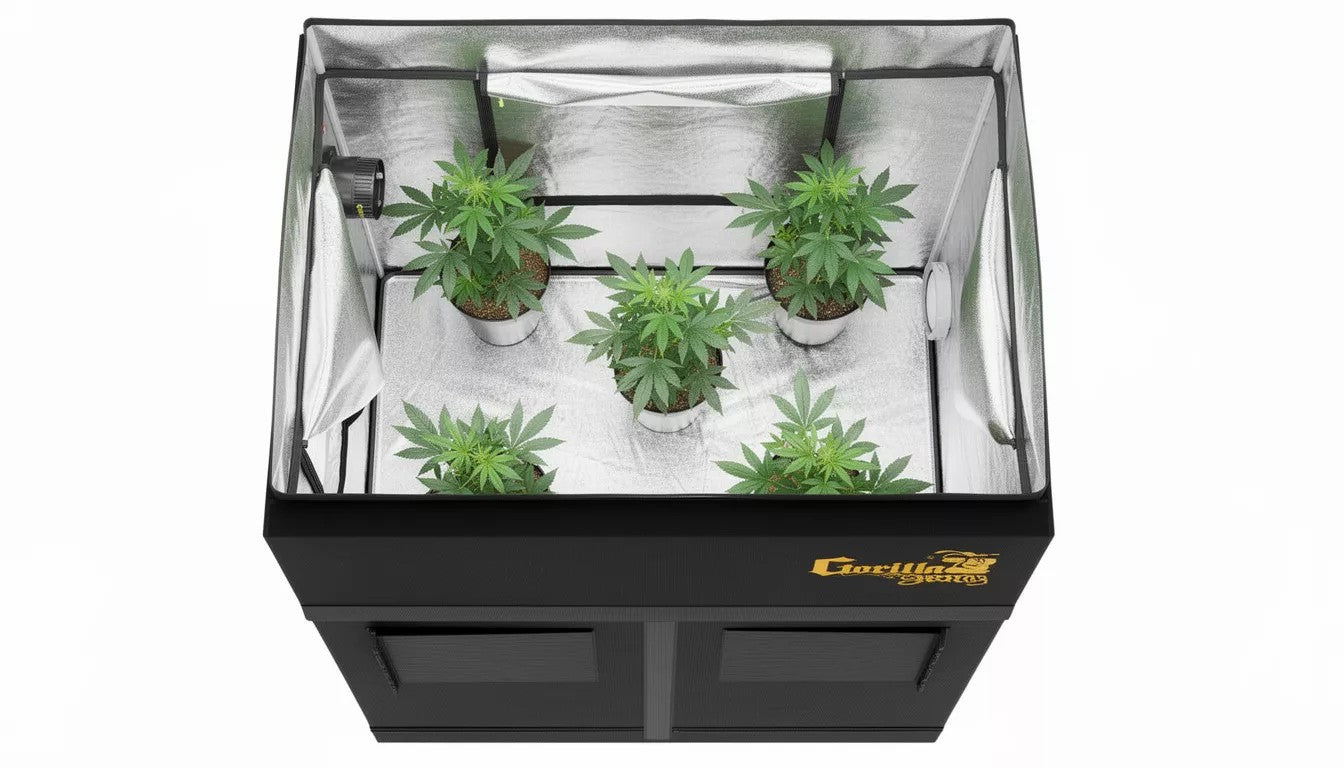
For comprehensive solutions, complete grow tent kits provide everything needed for year-round growing including seed starting:
- Professional-grade grow tent with reflective interior
- Appropriate LED lighting sized for space
- Ventilation equipment for temperature and humidity control
- All mounting hardware and accessories
These integrated systems eliminate compatibility concerns while providing professional results for both seed starting and growing mature plants.
Frequently Asked Questions
Do seeds need light to germinate?
Most seeds don't require light for germination—they germinate in darkness underground. However, some species (lettuce, petunias, snapdragons) are "light germinators" requiring light exposure to sprout. Check seed packet instructions. Critically, all seedlings need intense light immediately upon emergence to prevent stretching. Have grow lights ready before germination and turn them on the moment you spot green shoots.
How far should grow lights be from seedlings?
LED grow lights should position 18-24 inches above newly emerged seedlings, gradually lowering to 12-18 inches as they mature. Distance depends on light intensity and seedling response. Monitor for signs of stress (curling, bleaching) indicating lights are too close, or stretching indicating lights are too far. Adjust based on your specific setup and plant response.
How many hours of light do seedlings need?
Most seedlings thrive with 14-16 hours of light daily. This extended photoperiod maximizes photosynthesis and growth without depriving plants of essential dark periods for metabolic processes. Use automatic timers maintaining consistent schedules—irregular photoperiods stress seedlings and reduce vigor. Some crops like tomatoes tolerate 16-18 hours while others like lettuce prefer 12-14 hours.
Can I use regular LED bulbs for seed starting?
No. Regular household LED bulbs don't provide the spectrum or intensity seedlings require for proper development. They lack adequate blue wavelengths promoting compact growth and deliver insufficient overall intensity. While seedlings may survive under household LEDs, they'll stretch and develop poorly. Invest in proper horticultural LED grow lights designed specifically for plant cultivation to achieve healthy, vigorous seedlings.
When should I move seedlings from grow lights to outdoors?
Transplant timing depends on your climate and crop. Most vegetables transplant after last frost date when soil warms adequately. Begin hardening off 7-10 days before transplanting by gradually exposing seedlings to outdoor conditions—start with 1-2 hours of morning sun, increasing daily. Seedlings are ready when they've developed 2-4 sets of true leaves and adapted to outdoor conditions through hardening.
Featured Snippet Summary
Seeds need grow lights positioned 18-24 inches above trays immediately upon emergence to prevent stretching. Seedlings require 14-16 hours of full-spectrum light daily at 100-300 μmol/m²/s PPFD intensity. LED grow lights work best for seed starting, providing cool operation and adjustable intensity that adapts as seedlings mature. Position newly emerged seedlings 18-24 inches from lights, gradually lowering to 12-18 inches over 2-3 weeks. Use timers maintaining consistent photoperiods. Quality LED systems like Gorilla Xi Series deliver professional results through efficient operation, complete spectrum coverage, and smartphone control that simplifies seed starting for beginners and experts alike.
Start Your Seeds Right, Grow Your Garden Strong
Successful gardening begins with vigorous seedlings—and vigorous seedlings begin with proper lighting. The right grow light transforms seed starting from frustrating to foolproof, producing stocky, healthy transplants that outperform anything available at garden centers while giving your garden the strongest possible foundation.
The investment in quality seed starting lights pays enormous dividends through decades of reliable service producing countless healthy seedlings. Modern LED technology makes it simple to provide the exact conditions seeds need from germination through transplanting, eliminating the guesswork and disappointment that plagued earlier generations of gardeners.
Ready to achieve those spectacular seedlings you've been dreaming of? Browse the complete selection of LED grow lights and seed starting systems specifically engineered for professional results. Whether you're starting a few tomatoes for summer harvest or launching a comprehensive year-round growing operation, Gorilla Grow Tent provides the professional-grade equipment and expert guidance you need for success. Stop struggling with leggy, weak seedlings—give your seeds the perfect start they deserve and watch them transform into the vigorous, productive plants they were meant to be!