Complete Guide to LED Full Spectrum Grow Lights for Indoor Gardening Success
Indoor growing has never been more accessible, and LED full spectrum grow lights are the reason why. These advanced lighting systems have revolutionized how we cultivate plants indoors, delivering the perfect balance of wavelengths that plants need from seedling to harvest. Whether you're growing herbs in your kitchen, cultivating vegetables in a spare room, or running a dedicated grow tent operation, understanding full spectrum LED technology is your key to maximizing yields and plant health.
Let's dive into everything you need to know about LED full spectrum grow lights and how they can transform your indoor garden into a thriving oasis of productivity.
What Is a Full Spectrum LED Grow Light?
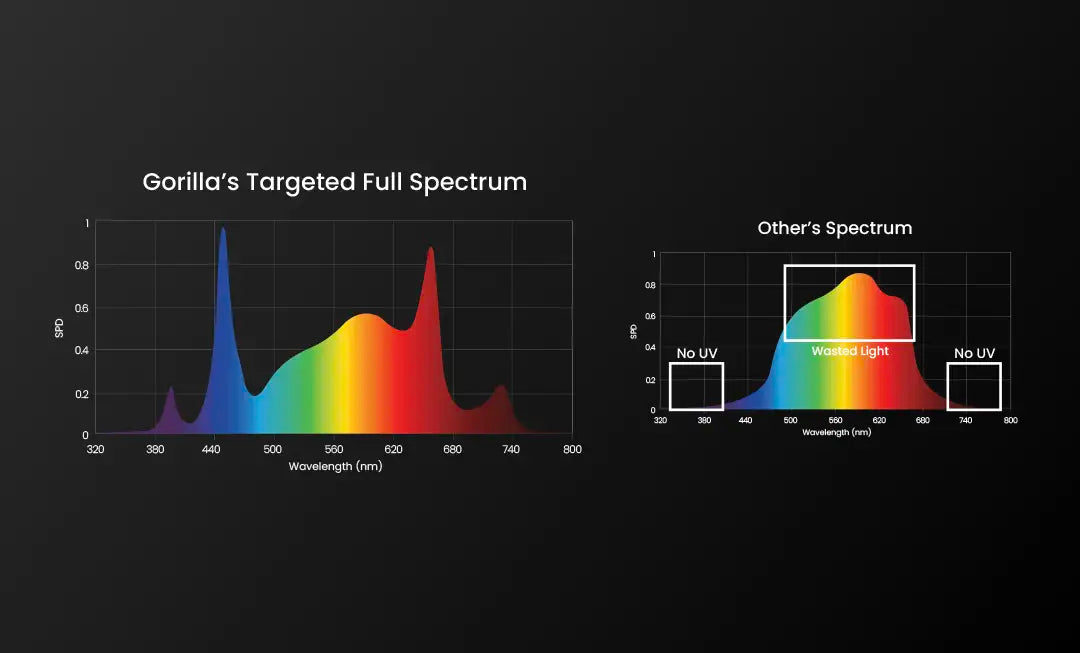
A full spectrum LED grow light mimics the complete light spectrum produced by the sun. Unlike older "blurple" lights that only emit blue and red wavelengths, modern full spectrum LEDs provide your plants with the entire range of light they need throughout their entire lifecycle.
Think about how plants evolved over millions of years under natural sunlight. They've adapted to use specific wavelengths for different functions. Blue light (400-500nm) promotes strong vegetative growth, building robust stems and healthy foliage. Red light (600-700nm) triggers flowering and fruit production. Far-red and infrared wavelengths penetrate deep into the canopy and enhance flower density, while UV wavelengths trigger beneficial stress responses that increase resin production and terpene profiles.
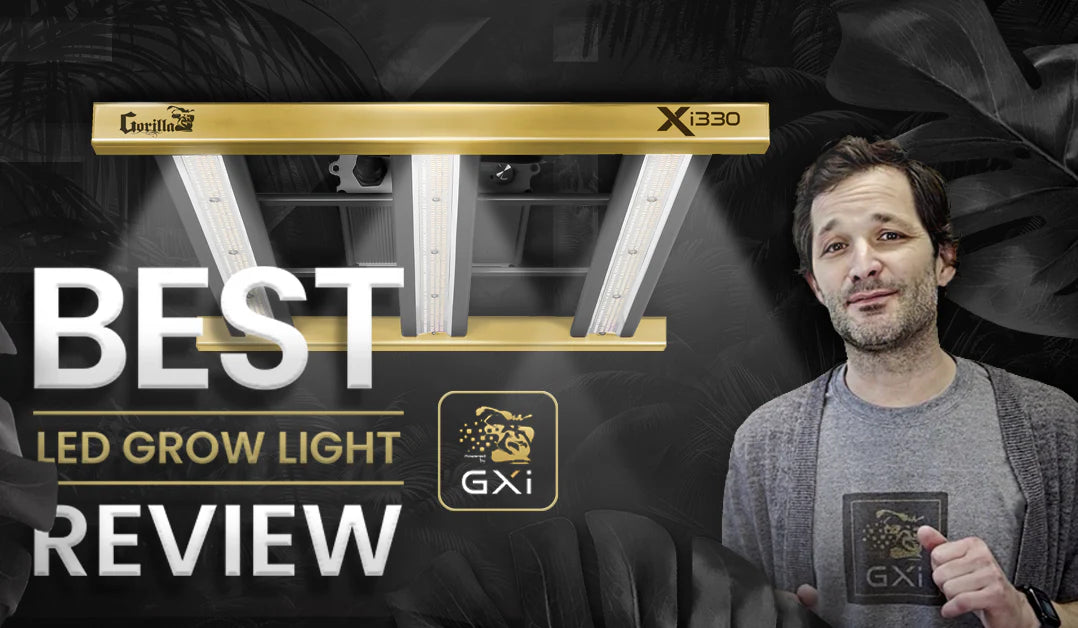
The Gorilla Xi Series LED Grow Lights exemplify this technology perfectly. These lights deliver precisely calibrated wavelengths that plants actually absorb and utilize, rather than wasting energy on light that looks good to human eyes but doesn't help your plants grow.

Why LED Full Spectrum Grow Lights Outperform Traditional Lighting
The benefits of switching to full spectrum LED technology go far beyond simple energy savings. Here's what makes these lights the top choice for serious indoor growers.
Dramatic Energy Savings That Pay for Themselves
Full spectrum LED grow lights use 40-60% less electricity compared to traditional HID (High-Intensity Discharge) lights. This isn't just marketing hype—it's real savings that show up on your electricity bill every single month.
Quality LED systems typically pay for themselves within two to three years through reduced energy costs alone. The Xi420 LED Grow Light maximizes production in 2x4 to 3x4 spaces while consuming significantly less power than older lighting technologies. Plus, you can reduce heat output by up to 25% by using a remote driver mount, which cuts down on cooling costs even further.
One Light for All Growth Stages
Traditional grow lights force you to compromise. Metal Halide bulbs work well for vegetative growth but poorly for flowering. High-Pressure Sodium lights excel during bloom but produce stretched, weak vegetative growth. You end up buying multiple systems or accepting suboptimal results.
Full spectrum LEDs eliminate this problem completely. Modern systems like the Xi750 LED Grow Light feature tri-channel spectrum control that lets you adjust blue, red, and UV/IR wavelengths independently. You get optimal light for seedlings, robust vegetative growth, and explosive flowering—all from the same fixture.
Superior Light Distribution and Penetration
LED full spectrum grow lights distribute light more evenly across your canopy compared to single-point HID bulbs. This means plants at the edges of your grow space receive nearly the same light intensity as plants in the center, resulting in more uniform growth and consistent yields.
The bar-style design of premium LEDs also provides better canopy penetration. Light reaches lower leaves and bud sites that would remain shaded under traditional bulbs, increasing overall productivity and eliminating "larf" (underdeveloped lower buds).
Cooler Operation Reduces Stress and Saves Money
Heat management is critical in indoor growing. Traditional HID lights generate massive amounts of heat that stresses plants, increases water consumption, and forces you to run powerful ventilation systems that spike your electricity costs.
LED full spectrum grow lights operate significantly cooler. They convert more energy into usable light and less into waste heat. This means your plants grow in more comfortable conditions, you water less frequently, and your ventilation system runs less often. Many growers report reducing their HVAC costs by 30-50% after switching to LEDs.

Understanding Key Specifications When Choosing LED Full Spectrum Grow Lights
Shopping for LED grow lights can feel overwhelming when hundreds of options all claim to be "the best." Here's how to cut through the marketing noise and identify quality systems.
Actual Wattage vs. Marketing Wattage
Many cheap LED manufacturers advertise "1000W equivalent" lights that actually draw only 150 watts from the wall. This deceptive marketing makes comparison shopping difficult and often disappoints buyers who expected professional results.
Always check product specifications for "true wattage," "actual power consumption," or "wall draw" to understand real electrical requirements and performance potential. Quality manufacturers clearly state actual wattage without inflated equivalency claims.
PPFD: The Metric That Actually Matters
PPFD (Photosynthetic Photon Flux Density) measures the amount of usable light energy that actually reaches your plants. This metric matters far more than wattage claims because it tells you exactly what your plants receive.
Quality manufacturers provide detailed PPFD maps showing light distribution across their coverage area at various mounting heights. Here's what different growth stages need:
- Seedlings: 200-400 µmol/m²/s
- Vegetative growth: 400-600 µmol/m²/s
- Flowering: 600-1000+ µmol/m²/s
The Xi330 LED Grow Light is designed for 2'x3' to 3'x3' footprints and delivers consistent PPFD values across its entire coverage area, ensuring every plant receives optimal light intensity.
Spectrum Control: Single vs. Multi-Channel Systems
Single-spectrum lights force compromise—too blue for flowering or too red for vegetative growth. Multi-channel spectrum control enables precise adjustment throughout growth cycles.
Tri-channel systems allow independent control of blue, red, and UV/IR wavelengths, optimizing light delivery at every stage while eliminating wasted energy. UV wavelengths trigger beneficial stress responses that increase resin production and secondary metabolites, enhancing potency and terpene profiles. IR wavelengths penetrate deeper into canopy and boost flower density.
Systems lacking these specialized wavelengths simply cannot achieve the same quality results as advanced models offering UV/IR control. Learn more about comparing LED grow lights for detailed specifications.
Build Quality and Component Selection
Premium LED full spectrum grow lights use top-tier components from manufacturers like Samsung, Osram, and Mean Well. These components ensure consistent performance over 50,000+ hours of operation with minimal light degradation.
Look for lights built with aircraft-grade aluminum heat sinks that rapidly disperse heat, keeping LEDs at optimal operating temperatures. Proper thermal management extends component life and maintains light output consistency grow after grow.

How to Set Up Your LED Full Spectrum Grow Light System
Proper installation and positioning are crucial for maximizing the effectiveness of your LED full spectrum grow lights. Here's how to get it right from day one.
Calculating the Right Size for Your Space
LED grow lights are sized by their coverage area, not wattage. Match your light to your actual growing space for optimal results:
- 2x2 to 2.5x2.5 feet: Xi220 LED Grow Light (220W)
- 2x3 to 3x3 feet: Xi330 LED Grow Light (330W)
- 2x4 to 3x4 feet: Xi420 LED Grow Light (420W)
- 4x4 to 5x5 feet: Xi750 LED Grow Light (750W)
Undersized lights leave edges in darkness, while oversized lights waste money on coverage you don't need.
Proper Hanging Height and Distance
Light intensity follows the inverse square law—double the distance, and intensity drops to one-quarter. Getting hanging height right is critical.
For LED full spectrum grow lights, use these general guidelines:
- Seedlings: 24-36 inches above canopy (200-300 PPFD)
- Vegetative: 18-24 inches above canopy (400-600 PPFD)
- Flowering: 12-18 inches above canopy (600-900 PPFD)
Always monitor your plants for signs of light stress. Bleaching, yellowing top leaves, or excessive heat indicate lights are too close. Stretching, weak stems, or slow growth suggest lights are too far away. Check out this detailed guide on grow light distance for specific recommendations by growth stage.
Programming Your Light Schedule
Different plants and growth stages require different photoperiods:
Vegetative stage: Most plants thrive with 18 hours of light and 6 hours of darkness. This promotes robust vegetative growth, strong stems, and healthy foliage development.
Flowering stage: Most flowering plants need 12 hours of light and 12 hours of darkness to trigger and maintain bloom. This mimics natural seasonal light changes that signal plants to flower.
The GXi Wireless Grow Intelligence system on Gorilla Xi Series lights connects directly to the Gorilla Grow Tent App, allowing you to program custom light schedules with sunrise/sunset technology. This gently ramps light intensity up and down to prevent light shock and simulate natural growing conditions.
Maximizing Performance with Smart Spectrum Control
Take advantage of multi-channel control to fine-tune your spectrum throughout the grow cycle:
Seedlings (0-2 weeks): Use low intensity with balanced spectrum. Avoid UV/IR channels during this delicate stage.
Vegetative (2-8 weeks): Increase blue spectrum for compact, bushy growth with tight internodal spacing. Keep intensity at 400-600 PPFD.
Early Flowering (1-3 weeks): Gradually shift toward red spectrum while maintaining moderate blue to prevent excessive stretch.
Mid-Late Flowering (3-8 weeks): Maximize red spectrum and introduce UV/IR channels. UV triggers trichome production and enhances terpene profiles, while IR increases flower density and overall yield weight.
For more guidance on optimizing your entire setup, explore this comprehensive grow tent setup guide.
Common Mistakes to Avoid with LED Full Spectrum Grow Lights
Even experienced growers make these errors when switching to LEDs. Avoid these pitfalls to maximize your investment.
Mistake 1: Mounting Lights Too High
Many growers trained on HID systems hang LEDs at the same distance they used for hot HPS bulbs. LEDs run cooler, allowing you to position them much closer to plants without heat stress.
Mounting LEDs too high wastes light intensity. Follow manufacturer recommendations and adjust based on plant response. Use a PAR meter or smartphone app to measure actual PPFD at canopy level.
Mistake 2: Ignoring Spectrum Adjustments
Don't set your full spectrum LED to one setting and forget it. Plants have different light needs at different growth stages. Take advantage of spectrum control to optimize wavelengths throughout the grow cycle.
If your light offers UV/IR channels, remember these are most beneficial during mid-late flowering. Running UV during seedling or early vegetative stages can cause unnecessary stress without providing benefits.
Mistake 3: Buying Cheap LEDs Without Proper Research
Budget LEDs often use inferior diodes, inadequate heat sinks, and cheap drivers that fail prematurely. The initial savings evaporate when you replace failed lights or deal with poor plant performance.
Quality LED full spectrum grow lights from reputable manufacturers come with 3-5 year warranties and use premium components that maintain performance for 50,000+ hours. Calculate total cost of ownership, not just purchase price. Read more about what makes the best LED grow light in 2025.
Mistake 4: Overlooking Environmental Controls
LED efficiency means your grow space stays cooler. While this generally benefits plants, it also means less dehumidification from heat. Many growers switching from HID to LED discover they need to adjust their environmental controls.
Monitor temperature and humidity closely during your first LED grow cycle. You may need to adjust your HVAC settings, reduce ventilation, or add supplemental heating to maintain optimal growing conditions.
LED Full Spectrum Grow Lights: FAQ Section
Q: What is the difference between full spectrum and regular LED grow lights?
A: Regular LED grow lights (often called "blurple" lights) emit only specific wavelengths, typically blue and red. Full spectrum LED grow lights provide a complete range of wavelengths similar to natural sunlight, including blue, red, far-red, and UV wavelengths. This complete spectrum supports all growth stages and produces healthier, more robust plants with better yields and quality.
Q: How much can I save on electricity with LED full spectrum grow lights?
A: LED full spectrum grow lights typically use 40-60% less electricity than comparable HID systems while producing similar or better results. For example, a 420W LED can replace a 600W HPS bulb, saving approximately 180 watts per hour. At $0.12 per kWh running 12 hours daily, this saves about $79 per month or $945 annually per light. Factor in reduced cooling costs, and annual savings often exceed $1,200 per light.
Q: Do I need different lights for vegetative growth and flowering?
A: No. Quality full spectrum LED grow lights work perfectly for all growth stages. Advanced systems like the Gorilla Xi Series feature tri-channel spectrum control, allowing you to adjust blue, red, and UV/IR wavelengths independently to optimize performance at each stage. This eliminates the need to purchase separate vegetative and flowering lights.
Q: How long do LED full spectrum grow lights last?
A: Premium LED full spectrum grow lights typically last 50,000-100,000 hours, which translates to 5-10 years of continuous 12-hour daily use. The actual lifespan depends on build quality, heat management, and component selection. Lights using premium Osram or Samsung diodes with proper thermal management maintain 90%+ of their original output even after years of operation.
Q: Can I use LED full spectrum grow lights for seedlings?
A: Yes, but with proper distance and intensity adjustment. Seedlings need much lower light intensity (200-400 PPFD) than mature plants. Position lights 24-36 inches above seedlings or use dimming controls to reduce intensity. Many modern LEDs offer programmable settings specifically designed for seedlings. Learn more about optimal PPFD for seedlings in our detailed guide.
Featured Snippet Summary
LED full spectrum grow lights replicate natural sunlight wavelengths, providing plants with optimal light for all growth stages. They use 40-60% less electricity than HID lights, operate cooler, and last 50,000+ hours. Key features include multi-channel spectrum control for precise wavelength adjustment, uniform PPFD distribution for consistent yields, and smart controls for automated light schedules. Choose lights sized appropriately for your space and look for premium components from manufacturers like Samsung, Osram, and Mean Well.
Ready to Transform Your Indoor Garden?
LED full spectrum grow lights represent the future of indoor cultivation. They deliver superior results while dramatically reducing energy costs, heat output, and maintenance requirements. Whether you're just starting your indoor growing journey or upgrading from older lighting technology, investing in quality full spectrum LEDs sets the foundation for years of successful harvests.
The Gorilla Xi Series LED Grow Lights combine Northern California growing expertise with cutting-edge technology to maximize your plants' genetic potential. With tri-channel spectrum control, GXi Wireless Intelligence, and professional-grade construction backed by a 3-year warranty, these lights deliver the performance serious cultivators demand.
Stop compromising on light quality. Upgrade to LED full spectrum technology and experience the difference that proper lighting makes in plant health, yield quality, and growing efficiency. Your plants—and your electricity bill—will thank you.
For more expert guidance on optimizing your indoor growing setup, check out our guides on installing LED grow lights and choosing the best plants for grow tents. Ready to build your perfect growing environment? Explore our complete selection of grow tents, lighting, and accessories designed to help you achieve professional results.