Planting Seeds: A Complete Guide to Growing Healthy Plants in Your Grow Tent
Are you eager to start your indoor garden but unsure about the proper way to plant seeds? Whether you're a beginner or experienced grower, mastering the art of seed planting is crucial for successful harvests. In this comprehensive guide, we'll walk you through every step of the process—from selecting quality seeds to caring for your seedlings until they mature into healthy, vibrant plants.

Understanding Seed Basics: What You Need to Know Before Planting
Before diving into the planting process, it's important to understand a few basics about seeds. Seeds are essentially dormant plants waiting for the right conditions to sprout and grow. Each seed contains everything needed to start a new plant—an embryo (baby plant), stored food, and a protective coating.
Types of Seeds and Their Requirements
Different plants have varying seed requirements. Some need light to germinate, while others prefer darkness. Some germinate best in warm soil, others in cooler conditions. Here's a quick breakdown:
- Light-dependent seeds: These need exposure to light for germination and should be pressed gently onto the soil surface rather than buried.
- Dark-requiring seeds: These need to be covered with soil to germinate properly.
- Temperature-sensitive seeds: Most seeds germinate best between 65-75°F (18-24°C), but some tropical varieties need warmer conditions, while others prefer cooler temperatures.
Understanding these basic requirements will significantly improve your germination rates. The Gorilla Grow Tent 2x4 provides the perfect controlled environment to meet all your seeds' needs, with adjustable height to accommodate plants as they grow.
Seed Quality and Storage
The quality and freshness of your seeds play a crucial role in germination success. Fresh seeds typically have higher germination rates than older ones. If you're storing seeds for future use, keep them in a cool, dry place—ideally in an airtight container in the refrigerator.
Essential Supplies for Planting Seeds
Before you start planting, gather all necessary supplies:
- Seeds: Choose high-quality seeds from reputable sources.
- Growing medium: Seed-starting mix or sterile potting soil.
- Containers: Seed trays, pots, or biodegradable seed starters.
- Labels: To identify what you've planted.
- Watering tools: Spray bottle or watering can with a fine rose.
- Humidity dome: To maintain moisture around seeds.
- Heat mat: For seeds that require warmer soil temperatures.
- Grow lights: For providing optimal light conditions.
A Gorilla Grow Tent Kit includes most of what you need for successful seed starting and comes with the industry's strongest grow tent for creating the perfect controlled environment.
Step-by-Step Seed Planting Guide
Step 1: Prepare Your Growing Medium
Start with a high-quality seed-starting mix or sterile potting soil. Pre-moisten the mix until it's damp but not soaking wet. Fill your containers to about ¼ inch from the top and gently tap them to settle the soil.

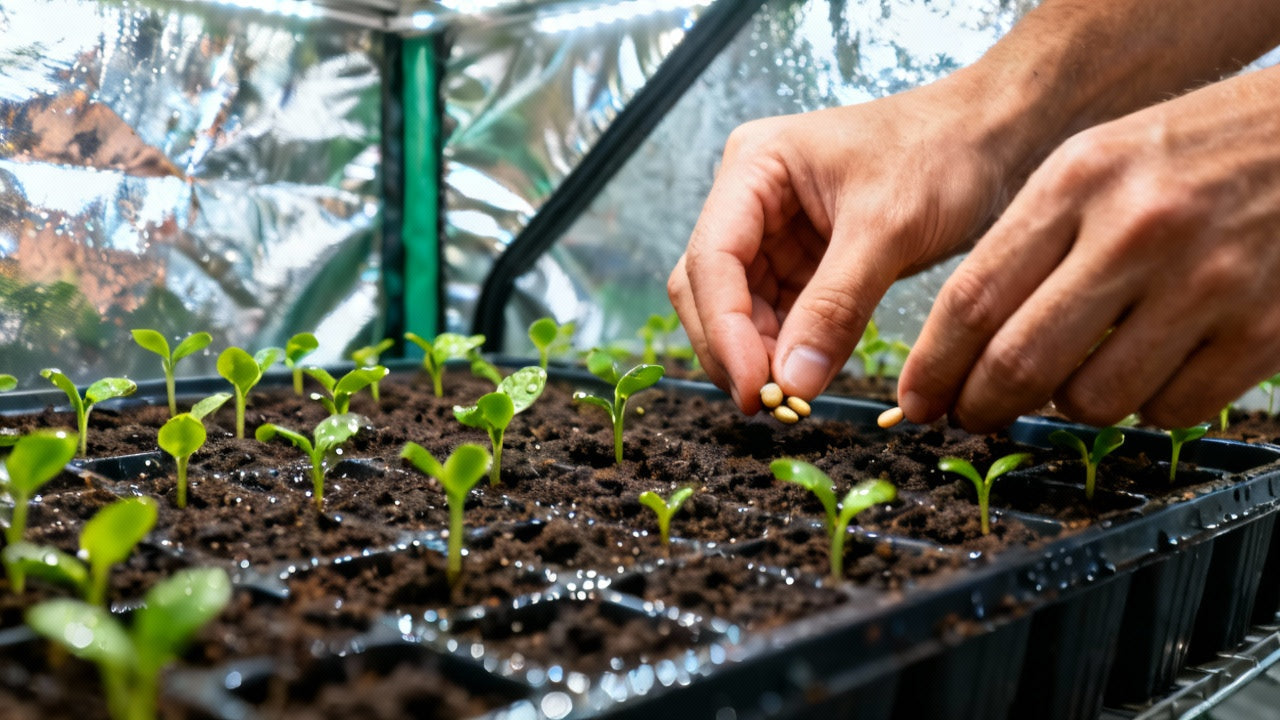
Step 2: Sow the Seeds
Depending on the seed size:
- For tiny seeds: Sprinkle them on the soil surface.
- For medium-sized seeds: Make shallow indentations and place 2-3 seeds per hole.
- For larger seeds: Create deeper holes (about twice the seed's diameter) and place one seed per hole.
Always check the seed packet for specific planting depth recommendations.
Step 3: Cover the Seeds
Cover small and medium seeds with a thin layer of soil or vermiculite. Remember that some seeds need light to germinate and should only be pressed gently onto the soil surface without covering.
Step 4: Water Gently
Water your newly planted seeds gently using a spray bottle or a watering can with a fine rose. The goal is to keep the soil consistently moist but not waterlogged. Overwatering can lead to fungal diseases and seed rot.
Step 5: Create Optimal Conditions
Place your seed trays in a warm location with appropriate light conditions. For most seeds, a temperature between 65-75°F (18-24°C) is ideal. If you're using a Gorilla Grow Tent, you can easily maintain these conditions with proper ventilation and lighting.
Cover the trays with a humidity dome or plastic wrap to maintain moisture levels and create a mini greenhouse effect. Remove this cover once seedlings emerge.
Caring for Your Seedlings After Germination
Providing Adequate Light
Once your seeds germinate, they need proper lighting to grow strong. Inadequate light leads to weak, leggy seedlings. Position your seedlings under grow lights, keeping the lights just a few inches above the seedling tops. Raise the lights as the plants grow.
The height-adjustable feature of Gorilla Grow Tents makes it easy to accommodate your growing plants and lighting setup, ensuring optimal conditions at every stage.

Watering Seedlings Properly
Water seedlings from the bottom when possible by placing the trays in shallow water and allowing the soil to absorb moisture. This promotes stronger root growth and prevents damping-off disease. Let the soil surface dry slightly between waterings, but never let seedlings wilt.
Providing Airflow
Good air circulation helps prevent fungal diseases and strengthens seedling stems. Once seedlings have their first true leaves, remove any humidity dome and ensure proper ventilation. A small fan set on low can provide gentle air movement.
Thinning Seedlings
If multiple seeds germinated in the same cell or pot, you'll need to thin them out. Keep the strongest seedling and snip the others at soil level using scissors. Avoid pulling them out, which could disturb the roots of the seedling you want to keep.
Transplanting Seedlings
When seedlings have developed several sets of true leaves and are strong enough to handle, it's time to transplant them to larger containers or their final growing location.
When to Transplant
Timing varies by plant type, but generally, seedlings are ready for transplanting when:
- They have at least 2-3 sets of true leaves (not counting the cotyledons or seed leaves)
- The root system has developed enough to hold the soil together
- They've outgrown their current containers
The Transplanting Process
- Water seedlings an hour before transplanting to reduce shock.
- Prepare new containers with quality potting mix.
- Make a hole in the new soil large enough for the seedling's root ball.
- Gently remove the seedling, supporting the stem between your fingers.
- Place in the new container at the same depth it was growing before.
- Firm the soil gently around the roots.
- Water thoroughly after transplanting.
Common Seed Starting Problems and Solutions
Problem: Seeds Not Germinating
Possible causes:
- Old or poor-quality seeds
- Improper temperature
- Too much or too little water
- Planted too deep
Solutions:
- Use fresh, high-quality seeds
- Provide appropriate temperature (use a heat mat if necessary)
- Maintain consistent moisture
- Follow seed packet depth recommendations
Problem: Leggy, Weak Seedlings
Possible causes:
- Insufficient light
- Overcrowding
- Too much heat
Solutions:
- Provide more intense light closer to seedlings
- Thin seedlings to proper spacing
- Maintain appropriate temperature
- Use a small fan to strengthen stems
Problem: Damping-Off Disease
Possible causes:
- Fungal infection
- Poor air circulation
- Overwatering
Solutions:
- Use sterile potting mix and clean containers
- Improve ventilation
- Water from the bottom
- Apply a thin layer of fine sand or vermiculite on soil surface
FAQ: Common Questions About Planting Seeds
How long do seeds take to germinate?
Germination time varies widely by plant species. Some fast-germinating seeds like lettuce may sprout in 2-3 days, while others like peppers can take 2-3 weeks. Always check the seed packet for specific information.
Should I soak seeds before planting?
Some larger or harder seeds benefit from soaking for 12-24 hours before planting. This softens the seed coat and speeds germination. However, tiny seeds or those with very thin coats should not be soaked.
How often should I water newly planted seeds?
Keep the soil consistently moist but not waterlogged. Depending on your environment, this might mean misting once or twice daily. Using a humidity dome can reduce watering frequency.
Do all seeds need light to germinate?
No. Some seeds require light to germinate (like lettuce and petunias), while others need darkness (like tomatoes and peppers). Check seed packets for specific requirements.
When should I start fertilizing my seedlings?
Wait until seedlings have their first true leaves before fertilizing, and then use a half-strength, balanced liquid fertilizer once a week.
Final Thoughts: Creating the Perfect Environment for Seed Growth
Successful seed planting is all about creating the right environment. With the proper temperature, moisture, light, and care, you can achieve excellent germination rates and grow healthy, robust plants.
For indoor growers, a Gorilla Grow Tent provides the ideal controlled environment for starting seeds and growing plants to maturity. With superior construction, height adjustability, and excellent light reflection, these professional-grade grow tents help you maximize your growing potential.
Ready to start your seed-planting journey? Gather your supplies, select your favorite seeds, and follow this guide to grow healthy, productive plants from seed to harvest. Happy growing!
Have you tried growing plants from seeds in your Gorilla Grow Tent? Share your experiences and tips in the comments below!