How to Use Grow Lights: The Complete Step-by-Step Guide for Indoor Growing Success
Staring at wilted seedlings on your windowsill? Watching your herbs stretch desperately toward inadequate sunlight? Frustrated that your indoor plants refuse to thrive despite your best efforts? You're not alone—and the solution is simpler than you think.
Grow lights transform struggling indoor gardens into thriving, productive spaces by providing the intense, consistent illumination plants need to flourish. Whether you're starting vegetable seedlings in February, maintaining a year-round herb garden, or cultivating exotic houseplants, understanding how to use grow lights properly makes the difference between disappointing results and spectacular success.
The challenge isn't just buying grow lights—it's using them correctly. Position them wrong and you'll burn foliage or waste electricity. Use the wrong spectrum and plants won't flower. Run them on irregular schedules and growth suffers. This comprehensive guide eliminates the guesswork, walking you through every aspect of using grow lights effectively.
From choosing the right system to positioning lights at optimal distances, setting proper schedules, and troubleshooting common problems, you'll discover practical, tested strategies that actually work. Whether you're a complete beginner or experienced gardener upgrading to LED technology, this guide provides everything you need to master indoor growing with artificial lighting. Let's transform your indoor garden from struggling to spectacular.
Understanding How Grow Lights Work
Before diving into practical usage, understanding the science behind grow lights helps you make better decisions and achieve superior results.
The Science of Photosynthesis and Light
Plants evolved over millions of years to harness sunlight through photosynthesis—the miraculous process that converts light energy into chemical energy (sugars) that fuel growth. Chlorophyll, the green pigment in plant cells, absorbs specific wavelengths of light most efficiently: blue light (400-500nm) for vegetative growth and red light (600-700nm) for flowering and fruiting.
Natural sunlight provides the complete spectrum of wavelengths plants need, delivering approximately 100,000 lux on bright summer days. Indoor environments rarely provide even 10% of this intensity, which explains why plants struggle near windows and refuse to thrive in typical room lighting.
Quality grow lights for plants replicate the essential wavelengths of sunlight, delivering concentrated photons directly to your plants. By positioning lights close to foliage and running them for extended periods, you compensate for their lower intensity compared to direct sun, providing adequate total daily light integral (DLI) for robust growth.
Why Regular Light Bulbs Don't Work
Standard household LED bulbs, designed for human visual comfort, emphasize wavelengths in the green-yellow spectrum where plants absorb light poorly. While humans perceive green light as bright, plants primarily reflect it—that's why foliage appears green to our eyes.
Even "daylight" bulbs optimized for natural color rendering waste significant energy on wavelengths plants can't utilize efficiently. Dedicated grow lights engineer their spectrum specifically for photosynthesis, maximizing usable photons per watt consumed. This targeted approach delivers dramatically better growth while actually consuming less electricity than trying to grow under household bulbs.
LED vs. Traditional Grow Light Technology
Modern LED grow lights have revolutionized indoor cultivation. These advanced systems consume 50-70% less electricity than older fluorescent or HID (High-Intensity Discharge) technologies while lasting 50,000+ hours—that's 10+ years of continuous operation without bulb replacement.
LED technology's low heat output represents perhaps its greatest advantage. Traditional grow lights generate excessive heat that stresses plants, complicates temperature management, and increases cooling costs. Cool-running LEDs allow positioning lights much closer to plants for maximum intensity without heat damage, while maintaining comfortable ambient temperatures.
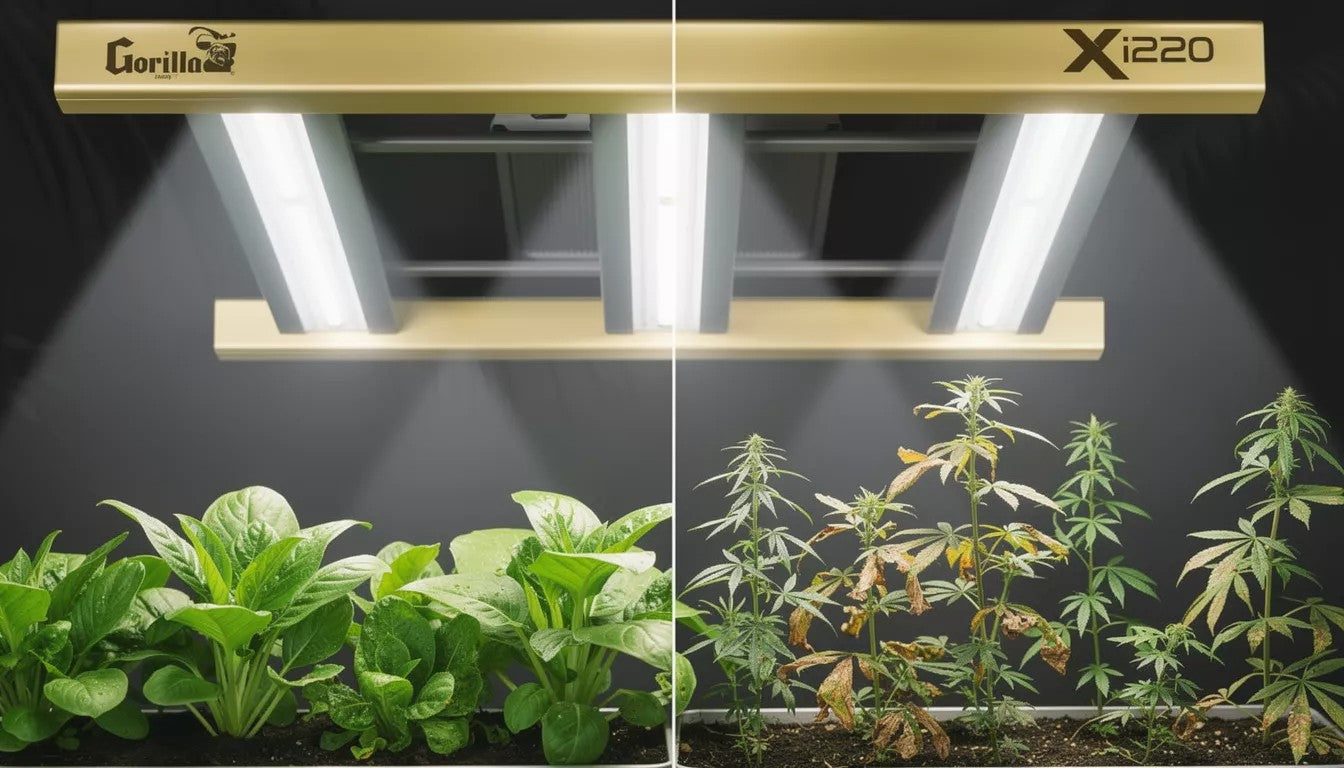
The Gorilla GXi Series LED Grow Lights exemplify modern LED excellence with targeted full-spectrum output, wireless app control, and tri-channel spectrum adjustment. These features provide professional-grade performance that was impossible with older lighting technologies.

Step 1: Choosing the Right Grow Light for Your Needs
Success begins with selecting appropriate equipment matched to your specific growing situation.
Assess Your Growing Space
Start by measuring your growing area. A 2x2 foot shelf requires dramatically different lighting than a 4x4 grow tent. Calculate the square footage you need to illuminate—this determines which grow light size and wattage you'll need.
As a general rule, quality LED systems require approximately 30-50 watts per square foot for most plants. Herbs and leafy greens manage with the lower end (30-35 watts/sq ft), while fruiting vegetables and flowering plants benefit from the higher end (40-50 watts/sq ft).
For compact spaces (2x2 to 2.5x2.5 feet), the Gorilla Xi220 LED Grow Light delivers 220W of concentrated power perfect for 1-4 plants without overwhelming small areas or closets.
Medium operations (2x3 to 3x3 feet) work best with the Xi330, providing ideal coverage for 2-6 plants with advanced features including tri-channel control and wireless connectivity.
Standard growing spaces (2x4 to 3x4 feet) benefit from the Xi420's professional-grade intensity and consistent PPFD distribution across the entire canopy.
Match Light to Plant Requirements
Different plant types require varying light intensities:
Low-Light Plants (100-200 PPFD): Shade-tolerant houseplants, ferns, and certain herbs like mint and parsley thrive with gentle lighting positioned farther from foliage.
Medium-Light Plants (200-400 PPFD): Most herbs, leafy greens like lettuce and spinach, and many popular houseplants perform best in this moderate range—bright but not intense.
High-Light Plants (400-800+ PPFD): Fruiting vegetables (tomatoes, peppers), flowering plants, and sun-loving herbs like basil and rosemary demand intense illumination for maximum productivity.
Understanding your plants' light requirements helps you select appropriate fixtures and position them correctly. For detailed guidance on different plant needs, explore our comprehensive guide on grow LED lights for indoor plants.
Consider Full-Spectrum vs. Targeted Spectrum
Full-spectrum LED lights provide the complete wavelength range from blue through red plus UV and far-red wavelengths. These versatile systems support plants through all growth stages without requiring multiple light changes. They produce natural-looking white light that allows you to appreciate your plants' true colors while working in your grow space.
Targeted spectrum lights emphasize blue and red wavelengths specifically, often appearing purple or pink ("blurple"). While plants can grow well under these lights, they make it difficult to visually assess plant health and many growers find the purple glow unpleasant in living spaces.
For most applications, full-spectrum LED grow lights represent the superior choice, combining versatility with pleasant aesthetics and complete support for all growth processes.

Step 2: Installing and Positioning Your Grow Lights
Proper installation determines whether your lighting investment delivers spectacular results or disappointing performance.
Safe Installation Basics
Always follow manufacturer instructions carefully—grow lights represent electrical equipment requiring respect and proper handling. Key safety considerations include:
- Verify electrical requirements: Ensure your outlets and circuit breakers handle the amperage your lights draw. Most LED systems operate on standard 110-120V household current, but verify before plugging in.
- Use appropriate hangers: Hang lights using adjustable rope ratchets or chains that allow easy height modifications as plants grow. The Gorilla grow tents feature robust ceiling bars rated to support 300+ pounds, easily handling multiple lights and accessories.
- Maintain proper clearance: Keep all electrical connections away from water sources and potential splashing. Position drivers (power supplies) in well-ventilated areas where heat dissipates safely.
- Secure all connections: Ensure plugs seat firmly in outlets and all connections between drivers and light fixtures secure completely. Loose connections generate heat and create fire hazards.
For detailed installation guidance, reference our tutorial on how to install LED grow lights in your indoor garden.
Optimal Light Distance and Positioning
The distance between grow lights and plant canopy dramatically impacts results. Position lights too close and you risk light burn or bleaching; too far and plants stretch desperately toward inadequate illumination.
General LED Distance Guidelines by Growth Stage:
Seedlings and Clones: 24-36 inches above plants. Young plants with underdeveloped root systems can't handle intense light and benefit from gentle illumination positioned higher.
Vegetative Growth: 18-24 inches for most plants. Established plants with robust root systems utilize more intense lighting for rapid foliage development.
Flowering/Fruiting: 12-18 inches for high-light plants producing flowers or fruit. This closer positioning delivers the maximum intensity needed for abundant production.
These distances serve as starting points—monitor your plants closely and adjust based on their response. Signs of excessive light include:
- Leaves bleaching or developing pale patches
- Foliage curling or cupping protectively
- Brown, crispy leaf edges
- Stunted growth despite otherwise good conditions
Signs of insufficient light include:
- Elongated stems stretching toward light
- Larger-than-normal spacing between leaf nodes (internodes)
- Pale, yellowish foliage instead of vibrant green
- Reduced or absent flowering
For detailed positioning guidelines, consult our comprehensive grow light distance chart covering various plant types and growth stages.
Ensuring Even Light Distribution
Position lights to provide uniform coverage across your entire growing area. Edge plants shouldn't receive dramatically less light than center plants—this causes uneven growth and reduced yields.
Quality grow lights specify their effective coverage area (footprint) at various heights. The Xi420, for example, provides intense coverage over 2x4 feet when hung 18 inches above the canopy, ensuring all plants receive adequate illumination.
For larger areas, use multiple lights rather than a single fixture positioned too high. Two properly positioned lights deliver better results than one oversized fixture struggling to cover excessive space.
The reflective interior of quality grow tents maximizes efficiency by bouncing photons back toward plants. This reflectivity increases effective light intensity by 20-30% compared to growing in standard rooms with painted walls that absorb light.
Step 3: Setting Optimal Light Schedules
Plants need darkness, not just light. The photoperiod (day/night cycle) you provide profoundly impacts growth patterns, flowering, and plant health.
Understanding Photoperiod Requirements
Different plant types respond to day length differently:
Long-Day Plants require extended light periods (14-18 hours) to flower and produce optimally. Most herbs, leafy greens, and many vegetables fall into this category. These plants naturally flower as days lengthen in late spring and summer.
Short-Day Plants need longer darkness periods (12+ hours of uninterrupted darkness) to initiate flowering. Examples include poinsettias, chrysanthemums, and cannabis. These plants naturally flower as days shorten in fall.
Day-Neutral Plants flower based on maturity rather than day length. Tomatoes, peppers, cucumbers, and most fruiting vegetables flower regardless of photoperiod once they reach appropriate size and vigor.
Recommended Light Schedules by Plant Type
Seedlings and Young Plants: 14-16 hours daily promotes rapid establishment and strong vegetative growth. This extended light period provides ample photosynthesis time without overwhelming tender young plants.
Herbs and Leafy Greens: 14-16 hours daily maintains active growth and continuous harvesting. The longer photoperiod prevents premature flowering (bolting) in greens like lettuce and spinach.
Vegetative Growth (fruiting plants): 16-18 hours daily maximizes vegetative development, building the robust structure needed to support heavy fruit loads later.
Flowering and Fruiting: 12-14 hours daily for most fruiting vegetables. This moderate photoperiod supports flower and fruit development without wasting electricity on excessive light duration.
The smart GXi LED grow lights feature programmable schedules accessible via smartphone app. Set your desired schedule once and the system maintains it automatically, including gradual sunrise/sunset ramping that prevents light shock.
Using Timers Effectively
Invest in reliable timers—either mechanical or digital—to maintain consistent schedules automatically. Manual switching inevitably leads to irregular schedules that stress plants and reduce productivity.
Position timers accessibly for easy adjustments while keeping them dry and away from potential water contact. Digital timers offer more programming flexibility, but quality mechanical timers provide bulletproof reliability at lower cost.
Pro Tip: Start lights just before you wake up so you can inspect plants during their "daytime" after work or in evenings. Trying to work with plants during their dark period disrupts their rest and can interfere with flowering processes.

Step 4: Managing Temperature and Environment
Grow lights impact more than just illumination—they affect temperature, humidity, and overall growing conditions.
Temperature Control Under Grow Lights
Even cool-running LED systems generate some heat. In enclosed spaces without ventilation, this heat accumulates, potentially raising temperatures to stressful levels.
Most plants thrive between 65-75°F during their light period, with slightly cooler temperatures (60-70°F) during darkness. Monitor temperature at plant canopy level—where plants actually experience conditions—rather than relying on general room temperature.
High temperatures (above 85°F) stress plants, reducing photosynthesis efficiency despite adequate light. In extreme cases, excessive heat causes leaf curling, wilting, and reduced growth even under perfect lighting.
Install circulation fans to move air throughout your growing space. Oscillating fans prevent hot spots while strengthening plant stems through gentle movement. For enclosed grow tents, inline exhaust fans remove heat while drawing in fresh, CO2-rich air essential for photosynthesis.
Humidity Considerations
Grow lights, especially in enclosed spaces, can reduce ambient humidity as warm air holds less moisture. Most plants prefer 40-60% relative humidity, though specific requirements vary.
Monitor humidity with a simple hygrometer positioned at plant level. If humidity drops too low (below 35%), plants transpire excessively, struggling to maintain adequate hydration. Consider adding a humidifier or using humidity trays (water-filled saucers with pebbles) beneath plants.
Conversely, excessive humidity (above 70%) combined with poor air circulation encourages fungal diseases like powdery mildew. Maintain proper air exchange and circulation to prevent stagnant, overly humid conditions.
Maximizing Photosynthesis Efficiency
Light is just one component of photosynthesis. Plants also need:
Carbon Dioxide (CO2): Fresh air contains approximately 400 PPM (parts per million) CO2. Sealed grow spaces can become CO2-depleted as plants consume available CO2 during photosynthesis. Ensure adequate air exchange—at minimum, completely exchange the air in your growing space every 3-5 minutes during the light period.
Water and Nutrients: Plants growing under intense lights photosynthesize more actively, consuming more water and nutrients. Monitor soil moisture carefully and adjust fertilization to match increased growth rates. Quality plant fertilizers provide the complete nutrition plants need for vigorous growth under artificial lighting.
Proper Leaf Function: Keep foliage clean and healthy. Dust accumulation blocks light absorption, reducing photosynthesis efficiency. Gently wipe leaves periodically with a soft, damp cloth to maintain maximum light utilization.
Step 5: Adjusting for Different Growth Stages
As plants develop, their lighting needs change. Adjusting your setup through various growth stages optimizes results.
Seed Starting and Propagation
Newly germinated seedlings require gentle lighting positioned relatively far (24-36 inches) to prevent overwhelming tender growth. As seedlings develop their first true leaves, gradually lower lights to 18-24 inches, increasing intensity as root systems establish.
Many growers use separate, less intense lighting for seedlings and propagation, reserving powerful fixtures for mature plants. Alternatively, quality LED systems with dimming capability allow you to reduce intensity for young plants, then increase output as they mature.
Vegetative Growth
During vegetative development, plants focus on building foliage, stems, and root systems. Blue-heavy spectrum (400-500nm) encourages compact, bushy growth with tight internodal spacing during this phase.
Position lights at optimal vegetative distances (18-24 inches for most plants) and run extended photoperiods (16-18 hours) to maximize growth rate. This stage builds the robust structure needed for heavy flowering and fruiting later.
Flowering and Fruiting
As plants transition to reproductive growth, adjust lighting to support flowering and fruit development. Red spectrum light (600-700nm) becomes increasingly important during this phase.
Advanced systems like the Gorilla GXi lights feature tri-channel control allowing you to adjust spectrum throughout growth stages. Increase red/far-red wavelengths during flowering while potentially reducing overall photoperiod to 12-14 hours for plants requiring shorter days to bloom.
Position lights slightly closer during flowering (12-18 inches) to deliver maximum intensity that translates to denser flowers and heavier fruit production. For specific examples, see our guide on using grow lights for tomatoes that details optimal setup for fruiting crops.
Common Mistakes to Avoid
Learning from others' errors saves time, money, and plant casualties. Here are the most common grow light mistakes and how to avoid them.
Positioning Lights Incorrectly
Mistake: Setting lights at random heights without considering plant needs or manufacturer recommendations.
Solution: Follow distance guidelines based on light intensity and plant type. Start at recommended distances, then adjust based on plant response. Watch for signs of excessive or insufficient light and modify positioning accordingly.
Inconsistent Light Schedules
Mistake: Running lights on irregular schedules or forgetting to turn them on/off manually.
Solution: Use reliable timers to maintain consistent schedules automatically. Plants respond to photoperiod predictability—consistency matters more than absolute duration.
Neglecting to Adjust as Plants Grow
Mistake: Setting lights at initial height and never adjusting as plants grow toward them.
Solution: Check plant-to-light distance weekly. As plants grow taller, raise lights to maintain optimal spacing. Use adjustable hangers that make height changes quick and easy.
Insufficient Air Circulation
Mistake: Running grow lights in enclosed spaces without adequate ventilation or air movement.
Solution: Install circulation fans and, for enclosed spaces, exhaust fans that exchange air regularly. Proper airflow prevents heat buildup, strengthens stems, and provides fresh CO2 for photosynthesis.
Choosing Cheap, Inadequate Lights
Mistake: Purchasing the cheapest grow lights available, prioritizing initial cost over quality and performance.
Solution: Invest in quality lighting from reputable manufacturers. Cheap lights waste electricity on unusable wavelengths, fail prematurely, and deliver disappointing results. The benefits of using LED grow lights from quality manufacturers justify their higher initial investment through superior results and longevity.
Troubleshooting Common Problems
Even with proper setup, issues occasionally arise. Here's how to diagnose and fix common grow light problems.
Plants Stretching Toward Light
Problem: Elongated stems with large spaces between leaves indicate insufficient light intensity.
Solutions:
- Lower lights 2-4 inches closer to plants
- Extend photoperiod by 1-2 hours daily
- Upgrade to more powerful lighting if current fixtures lack adequate intensity
Leaf Burn or Bleaching
Problem: Pale patches, brown edges, or crispy foliage indicates excessive light intensity or heat stress.
Solutions:
- Raise lights 2-4 inches away from plants
- Reduce photoperiod by 1-2 hours if lights can't be positioned higher
- Improve ventilation to reduce heat accumulation
- If using dimmable LEDs, reduce intensity setting
Reduced Flowering or Fruiting
Problem: Healthy vegetative growth but few or no flowers/fruit suggests photoperiod or spectrum issues.
Solutions:
- Verify appropriate photoperiod for your plant type (some need longer darkness to flower)
- Ensure adequate light intensity—flowering requires more photons than vegetative growth
- Check that spectrum includes sufficient red wavelengths (600-700nm) that trigger flowering
- Verify proper fertilization with bloom-supporting nutrients (higher phosphorus/potassium)
Uneven Growth Patterns
Problem: Plants growing lopsided or faster on one side indicates uneven light distribution.
Solutions:
- Rotate plants quarter-turns weekly to ensure all sides receive equal exposure
- Adjust light positioning to provide more uniform coverage
- Add supplemental side lighting for large plants or dense canopies
- Consider upgrading to fixtures with better coverage for your space size
Maximizing Energy Efficiency
Running grow lights adds to electricity costs—smart practices minimize expenses while maintaining excellent results.
Choose Energy-Efficient LED Technology
Modern LEDs deliver 2-3 times more usable light per watt than older technologies. While quality LED systems cost more initially, they quickly pay for themselves through electricity savings and eliminated bulb replacement costs.
Calculate your operating costs: Watts ÷ 1000 × Hours per day × Days per month × Electricity rate per kWh = Monthly cost
Example: A 300W LED system running 16 hours daily at $0.12/kWh costs approximately $17-18 monthly. Compare this to equivalent HID systems costing $35-45 monthly for similar results.
Use Timers and Automation
Automated scheduling prevents accidentally leaving lights on when unnecessary. The smartphone-controlled GXi ecosystem allows you to monitor and adjust schedules remotely, optimizing efficiency while maintaining proper plant care.
Optimize Light Coverage
Using appropriately sized lights for your space prevents waste. One properly sized fixture positioned correctly uses less electricity while delivering better results than an oversized light hung too high or multiple underpowered fixtures struggling to provide adequate intensity.
Maintain Your Equipment
Keep fixtures clean—dust accumulation blocks light output, reducing efficiency. Wipe housings and lenses monthly with a soft, dry cloth. Ensure adequate ventilation around drivers (power supplies) so they operate efficiently without overheating.
Setting Up a Complete Growing System
Grow lights work best as part of an integrated growing environment that controls all variables affecting plant health.
Complete Grow Tent Systems
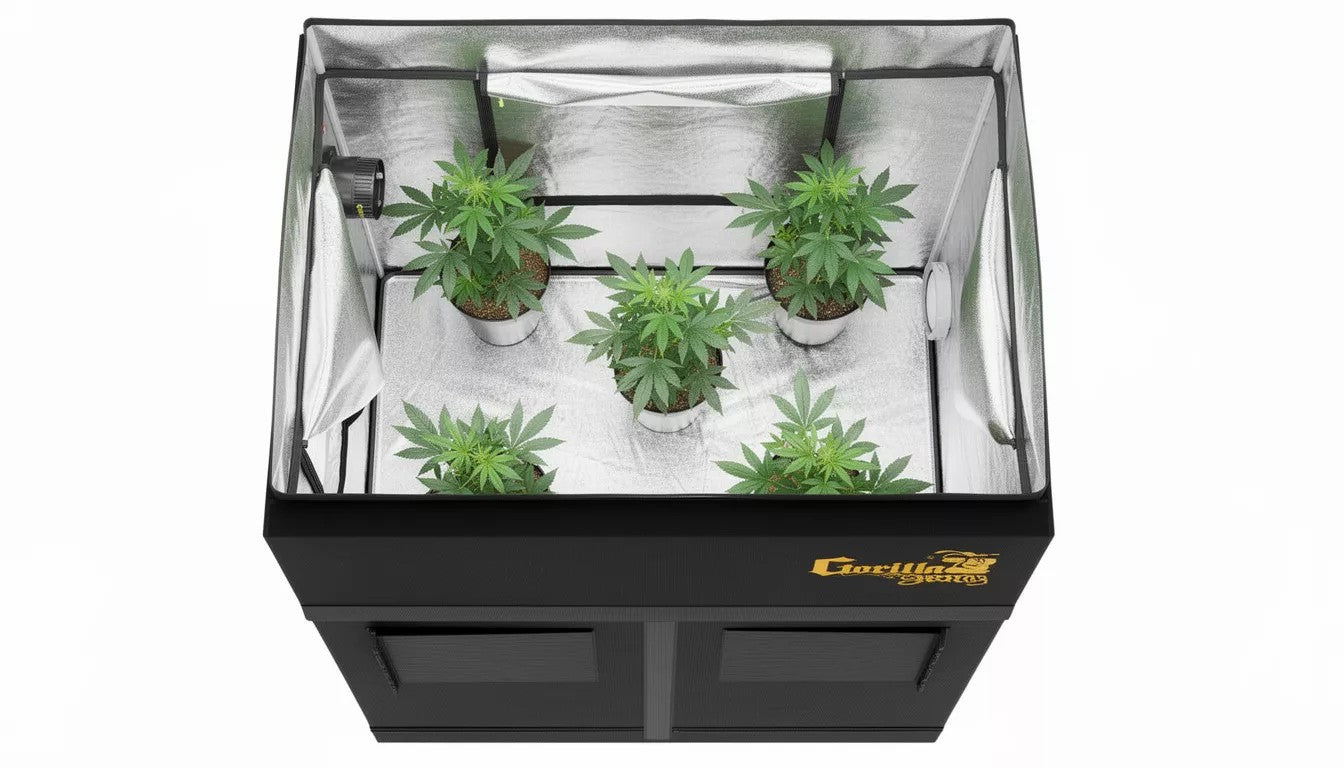
A dedicated grow tent setup provides the ideal controlled environment for indoor growing. These self-contained systems include:
- Light-proof enclosure with reflective interior maximizing light efficiency
- Ventilation ports for installing exhaust fans and ducting
- Cable access points for running electrical connections safely
- Sturdy frame supporting lights, fans, and accessories overhead
Complete grow tent kits include everything needed except plants—tent, lighting, ventilation, and accessories all designed to work together seamlessly. These integrated systems eliminate compatibility concerns while simplifying setup for beginners.
Combining Lights with Other Equipment
Successful indoor growing requires coordinating multiple systems:
Ventilation: Inline fans exchange air while carbon filters control odors if needed. Fresh air provides CO2 for photosynthesis while removing heat and excess humidity.
Environmental Monitoring: Thermometer/hygrometer combos help you track conditions and adjust ventilation or heating/cooling as needed.
Automated Controls: Smart controllers manage lights, fans, and other equipment automatically, maintaining ideal conditions without constant manual attention.
For comprehensive guidance on creating the perfect growing environment, explore our detailed tutorial on indoor grow room setup.
Frequently Asked Questions
How long should I run grow lights each day?
Most plants need 12-18 hours of light daily depending on type and growth stage. Herbs and leafy greens thrive with 14-16 hours; flowering plants often need 12-14 hours; fruiting vegetables during vegetative growth benefit from 16-18 hours. Always provide at least 6-8 hours of darkness for essential metabolic processes.
Can I leave grow lights on 24 hours?
No. Plants need darkness for important processes including respiration, nutrient uptake, and cellular repair. Running lights 24/7 stresses plants, reduces overall health, and wastes electricity. Maintain proper day/night cycles appropriate for your plant types.
How close should grow lights be to plants?
LED grow lights typically position 12-36 inches from plants depending on growth stage and light intensity. Seedlings need lights 24-36 inches away; vegetative plants 18-24 inches; flowering/fruiting plants 12-18 inches. Monitor plants closely and adjust based on their response rather than following rigid rules.
Do I need different lights for different growth stages?
Full-spectrum LED grow lights support all growth stages without changes. However, advanced systems with adjustable spectrum allow you to emphasize blue light during vegetative growth and red light during flowering for optimized results. Basic full-spectrum lights work well throughout if spectrum adjustment isn't available.
How much do grow lights cost to operate?
Operating costs depend on wattage and usage. Calculate: (Watts ÷ 1000) × Hours per day × Days per month × Electricity rate = Monthly cost. A 300W LED running 16 hours daily at $0.12/kWh costs approximately $17-18 monthly. Quality LEDs cost 50-70% less to operate than older HID technology.
Featured Snippet Summary
Use grow lights by positioning them 12-36 inches from plants based on growth stage, running them 12-18 hours daily on consistent schedules with timers, and adjusting height as plants grow. LED systems work best for most applications, consuming minimal electricity while providing full-spectrum output. Match light intensity to plant needs—seedlings need gentle light positioned farther away, while fruiting plants require intense illumination positioned closer. Quality fixtures like Gorilla Xi Series LED lights deliver optimal results with smartphone control, adjustable spectrum, and professional-grade performance for thriving indoor gardens year-round.
Transform Your Indoor Garden Today
Mastering how to use grow lights effectively transforms struggling plants into thriving, productive specimens that rival or exceed outdoor growing results. With proper selection, positioning, scheduling, and environmental management, artificial lighting provides complete control over your garden's success regardless of season, weather, or natural light availability.
The investment in quality grow lights and proper setup pays enormous dividends through abundant harvests, year-round growing capability, and the satisfaction of nurturing healthy, vigorous plants. Modern LED technology makes indoor growing more accessible, efficient, and successful than ever before.
Ready to achieve those spectacular results you've been dreaming of? Browse the complete selection of LED grow lights and complete growing systems specifically designed for professional results. Whether you're starting with a small herb garden or planning a complete indoor growing operation, Gorilla Grow Tent provides the professional-grade equipment and expert guidance you need for success. Stop struggling with inadequate natural light—give your plants the consistent, optimal illumination they crave and watch them transform into the healthy, productive beauties they were meant to be!